Winter riding puts extra demands on disc brake rotors. Water, grit, road salt, mud, and repeated temperature changes can reduce braking consistency and accelerate wear, so choosing the right rotor matters.
This roundup compares 10 options across common 6-bolt and center-lock standards, several rotor sizes, and designs ranging from straightforward stainless-steel plates to floating and Ice Tech constructions. Use the guide below to match a rotor to your bike, riding style, and winter conditions.
Best 10 Bike Disc Rotors for Winter Riding Picks for 2026
Premium Winter Trail Upgrade

- 180 mm Center Lock rotor
- Ice Technologies FREEZA design
- Includes internal lockring
Best For: Compatible mountain-bike Center Lock setups
Versatile Six-Bolt Value

- 1.8 mm stainless steel construction
- Six-bolt mounting pattern
- Available in four diameters
Best For: Compatible multi-purpose bikes using six-bolt hubs
Road and Gravel Ice-Tech Choice
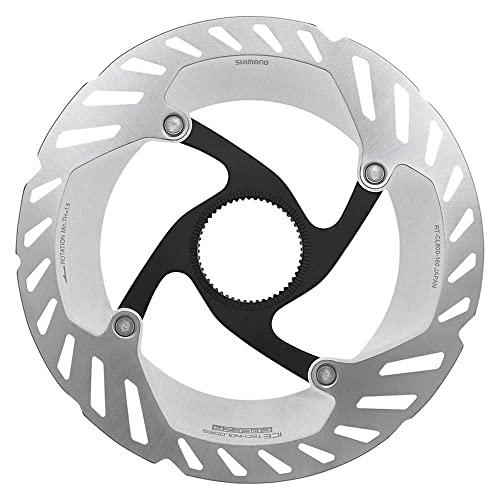
- 160 mm Center Lock rotor
- Ice Tech FREEZA design
- Includes lockring and magnet
Best For: Compatible bicycle Center Lock systems
Mud-Ready Floating Rotor

- Floating six-bolt rotor design
- Aluminum heat fins for cooling
- Mud-resistant braking features
Best For: Muddy MTB and mixed-bike six-bolt setups
Budget Stainless-Steel Set

- Two-piece stainless-steel rotor set
- 160mm, 180mm, and 203mm options
- Includes 12 six-bolt screws
Best For: Value-focused road, MTB, mountain, and BMX riders
Heat-Management Pick

- Two-piece floating rotor design
- Stainless surface with aluminum carrier
- Designed for repeated braking and heat dissipation
Best For: Aggressive MTB, enduro, downhill, gravel, and e-bike riding
Coated Commuter Option

- Two-rotor set with 12 screws
- Vacuum coating targets corrosion resistance
- Circular holes support ventilation and mud drainage
Best For: Everyday MTB, road, gravel, cross-country, and commuter bikes
Everyday Stainless-Steel Value

- Two 160mm rotors with six fixing bolts
- Stainless steel with a ventilated design
- 2mm thick and approximately 110g each
Best For: Replacing both rotors on compatible road, mountain, BMX, or MTB bikes
Heavy-Duty Winter Option
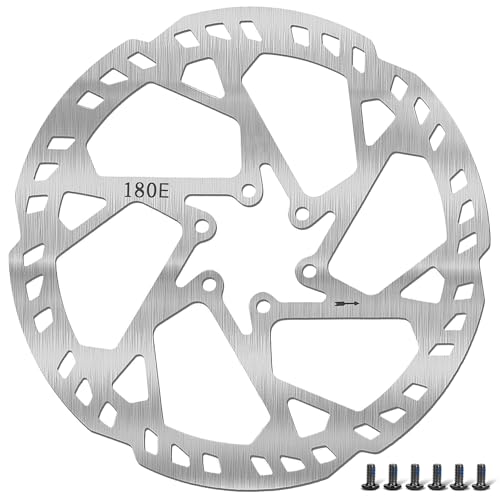
- 2.3mm-thick stainless-steel rotor
- Ventilated holes help with heat and mud drainage
- Includes six screws; other sizes are available
Best For: Aggressive riding and compatible e-bike or MTB setups
Simple Replacement Pick

- One 160mm rotor with six screws
- Stainless-steel construction
- 44mm center distance and 1.9mm thickness
Best For: Single-rotor replacement on compatible road, mountain, BMX, or MTB bikes
Premium Winter Trail Upgrade – Shimano Deore XT RT-MT800
For riders comparing bike disc rotors for winter riding, the Shimano Deore XT RT-MT800 offers a 180 mm Center Lock option with Ice Technologies FREEZA construction. Confirm your hub standard and local product specifications before ordering.
Best For: Mountain-bike riders seeking a 180 mm Center Lock rotor for compatible setups.
Pros:
- Ice Technologies FREEZA design
- 180 mm diameter for compatible mountain bikes
- Includes an internal lockring
Cons:
- Only suitable for Center Lock-compatible hubs
- Imported products may differ in fit, labeling, or instructions
This is a focused OEM-equivalent replacement for riders who already use the matching Shimano mounting system and want a larger rotor for their mountain bike.
Versatile Six-Bolt Value – PN28 160 mm Rotor
The PN28 is a practical choice among bike disc rotors for winter riding, using a 1.8 mm stainless-steel construction with a standard six-bolt mount. Check your existing rotor size, hub pattern, frame, fork, and caliper compatibility before purchase.
Best For: Riders with compatible six-bolt mountain, road, gravel, hybrid, or folding bikes.
Pros:
- Available in 140, 160, 180, and 203 mm sizes
- Stainless-steel one-piece construction with everyday corrosion protection
- Hollow cutouts support airflow and lower weight
- Includes six mounting bolts
Cons:
- Not directly compatible with Center Lock hubs
- Requires correct bedding-in and even bolt tightening
With broad size availability and a common six-bolt pattern, the PN28 is a straightforward replacement when you need to match an existing setup without changing hub standards.
Road and Gravel Ice-Tech Choice – Shimano Ultegra RT-CL800
Shimano Ultegra RT-CL800 Ice Tech FREEZA rotor with internal lockring and magnet, 160 mm, Silver
Check Price On AmazonThe Shimano Ultegra RT-CL800 is a 160 mm Center Lock rotor to consider when selecting bike disc rotors for winter riding. Its Ice Tech FREEZA design and included internal lockring and magnet suit compatible bicycle braking systems.
Best For: Bicycle riders with a compatible 160 mm Center Lock setup.
Pros:
- Ice Tech FREEZA rotor design
- 160 mm diameter for compatible bicycles
- Includes internal lockring and magnet
Cons:
- Requires a Center Lock-compatible hub
- Not a universal six-bolt replacement
This rotor makes the most sense as a direct-format replacement for riders who already use Center Lock hardware and want Shimano’s Ultegra-level rotor specification.
Mud-Ready Floating Rotor – RACEDUEL AR68 160 mm
For bike disc rotors for winter riding on muddy trails, the RACEDUEL AR68 combines a floating design with aluminum heat fins and a six-bolt mount. It is offered in several diameters, so verify the required size and clearance before ordering.
Best For: Mountain, road, e-bike, fat-bike, folding-bike, or BMX riders with compatible six-bolt brakes.
Pros:
- Floating rotor with reinforced arc structure
- Aluminum heat sink designed to improve cooling
- SUS304 stainless-steel rivets and anodized alloy for corrosion resistance
- Designed for mud clearance and quieter braking
Cons:
- Requires a six-bolt hub
- Compatibility still depends on correct rotor diameter and brake setup
The AR68 is a compelling option for wet, muddy use when heat management and mud clearance matter, provided your bike accepts its six-bolt format and selected diameter.
Budget Stainless-Steel Set – G3 Disc Brake Rotors
For riders comparing bike disc rotors for winter riding, this two-piece stainless-steel set offers multiple diameter options and included mounting hardware. Its drilled design is intended to support ventilation and heat dissipation, while the six-bolt threaded installation suits disc-brake-ready frames and forks.
Best For: Road, mountain, MTB, and BMX riders seeking a two-rotor replacement set with 160mm, 180mm, or 203mm sizing options.
Pros:
- Stainless-steel construction with a listed 1.9mm thickness.
- Available in 160mm, 180mm, and 203mm outside diameters.
- Includes 12 screws for six-bolt installation.
- Designed for heat dissipation and listed as ideal for Shimano Alivio/Deore systems.
Cons:
- The package listing specifies two 160/180mm rotors, so confirm the exact selected size before ordering.
- Compatibility depends on the frame, fork, and brake system using the stated six-bolt fit.
This is a practical value-oriented option when you need two stainless-steel rotors and want flexibility in diameter. Verify rotor size, mounting pattern, and brake clearance before installation.
Heat-Management Pick – Absolute Ice-Tech 203mm Rotor
For demanding bike disc rotors for winter riding, the Absolute Ice-Tech floating rotor focuses on thermal control and consistent braking. Its two-piece construction combines a stainless-steel braking surface with an aluminum carrier, making it suited to repeated braking and aggressive riding conditions.
Best For: MTB, enduro, trail, downhill, gravel, and high-powered e-bike riders using a 203mm six-bolt rotor.
Pros:
- Two-piece floating design uses an aluminum carrier and stainless-steel braking surface.
- Designed to transfer and dissipate heat during demanding riding.
- Engineered for predictable modulation during long descents and repeated braking.
- Compatible applications listed include MTB, enduro, trail, gravel, downhill, and high-powered e-bikes.
Cons:
- Only one rotor is included.
- The 203mm size may not suit frames, forks, or brake systems designed for smaller rotors.
- Six-bolt mounting compatibility should be confirmed before purchase.
This rotor is the performance-focused choice in the group for riders who prioritize heat management and consistent feel. Check your bike’s approved rotor diameter, adapter requirements, and six-bolt interface before fitting.
Coated Commuter Option – Vacuum-Coated Bike Rotors
For riders seeking bike disc rotors for winter riding, this two-rotor set combines vacuum coating with a circular-hole layout intended to improve corrosion resistance, ventilation, and mud drainage. It includes 12 screws and is offered in 140mm, 160mm, and 180mm sizes, with the listed configuration shown as two 160mm rotors.
Best For: MTB, road, gravel, cross-country, and commuter bikes needing a coated two-rotor replacement set.
Pros:
- Vacuum coating is specified to enhance abrasion and corrosion resistance.
- Circular holes are designed to aid ventilation, mud drainage, and weight reduction.
- Includes two rotors and 12 mounting screws.
- Available in 140mm, 160mm, and 180mm diameters.
Cons:
- The stated thickness is 1.8mm, so confirm it suits your brake system.
- The manufacturer warranty is listed as one month.
- Verify the six-bolt pattern and selected diameter before installation.
This set is a useful option when corrosion resistance and included hardware matter, especially for everyday bikes exposed to wet conditions. Confirm the exact size and brake-clearance requirements before replacing your rotors.
Everyday Stainless-Steel Value – 160mm Ventilated Rotor Pair
For riders looking for bike disc rotors for winter riding, this two-pack offers a practical replacement option for road bikes, mountain bikes, BMX bikes, and MTBs. The stainless-steel construction, polished surface, and ventilated design are suited to routine riding and heat management.
Best For: Riders who need two 160mm rotors for compatible bikes and want included mounting bolts.
Pros:
- Includes two 160mm rotors and six fixing bolts.
- Stainless-steel construction is described as wear-resistant and heat-resistant.
- Large ventilation holes help dissipate heat while keeping weight down.
- Each rotor weighs approximately 110g and is 2mm thick.
Cons:
- Only a 160mm size is supplied.
- Compatibility should be confirmed before installation, including the six-bolt mounting pattern.
This is a straightforward value pick when you need a matching pair rather than a single replacement. Confirm your bike’s rotor size and clearance before buying, especially if winter riding has accelerated wear on both wheels.
Heavy-Duty Winter Option – 180mm Thick Rotor
This 180mm rotor is a compelling option for bike disc rotors for winter riding when you want a thicker disc for more aggressive use. Its 2.3mm stainless-steel design is described as more wear-resistant and less deformable than ordinary rotors, while the hole pattern helps ventilation and mud drainage.
Best For: Compatible mountain bikes, e-bikes, e-scooters, and aggressive riders needing a single 180mm rotor.
Pros:
- 2.3mm thickness is intended to improve wear resistance and braking stability.
- Ventilation holes help dissipate heat, reduce weight, and drain mud.
- Includes six screws for installation.
- Available in 140mm, 160mm, 180mm, and 203mm versions.
Cons:
- The supplied configuration is one 180mm rotor, not a pair.
- Its 2.3mm thickness requires a brake caliper compatible with thicker discs.
- Only a one-month manufacturer warranty is listed.
The extra thickness makes this the most heavy-duty-oriented choice in this group, but fit is especially important. Verify the 180mm size, six-bolt interface, and caliper clearance before installation.
Simple Replacement Pick – 160mm Six-Bolt Rotor
For a straightforward replacement among bike disc rotors for winter riding, the Teyssor 160mm rotor uses a stainless-steel construction and a common six-bolt mounting format. It includes the screws needed for installation and is listed for road bikes, mountain bikes, BMX bikes, and MTBs.
Best For: Riders replacing one compatible 160mm six-bolt rotor on a road, mountain, BMX, or MTB bike.
Pros:
- Includes one 160mm rotor and six screws.
- Stainless-steel construction.
- 44mm center distance supports compatible six-bolt setups.
- Listed weight is approximately 122g for the 160mm version.
Cons:
- Only one rotor is included.
- At 1.9mm thick, it is thinner than the 2.3mm option in this roundup.
- Rotor size and mounting compatibility must be checked before purchase.
This is a basic, single-rotor replacement for riders who want a familiar 160mm format. Check the existing rotor specifications and caliper clearance before fitting, particularly if replacing a worn winter-season rotor.
How We Picked the Best Bike Disc Rotors for Winter Riding
We focused on the features that matter most in cold, wet, and dirty conditions: braking-surface material, heat management, corrosion resistance, mounting standard, size availability, and compatibility with common road, gravel, mountain-bike, BMX, and commuter setups. The selection includes established Shimano Ice Tech and Ice Tech FREEZA models alongside simpler stainless-steel rotors and multi-size replacement sets.
Rotor quality is only one part of winter braking. Correct installation, compatible brake pads, adequate caliper clearance, and regular cleaning are equally important. Always confirm the manufacturer’s specifications before ordering.
Quick Comparison
| Rotor type | Best suited to | Main advantage |
|---|---|---|
| Ice Tech or Ice Tech FREEZA | Fast riding, long descents, performance bikes | Improved heat management |
| Floating rotor | Trail and aggressive MTB use | Potentially better heat control and reduced weight |
| Standard stainless steel | Commuting, touring, general replacement | Simple, durable, and usually affordable |
| Multi-size or two-piece sets | Several bikes or replacement projects | Flexible sizing and better value |
Key Buying Factors for Bike Disc Rotors for Winter Riding
Mounting Standard and Fit
Check whether your hub uses six-bolt or Center Lock mounting. A six-bolt rotor cannot be installed directly on a Center Lock hub without the correct adapter, and the lockring type must also match the hub and axle arrangement. Confirm rotor diameter, bolt pattern, and caliper clearance before purchase.
Rotor Diameter and Thickness
Larger rotors generally provide more braking leverage and dissipate heat more effectively, but the frame and fork must support the size. Common options include 140, 160, 180, and 203 mm. Do not assume a thicker rotor is compatible: many calipers are designed around a specific thickness, often close to 1.8 or 2.0 mm. Follow the brake manufacturer’s limit.
Heat Control and Winter Durability
For sustained descents or loaded winter bikes, two-piece, floating, and finned Ice Tech designs can help manage heat and reduce fade. Stainless steel is a practical choice for wet-weather use, but grit and road salt still require frequent rinsing and inspection. Replace rotors that are deeply scored, warped, excessively thin, or badly corroded.
Pad Compatibility and Braking Conditions
Use pads approved for your brake system and rotor. Organic pads can feel quiet and provide strong initial bite, while metallic pads often tolerate contamination and demanding conditions better but may be noisier. Bed in new rotors and pads correctly before relying on them for steep or slippery winter routes.
Who Should Buy Which Bike Disc Rotors for Winter Riding?
Choose Shimano Ice Tech FREEZA or Ice Tech models if you ride quickly, tackle long descents, or want a performance-focused rotor from an established brake-system manufacturer. These are particularly attractive when exact Shimano compatibility and heat management are priorities.
Choose a floating rotor for aggressive trail riding or repeated braking where heat control and stiffness matter. Verify that the design is approved for your caliper and riding category.
Choose a standard stainless-steel six-bolt rotor for commuting, touring, winter training, or a straightforward replacement. These options are often the best balance of cost, availability, and practical durability.
Choose a multi-pack or multi-size set when replacing rotors on more than one bike or keeping spares available. Before buying, confirm the included bolts, diameter, thickness, and mounting pattern rather than relying on the listing title alone.