A dedicated leg extension machine can make lower-body training more controlled, consistent, and convenient—especially when you want focused quad work without relying on a full gym setup.
We selected 10 machines spanning selectorized, plate-loaded, adjustable, and multifunction designs to help you match equipment to your space, training style, and budget.
Best 10 Leg Extension Machine Picks for 2026
Best Overall
Titan Selectorized Leg Extension & Curl Machine

- Dual leg extension and curl functions
- 250-lb pin-loaded stack with 1:1 ratio
- Seven-position backrest and thigh-pad adjustments
Best For: Convenient, repeatable quad and hamstring training
Best for Fine Adjustments
GMWD LE11 Leg Extension & Curl Machine

- 24 starting positions and nine leg-pad settings
- 255-lb stack with an extra 5-lb precision block
- Wide seat and decline back pad for fit and support
Best For: Larger users and precise machine positioning
Best Compact Plate-Loaded Option

- Four lower-body exercise functions
- Compact 33-by-34-by-38.5-inch design
- Works with 1-inch or 2-inch weight plates
Best For: Space-conscious home gyms with existing plates
Best for Versatility
GMWD LE08 2.0 Plate-Loaded Leg Machine

- Dual extension and curl functions
- Three adjustable load-ratio settings
- Multiple fit adjustments and full-body exercise support
Best For: Configurable home-gym training with plate loading
Best for Easy Setup
JELENS J10 Leg Extension and Curl Machine

- Seated extensions and lying curls in one machine
- Compact footprint with adjustable backrest
- Heavy-duty frame supports users up to 500 pounds
Best For: Home gyms seeking a stable, versatile lower-body machine
Best for Unilateral Training
GMWD LE03 Leg Extension and Curl Machine
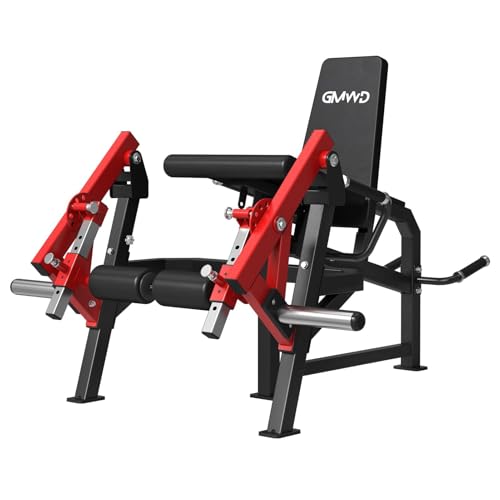
- Independent arms support single-leg training
- Offers extensions plus lying and standing curls
- Quick-adjust roller, seat, and back cushions
Best For: Lifters focused on correcting leg-strength imbalances
Best for Adjustable Resistance
Mikolo LE12 Adjustable Leg Extension Machine

- Variable load ratios provide 100–120 pounds of resistance
- Fast switch between extensions and curls
- Extensive starting-position and leg-lock adjustments
Best For: Experienced users seeking precise setup and progression control
Adjustable Lower-Body Builder
GMWD Leg Extension and Curl Machine

- Leg extension, curl, and glute bridge functions
- 28+5 leg positions plus extensive seat and pad adjustments
- Removable pins and upgraded breathable padding
Best For: Highly adjustable lower-body training at home
Compact Triple-Load Station
Mikolo Leg Extension and Curl Machine

- Seated extension and lying curl functions
- Plate, band, and cable loading options
- Compact design with storage and wheels
Best For: Flexible resistance training in smaller home gyms
Four-in-One Strength Station
GOIMU Leg Extension and Curl Machine

- Supports extensions, curls, hip thrusts, and calf raises
- 47 adjustment settings for customized positioning
- Listed 750-pound maximum weight recommendation
Best For: Versatile, high-capacity lower-body workouts
Best Overall – Titan Selectorized Leg Extension & Curl Machine
If you want a versatile leg extension machine for structured quad and hamstring training, the Titan Fitness selectorized model combines extension and curl movements in one station. Its 250-pound pin-loaded stack, 1:1 resistance ratio, and multiple adjustment points make it practical for both home and commercial gym use.
Best For: Lifters who want smooth, convenient selectorized resistance for both leg extensions and curls.
Pros:
- Combines seated leg extensions and leg curls in one machine.
- 250-pound weight stack with 10-pound increments and a 1:1 ratio.
- Seven backrest and thigh-pad adjustments support varied user heights.
- Counterbalanced foot pad and four exercise positions help speed transitions.
Cons:
- At 545 pounds, it is difficult to move once assembled.
- The 60-by-36-inch footprint may be substantial for smaller home gyms.
- Resistance adjustments are limited to the included 10-pound stack increments.
The Titan is a strong all-around choice when smooth cable resistance and quick weight selection matter more than portability. Its commercial-style construction and dual-function design make it well suited to repeated training.
Best for Fine Adjustments – GMWD LE11 Leg Extension & Curl Machine
This GMWD leg extension machine emphasizes fit, stability, and incremental resistance control. A 255-pound stack, 24 starting positions, nine leg-pad settings, and a decline back pad give users plenty of ways to align the machine for seated extensions and leg curls.
Best For: Larger users and lifters who prioritize precise positioning, stable construction, and small resistance increases.
Pros:
- 12-gauge 3-by-3-inch steel frame is designed for rigidity.
- Includes a 250-pound stack plus a 5-pound precision block.
- Wide 21.5-inch seat and nearly full-length leg roller accommodate larger users.
- Decline back pad and six-position adjustment help support pelvic stability.
Cons:
- Its commercial-grade construction may require significant assembly space.
- The one-year warranty is shorter than some competing options.
- Band pegs add versatility but require separately purchased resistance bands.
The LE11 stands out for adjustability and user accommodation rather than minimal size. It is a compelling option for households where multiple people need a dependable, precisely fitted leg station.
Best Compact Plate-Loaded Option – FEIERDUN 4-in-1 Leg Trainer
For a smaller home setup, the FEIERDUN leg extension machine offers a plate-loaded alternative with several lower-body functions. It supports leg extensions, leg curls, hip thrusts, and calf raises, while its 33-by-34-by-38.5-inch dimensions help conserve floor space.
Best For: Home-gym users who want a compact, adjustable multi-exercise station and already own weight plates.
Pros:
- Supports leg extensions, leg curls, hip thrusts, and calf raises.
- Compact footprint is suited to tighter home-gym layouts.
- Accepts 1-inch or 2-inch plates with an Olympic adapter.
- Adjustable components and padded rollers help accommodate different heights.
Cons:
- It does not include a built-in selectorized weight stack.
- Plate loading requires users to supply compatible plates.
- The stated 700-pound capacity is a capacity rating, not included resistance.
The FEIERDUN is a practical space-saving pick for plate owners who value exercise variety. Its compact design and four-in-one functionality make it more flexible than a dedicated leg extension station.
Best for Versatility – GMWD LE08 2.0 Plate-Loaded Leg Machine
The GMWD LE08 2.0 is a plate-loaded leg extension machine designed for users who want more than standard extensions and curls. Its adjustable load-ratio system, multi-position fit adjustments, and support for additional exercises make it a flexible choice for a home gym.
Best For: Experienced home-gym users who want adjustable resistance feel, dual leg movements, and broader exercise versatility.
Pros:
- Switches between leg extensions and curls with a pull-pin system.
- Adjustable 1.0, 1.1, and 1.2 load-ratio settings fine-tune plate resistance.
- Seven-position backrest, eight-position leg roller, and nine tibia-pad settings support alignment.
- 3-by-3-inch, 12-gauge steel frame is built for heavy-duty stability.
Cons:
- It is plate-loaded, so weight plates are not included in the supplied specifications.
- The 52.2-inch width may be demanding in a compact room.
- Its many adjustment and exercise features may take more setup familiarity.
The LE08 2.0 is a strong fit for lifters who want a more configurable station than a basic plate-loaded machine. Its load-ratio selector and extensive adjustment range add useful flexibility for progressive training.
Best for Easy Setup – JELENS J10 Leg Extension and Curl Machine
The JELENS J10 is a versatile leg extension machine for home gyms, combining seated leg extensions with lying leg curls. Its adjustable backrest, compact footprint, and reinforced frame make it a practical choice for focused quad and hamstring training.
Best For: Home-gym users who want a stable two-in-one leg machine with a compact design.
Pros:
- Supports both seated leg extensions and lying leg curls.
- Adjustable backrest and ergonomic pads help accommodate different body types.
- Compact 47.24-by-29.92-inch footprint suits smaller training spaces.
- Heavy-duty steel frame and H-shaped base support users up to 500 pounds.
Cons:
- Its listed supported tension is 440 pounds, so users should verify compatibility with their intended loading setup.
- The supplied details do not specify included weight plates.
Choose the J10 if you prioritize stability, comfort, and straightforward quad-and-hamstring coverage in a relatively space-conscious leg extension machine.
Best for Unilateral Training – GMWD LE03 Leg Extension and Curl Machine
The GMWD LE03 stands out among leg extension machine options for its independent single-leg arms. It also supports bilateral extensions, lying curls, and standing curls, giving home-gym users several ways to train quads, hamstrings, and glutes.
Best For: Lifters who want unilateral training and multiple lower-body exercises from one plate-loaded station.
Pros:
- Independent arms help target each leg separately and address strength imbalances.
- Four-in-one design supports leg extensions, lying curls, and standing curls.
- Six-position ankle roller plus adjustable seat and back cushions allow quick setup changes.
- 115-pound machine weight and a 50-by-50 mm, 14-gauge steel frame are designed for stability.
Cons:
- The 32.5-by-48-inch footprint may require more room than the most compact options.
- Plate-loaded operation means weight plates are needed for resistance.
The LE03 is a strong fit when independent leg work matters more than having the smallest possible machine, especially for users who value exercise variety.
Best for Adjustable Resistance – Mikolo LE12 Adjustable Leg Extension Machine
The Mikolo LE12 is a leg extension machine built around adjustable resistance and positioning. Its variable load ratios, constant-tension system, and fast switch between seated extensions and lying curls give experienced home-gym users more control over progression and exercise setup.
Best For: Users who want fine-tuned resistance and extensive positioning adjustments for quad and hamstring isolation.
Pros:
- Variable load ratios adjust resistance from 100 to 120 pounds.
- Switches between seated extensions and lying curls in under three seconds.
- Eight starting positions and a nine-point leg lock support customized alignment.
- V-shaped design is intended to improve comfort during leg curls and reduce pressure on the back and diaphragm.
Cons:
- Its 56.5-by-51.18-inch dimensions require substantial floor space.
- The listed maximum weight recommendation is 400 pounds.
- The supplied notes do not indicate that weight plates are included.
The LE12 makes the most sense for users who will take advantage of its detailed adjustments and variable resistance rather than needing a basic, minimal-footprint leg station.
Adjustable Lower-Body Builder – GMWD Leg Extension and Curl Machine
For shoppers seeking a versatile leg extension machine, the GMWD LE02 combines leg extensions, leg curls, and glute bridges in one plate-loaded home-gym station. Its broad adjustment range and removable pin mechanism make it practical for varied users and controlled lower-body training.
Best For: Users who want extensive fit adjustments and multiple lower-body movements in a sturdy home-gym machine.
Pros:
- Supports leg extension, leg curl, and glute bridge exercises.
- Offers 28+5 leg positions, eight backrest positions, four seat positions, and eight hold-down positions.
- Removable pins simplify switching modes and help limit excessive weight-arm movement.
- Thick, breathable, sweat-resistant padding is designed for comfort and durability.
Cons:
- At 95 pounds, it is heavier than some compact alternatives.
- Its 34-by-36-inch footprint may require dedicated floor space.
- The machine is plate loaded, so weight plates are not included in the supplied specifications.
The GMWD LE02 is a strong choice when adjustability, padding, and exercise variety matter more than having the smallest possible station. Its one-year manufacturer warranty and stated 300-pound tension support add useful reassurance for home use.
Compact Triple-Load Station – Mikolo Leg Extension and Curl Machine
The Mikolo LE00 is a compact leg extension machine that combines seated extensions and lying curls while offering three resistance options. Plate posts, band pegs, and a cable clip give home-gym users several ways to configure progressive resistance.
Best For: Space-conscious users who want extension and curl training with plate, band, and cable compatibility.
Pros:
- Combines seated leg extensions and lying leg curls in one station.
- Triple loading system supports weight plates, resistance bands, and cable-station connection.
- Five extension and four curl settings help accommodate different user heights.
- Compact 7.28-square-foot design includes plate storage and smooth-rolling wheels.
Cons:
- The supplied specifications do not list included weight plates, bands, or a cable station.
- Its 55-pound weight may provide less heft than heavier machines during setup or use.
- The 15-degree V-tilt and open-front curl design may feel different from a conventional flat pad.
Choose the Mikolo LE00 if flexibility and footprint are priorities. Its multiple loading methods and mobility are especially useful in a compact home gym, while the two-year manufacturer warranty is longer than the warranty listed for the GMWD model.
Four-in-One Strength Station – GOIMU Leg Extension and Curl Machine
The GOIMU is a multifunctional leg extension machine built for users who want more than standard extensions and curls. Its linear-bearing design also supports hip thrusts and calf raises, while 47 adjustment settings help tailor the bench and leg positions.
Best For: Users seeking a high-capacity, multi-exercise lower-body station with extensive adjustment options.
Pros:
- Supports leg extensions, curls, hip thrusts, calf raises, and other lower-body exercises.
- Provides 47 stated adjustment settings across the seat, backrest, rotary extension, and leg pads.
- Linear bearings are designed for smooth, precise movement.
- Listed 750-pound maximum weight recommendation offers substantial capacity.
Cons:
- No manufacturer warranty is listed in the supplied details.
- Its 39.9-inch width makes it broader than the Mikolo station.
- The high stated capacity may be more than casual users need for basic extensions and curls.
The GOIMU stands out for exercise variety, adjustment range, and its stated 750-pound capacity. It is a compelling option for intensive home training, provided buyers are comfortable with the lack of a listed warranty and have enough room for its footprint.
How We Picked the Best Leg Extension Machines
We compared these machines across the features that matter most in real home-gym use: exercise versatility, resistance system, adjustability, weight capacity, stability, footprint, user comfort, and setup requirements. We also considered whether each model supports both seated leg extensions and leg curls, since that combination provides more value than a single-purpose unit.
Because product specifications can vary by configuration, confirm the listed dimensions, included plates or weight stack, maximum load, and available adjustments before ordering. A machine’s stated capacity is not the same as its recommended working load or the amount of resistance delivered at the pad.
Quick Comparison
| Type | Best For | Main Advantage | Watch For |
|---|---|---|---|
| Selectorized | Convenient home workouts | Fast weight changes | Larger footprint and fixed stack |
| Plate-loaded | Progressive strength training | Flexible resistance | Weight plates may be sold separately |
| Adjustable combination | Smaller home gyms | Extension and curl versatility | More setup adjustments |
| Higher-capacity models | Heavier training | Greater loading potential | Need a sturdy floor and frame |
Key Buying Factors for a Leg Extension Machine
Resistance and Loading
Choose a selectorized machine if you want quick, tidy adjustments between sets. Plate-loaded models can offer more flexibility, but you need compatible plates and enough storage space. Check whether the resistance is direct, cable-based, or lever-driven, as the feel can differ substantially through the range of motion.
Adjustability and Fit
Look for adjustable backrests, seat positions, roller-pad height, and starting-angle settings. Proper alignment is important: your knee should line up closely with the machine’s pivot point, while the pad should rest comfortably above the ankle. A wide adjustment range is especially valuable if multiple people will use the machine.
Comfort and Stability
Dense upholstery, supportive thigh restraints, and a smooth pivot can make controlled repetitions easier. A stable frame matters when lifting heavy or using the curl function. Review the machine’s footprint, floor-contact points, and any recommendations for anchoring or placing it on protective flooring.
Space and Maintenance
Measure the available area with room for mounting, loading plates, and moving around the machine. Combination units save space compared with separate machines, but they may require more frequent adjustments. Inspect cables, bolts, pads, and pivots regularly, and follow the manufacturer’s lubrication and tightening guidance.
Who Should Buy Which Leg Extension Machine?
Choose a selectorized model if convenience, quick weight changes, and a cleaner setup are your priorities. These are well suited to shared home gyms and users who prefer a straightforward training station.
Choose a plate-loaded model if you already own Olympic or standard plates and want flexible loading for progressive training. Verify plate-sleeve compatibility and account for the extra storage space.
Choose a 4-in-1 or multifunction machine if floor space is limited and you want seated extensions plus lying or standing curl variations. These machines offer more exercise options, though adjustment time and build quality deserve extra attention.
Choose a higher-capacity frame if you train heavily or expect multiple users. Prioritize stability, weld quality, adjustment range, and the manufacturer’s actual load guidance rather than capacity claims alone.