The best helmet lights for touring improve visibility without adding unnecessary bulk, complicated controls, or frequent charging stops. This roundup covers versatile bicycle and motorcycle options for commuting, road touring, trail riding, and low-light emergencies.
We selected lights across several use cases, from powerful forward beams and long-range trail models to compact rear warning lights and smart brake-sensing designs. Use the buying guide below to match output, mounting, weather resistance, and battery life to your route.
Best 10 Helmet Lights for Touring Picks for 2026
Best All-Rounder
FUNWICT 1000-Lumen Helmet Light

- Bright 1000-lumen output
- Five lighting modes
- 93g body with IP65 rating
Best For: Night touring with flexible helmet or handlebar mounting
Best for Heritage Helmets
Thousand Magnetic Helmet Light

- Magnetic helmet mounting
- Three light modes
- 50g IP54-rated design
Best For: Heritage 2.0 riders wanting a compact light
Best Long-Range Option
BrightRoad 850-Lumen Helmet Light

- 850-lumen front beam
- 650-foot stated range
- Adjustable 100-degree mount
Best For: Night riding where beam reach and aiming control matter
Best Rear Visibility
Smart Wireless Motorcycle Helmet Light

- 100 rear-facing LEDs
- Smart brake detection
- Wireless USB-C rechargeable design
Best For: Motorcycle touring riders seeking extra rear visibility
Long-Ride Visibility Pick
Rechargeable Bike Helmet Light

- Front and rear lighting with six selectable modes
- Up to 22 hours of stated USB-rechargeable runtime
- IPX6-rated aluminum body with quick-connect mounts
Best For: Touring cyclists prioritizing visibility and long battery life
High-Output Trail Pick
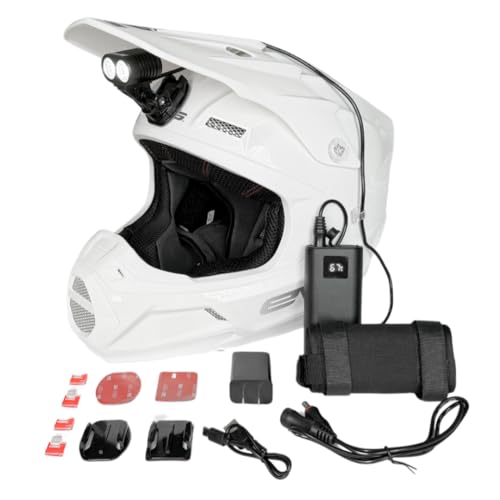
- 2,100-lumen rated Cree LEDs for trail illumination
- Three brightness settings and a battery digital readout
- External battery doubles as a power bank
Best For: Adventure touring and off-road riders needing maximum output
Lightweight Safety Pick
2-in-1 Rechargeable Helmet Light

- Independent front and rear controls with five modes
- About 2 ounces with 8–36 hours of stated runtime
- IP66 waterproof design with tool-free mounting
Best For: Everyday touring cyclists focused on visibility and low weight
Lightweight All-Weather Pick
Compact Rechargeable Helmet Light

- Three red LED modes
- IPX6 waterproof ABS housing
- 0.6-ounce Velcro-mounted design
Best For: Tourers prioritizing low weight and simple installation
Simple Touring Value
Lightweight USB Helmet Tail Light

- Multiple steady and flashing modes
- IPX6 waterproof ABS shell
- Adhesive, tool-free mounting
Best For: Night riders wanting a simple, versatile rear light
High-Output Touring Choice
14-LED Rechargeable Helmet Light
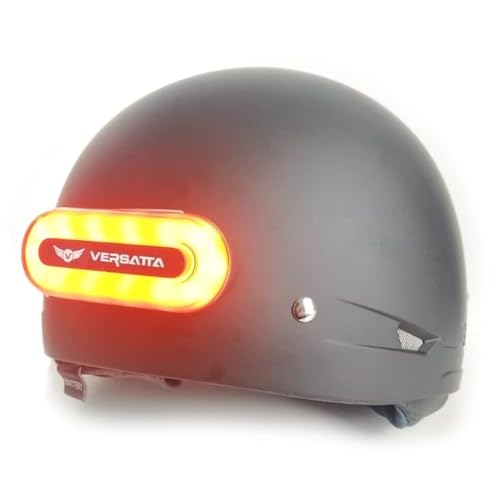
- 14 LEDs with stated 700-lux output
- Up to 12 hours of claimed runtime
- USB-C charging and IPX6 resistance
Best For: Long-distance riders seeking brightness and endurance
Best All-Rounder – FUNWICT 1000-Lumen Helmet Light
For riders comparing helmet lights for touring, this rechargeable FUNWICT model combines a bright 1000-lumen output with five lighting modes and a lightweight 93g design. Its helmet and handlebar holders also make it flexible for different setups.
Best For: Night touring riders who want a bright, lightweight front light with flexible mounting.
Pros:
- 1000-lumen output with high, medium, low, strobe, and SOS modes
- Lightweight aluminum-alloy body weighs 93g
- IP65 waterproof construction and included helmet and handlebar mounts
Cons:
- Battery runtime is listed as up to six hours, which may require recharging on longer trips
- The supplied details list a two-hour charging time but do not specify an exact runtime for each mode
The FUNWICT is a practical choice when illumination and mounting versatility matter most. Its compact weight helps reduce helmet bulk, while the IP65 rating adds useful protection for changing outdoor conditions.
Best for Heritage Helmets – Thousand Magnetic Helmet Light
The Thousand Magnetic Helmet Light is a compact option for riders who prioritize simple attachment and low weight. Designed for the Heritage 2.0 helmet, it uses magnetic mounting, USB-C charging, and three light modes.
Best For: Heritage 2.0 owners seeking a small, easy-to-remove helmet light for urban touring.
Pros:
- Magnetic mounting for quick installation and removal
- Three light modes and USB-C charging
- Lightweight 50g design with IP54 water and dust resistance
Cons:
- 40-lumen maximum output is lower than the other front-light options here
- Specified for the Thousand Heritage 2.0 helmet, limiting compatibility
- Water resistance is IP54 rather than a fully waterproof rating
This model emphasizes convenience and integration with a compatible helmet rather than maximum road illumination. It is best suited to riders who value a discreet, lightweight light for better visibility in built-up areas.
Best Long-Range Option – BrightRoad 850-Lumen Helmet Light
For helmet lights for touring that need strong forward coverage, the BrightRoad delivers 850 lumens, an 85-degree floodlight, and a stated 650-foot range. Its five modes, adjustable mount, and battery indicator add useful control for night riding.
Best For: Night riders who want a wide beam, long stated range, and an adjustable anti-slip helmet mount.
Pros:
- 850-lumen output with an 85-degree floodlight and 650-foot range
- Five modes and USB rechargeable operation
- 100-degree adjustable anti-slip mount with battery-status indicator
Cons:
- The listed IPX1 rating offers limited water protection compared with higher-rated options
- Included components are listed as none, so the supplied mount details should be verified before purchase
The BrightRoad stands out for beam coverage and aiming flexibility. Its low water-resistance rating makes it a better fit for planned rides or fair-weather touring unless additional weather protection is used.
Best Rear Visibility – Smart Wireless Motorcycle Helmet Light
This wireless motorcycle helmet light takes a different approach to helmet lights for touring by acting as a high-mounted rear light. Its 100 LEDs, smart brake detection, and weather-resistant housing are designed to help following traffic notice the rider.
Best For: Motorcycle touring riders who want additional rear visibility without wiring the helmet.
Pros:
- 100 LEDs positioned at eye level for enhanced visibility from behind
- Smart brake detection responds to braking, downshifting, and engine braking
- Wireless installation, USB-C charging, and universal and XL mounts included
Cons:
- It is primarily a rear visibility light, not a forward headlight for illuminating the road
- Listed as water resistant rather than fully waterproof
- The plastic body may be less impact-resistant than an aluminum-alloy design
The Smart Wireless Motorcycle Helmet Light is a useful visibility supplement for touring, especially when signaling deceleration is a priority. Riders needing road illumination should pair it with a dedicated front light.
Long-Ride Visibility Pick – Rechargeable Bike Helmet Light
For riders comparing helmet lights for touring, this compact rechargeable model emphasizes visibility from multiple angles without adding much weight. It combines a focused front beam with a rear red light, six independently selectable modes, and up to 22 hours of stated runtime.
Best For: Touring cyclists who want a lightweight front-and-rear light with long battery life and flexible mounting.
Pros:
- Front white light and rear red light offer steady and flashing modes.
- USB rechargeable 500 mAh battery provides up to 22 hours of stated runtime.
- IPX6 water resistance and aluminum construction suit rainy rides.
- Quick-connect mounting works on helmets, handlebars, or under a seat.
Cons:
- The product weighs only 2 ounces, but its small light body may provide less road illumination than a high-output trail headlamp.
- It has a six-month manufacturer warranty.
This is a practical touring option when being seen is the priority. Its rear light, long stated runtime, and compact mounting system make it especially useful for extended rides, while the focused front beam adds useful visibility on darker roads.
High-Output Trail Pick – Navigator LED Trail Light
Among helmet lights for touring, the Navigator stands out for riders who need substantially more illumination for off-road routes. Its Cree LEDs are rated at 2,100 lumens, with three brightness settings and an external battery pack that displays its remaining charge.
Best For: Adventure touring, mountain biking, dirt-bike, and motorcycle riders who need high-output trail lighting.
Pros:
- Rated 2,100-lumen Cree LEDs provide high-output trail illumination.
- Three brightness settings allow riders to adjust output for conditions.
- External battery lasts up to 3 hours on high or 12 hours on low, according to the supplied notes.
- Battery pack can also function as a power bank and includes a digital readout.
Cons:
- The complete setup weighs 1.4 pounds, making it substantially heavier than compact helmet lights.
- It uses an external battery pack and cable, which adds routing and setup considerations.
- The Dango Gripper Mount for quick chin-guard mounting is sold separately.
This is the performance-focused choice for touring beyond well-lit pavement. The high rated output, weatherproof design, included travel case, and broad helmet compatibility are useful for technical routes, though the heavier external-battery setup is best suited to riders who value power over simplicity.
Lightweight Safety Pick – 2-in-1 Rechargeable Helmet Light
This 2-in-1 model is a straightforward option for riders shopping for helmet lights for touring with an emphasis on visibility and low weight. It pairs independently controlled front and rear lights with five warning modes, USB charging, and a 360-degree rotatable design.
Best For: Touring and everyday cyclists who want a lightweight front-and-rear safety light for low-light riding.
Pros:
- Front and tail lights can be switched or adjusted independently.
- Five lighting modes include steady, slow flash, rhythm flash, battery-life flash, and fast flash.
- At about 2 ounces, it is lightweight for longer rides.
- IP66 waterproofing helps protect against rain and splashing water.
Cons:
- The 200-lumen front light is intended to help riders stay seen rather than provide long-distance road illumination.
- Stated runtime ranges from 8 to 36 hours depending on the selected mode, so brighter settings reduce endurance.
- The plastic construction may be less robust than an aluminum-bodied light.
This light makes sense when visibility, low weight, and simple installation matter more than a powerful headlamp beam. Its independently controlled front and rear lights are useful for touring in changing conditions, but riders on dark roads should not expect high-output trail illumination.
Lightweight All-Weather Pick – Compact Rechargeable Helmet Light
For riders comparing helmet lights for touring, this compact red LED offers a practical balance of visibility, weather resistance, and easy mounting. Its four LEDs provide steady, slow-flash, and fast-flash settings, while the rechargeable battery delivers a stated 8–10 hours of runtime.
Best For: Touring riders who want a slim, lightweight rear warning light that can be repositioned without tools.
Pros:
- Three lighting modes help tailor visibility to riding conditions.
- IPX6 waterproof ABS housing is suited to rainy rides.
- Tool-free adhesive Velcro mounting weighs just 0.6 ounces.
Cons:
- Its four-LED output may be less powerful than larger helmet lights.
- USB charging is less convenient than newer USB-C designs.
With its low weight, simple Velcro installation, and 8–10-hour claimed runtime, this is a sensible touring option when portability matters more than maximum brightness.
Simple Touring Value – Lightweight USB Helmet Tail Light
This lightweight red safety light is a straightforward choice for helmet lights for touring, with multiple flashing patterns, adhesive mounting, and USB recharging. Its IPX6-rated ABS shell is designed to handle water splashes during low-light rides.
Best For: Riders seeking an easy-to-install helmet or rear bike light for night riding and general outdoor use.
Pros:
- Multiple modes include steady, intermittent, and side-to-side blinking.
- Tool-free adhesive installation works on helmets, bikes, and motorcycles.
- IPX6 waterproof construction and included rechargeable battery support outdoor use.
Cons:
- The supplied notes do not specify a runtime or charging time.
- Its small design may offer fewer visibility features than larger 14-LED models.
This model keeps the feature set uncomplicated: choose a mode, attach it with the included Velcro, and recharge it by USB. It is a practical budget-oriented option when documented runtime is not a deciding factor.
High-Output Touring Choice – 14-LED Rechargeable Helmet Light
For riders who want more pronounced visibility from helmet lights for touring, this upgraded model uses 14 LED lamp beads, a stated 700-lux output, and four modes. Its 650mAh battery is claimed to run for up to 12 hours, and the side-positioned USB-C port is designed to improve charging access.
Best For: Touring and commuting riders who favor a brighter, longer-running helmet light with USB-C charging.
Pros:
- 14 LEDs and a stated 700-lux output emphasize visibility.
- 650mAh battery provides a claimed runtime of up to 12 hours.
- Curved ABS design, extra Velcro, and IPX6 water resistance support versatile use.
Cons:
- At 2.89 ounces, it is heavier than the smaller lightweight models.
- The notes recommend charging for at least two hours before use.
This is the strongest fit of the three for riders who value output and endurance on longer routes. The tradeoff is added weight, but four modes, USB-C charging, and broad helmet compatibility make it a well-equipped touring choice.
How We Picked the Best Helmet Lights for Touring
We compared these 10 helmet lights by the features that matter most on extended rides: beam output, visibility angle, charging convenience, weather resistance, mounting flexibility, controls, and intended riding environment. The selection includes front headlights, rear safety lights, combination designs, and motorcycle-focused models rather than treating every helmet light as interchangeable.
Advertised lumen figures can vary by testing method, so they should be used as a starting point rather than a guarantee of real-world distance. We also considered whether each design appears suited to bicycle helmets, motorcycle helmets, trail helmets, or multiple applications.
Quick Comparison
| Best For | Look For | Why It Matters |
|---|---|---|
| Road touring | Steady beam, multiple modes, secure mount | Helps you see and remain visible over long distances |
| Urban riding | Wide-angle or rear warning light | Improves recognition at intersections and in traffic |
| Trail riding | High output, durable housing, battery indicator | Supports uneven terrain and limited ambient light |
| Motorcycle touring | Weatherproof construction and brake signaling | Adds visibility without relying only on the bike’s lighting |
Key Buying Factors for Helmet Lights for Touring
Beam Pattern and Brightness
Choose a focused forward beam when you need to see road or trail surfaces, and choose a broad or flashing pattern when your main goal is being noticed. Several modes are useful, but only if the controls are easy to operate while stopped.
Battery Life and Charging
Check runtime for the specific mode you expect to use. Maximum brightness often drains a battery quickly. USB or USB-C charging is convenient for touring, while a visible battery indicator can help prevent unexpected darkness.
Mounting and Helmet Compatibility
A light should stay firmly attached over bumps without interfering with vents, shields, straps, or communication systems. Verify the included bracket or magnetic mount fits your helmet and allows the light to aim where you need it.
Weather Resistance and Durability
For touring, water resistance is more practical than a light designed only for fair weather. IP65 or IP66 ratings suggest protection from rain and water jets, but the charging-port seal still needs to be closed correctly.
Who Should Buy Which Helmet Lights for Touring?
Choose a high-output rechargeable headlight if you regularly ride unlit roads or trails. A compact rear red light is better for commuters and touring riders who already have a strong front lamp but need additional visibility from behind. Riders who alternate between bicycles and motorcycles should prioritize adaptable mounting and a durable, weather-resistant housing.
If you tour at night, favor dependable runtime and a secure mount over the highest advertised lumen number. For city riding, wide-angle visibility, flashing modes, and a lightweight design may be more valuable than maximum range. Motorcycle riders should consider smart brake or warning-light features when they complement, rather than replace, the motorcycle’s required lighting.