The best plate-loaded functional trainers let you train presses, rows, flyes, pulldowns, squats, and accessory movements without committing to a full commercial gym setup. They can also be easier to customize than fixed-stack machines, especially when you already own Olympic plates.
Our 2026 roundup compares ten functional trainers and cable systems across loading options, pulley design, adjustability, space requirements, and overall training flexibility. Use the guide below to narrow the field before choosing the model that fits your room, routine, and budget.
Best 10 Plate Loaded Functional Trainers Picks for 2026
Best Budget Plate-Loaded Trainer

- 16 adjustable cable positions
- Loadable sleeves for standard plates
- Compact 56-by-32-inch footprint
Best For: Plate-based home gyms on a tighter budget
Best High-Capacity Cable System
Altas Strength 3073 Functional Trainer

- Dual 220-pound weight stacks
- 2:1 ratio for smooth cable work
- Includes multiple training attachments
Best For: Full-body cable training without loading plates
Best Assisted Bodyweight Station
GMWD Assisted Chin-Dip Machine

- 1:1 plate-loaded assistance system
- Supports pull-ups, chin-ups, dips, and core work
- 600-pound stated weight capacity
Best For: Progressing toward unassisted pull-ups and dips
Best Adjustable Cable Trainer
REP Fitness Arcadia Functional Trainer
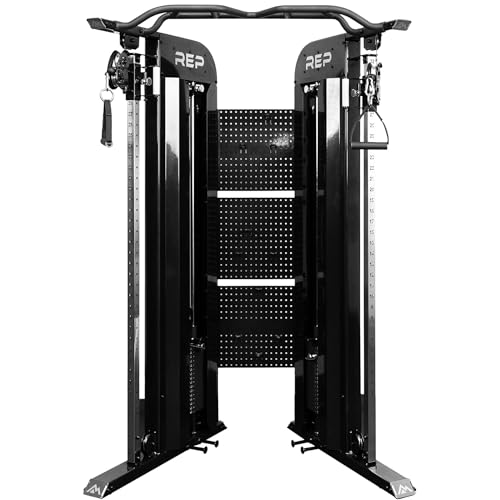
- 32 adjustable cable positions
- Optional stacks up to 220 pounds each
- Built-in storage and band pegs
Best For: Customizable home and garage-gym cable training
Best Compact Plate-Loaded Trainer
Bells of Steel Cable Machine Tower

- Dual cable towers with pull-up and squat-stand functionality
- Compact footprint under 2.5 ft by 2.5 ft
- 8.25-inch loadable sleeves; plates not included
Best For: Space-conscious home gyms using Olympic-style plates
Best Wall-Mounted Plate-Loaded Trainer

- Foldable wall-mounted design saves floor space
- 26 height holes and 13 arm-angle settings
- Switchable 2:1 and 1:1 cable ratios
Best For: Compact home gyms with a suitable wall for mounting
Best All-in-One Plate-Loaded Trainer

- Combines Smith machine, cage, crossover, and storage
- Includes extensive attachments and expandable upgrades
- Heavy-duty 519-pound unit with 1850-pound maximum recommendation
Best For: Dedicated home gyms wanting a complete strength-training station
Compact Plate-Loaded Power

- Compact footprint for home-gym corners
- 17 adjustable pulley positions
- Includes bars, handles, and plate storage
Best For: Space-conscious users seeking a versatile plate-loaded cable trainer
Fold-Away Heavy-Duty Trainer
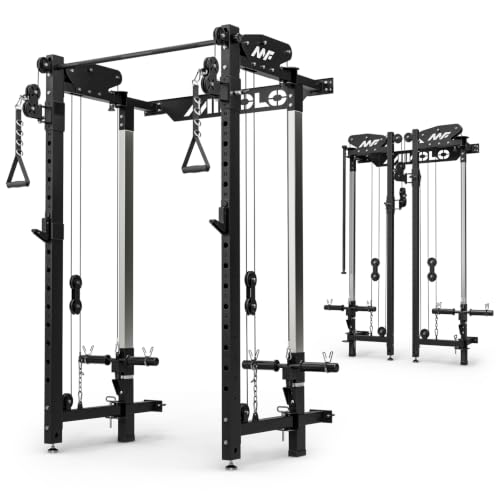
- Folds to about 3 square feet
- Combines rack, crossover, and lat pulldown
- Supports up to 1,000 pounds
Best For: Compact home gyms needing a wall-mounted, high-capacity training system
Selectorized Wall-Mount Alternative

- Built-in 118-pound weight stack
- 19 adjustable pulley positions
- Includes essential cable attachments
Best For: Users wanting quick, pin-selected resistance in a compact wall-mounted station
Best Budget Plate-Loaded Trainer – Bells of Steel Cable Machine
For shoppers comparing plate loaded functional trainers, the Bells of Steel Cable Machine is a compact, straightforward option with a 2:1 ratio and loadable weight sleeves. Its 16 handle-height positions support exercises ranging from chest flies and triceps pushdowns to glute work, while the 81-inch height can fit rooms with standard nine-foot ceilings.
Best For: Home-gym users who want adjustable cable training without an integrated weight stack.
Pros:
- 16 cable handle-height positions provide broad exercise adjustability.
- 8.25-inch weight sleeves accept standard plates and microplates.
- Smooth aluminum pulleys, a multi-grip pull-up bar, and storage hooks are included.
- Compact 56-by-32-inch footprint and limited lifetime warranty.
Cons:
- Weight plates are not included, so the total setup cost depends on your existing plates.
- Ships unassembled.
- The 250-pound cable capacity is lower than some heavier-duty options.
This is a practical pick when footprint, adjustability, and plate compatibility matter most. Its 250-pound capacity and included d-handles cover many home workouts, though higher-volume users may prefer a larger trainer.
Best High-Capacity Cable System – Altas Strength 3073 Functional Trainer
Although the Altas Strength 3073 uses integrated weight stacks rather than plates, it is a useful comparison point among plate loaded functional trainers for buyers prioritizing convenience and high resistance. Dual 220-pound stacks, a 2:1 ratio, and a 2.5mm steel frame create a substantial cable station for garage or basement gyms.
Best For: Lifters who want a broad full-body cable system with built-in resistance and extensive attachments.
Pros:
- Dual 220-pound stacks provide 440 pounds of total selectorized weight.
- 2:1 pulleys support smooth, continuous cable tension.
- Compact cable-crossover design covers exercises including pulldowns, rows, flys, curls, and woodchoppers.
- Includes lat bars, row handles, and ankle straps.
Cons:
- It is not plate loaded, so it may not suit shoppers specifically seeking weight-plate compatibility.
- At 65 inches wide and 84 inches high, it requires more room than smaller trainers.
- Parts warranty is limited to one year.
The 3073 makes the most sense when quick weight changes and a fully equipped station are more important than using your existing plates. Its wide frame and 1,000-pound maximum recommendation call for a dedicated training area.
Best Assisted Bodyweight Station – GMWD Assisted Chin-Dip Machine
The GMWD TX01 is a specialized alternative to conventional plate loaded functional trainers. Its plate-loaded 1:1 counterweight system assists pull-ups and chin-ups while also supporting dips and core work, making it a focused choice for upper-body bodyweight training in a relatively compact home-gym setup.
Best For: Users building toward unassisted pull-ups and dips who also want a dedicated core-training station.
Pros:
- Combines assisted pull-ups, chin-ups, dips, and core training in one machine.
- 1:1 counterweight system provides direct loading for assistance.
- 600-pound capacity with each weight holder supporting up to 150 pounds.
- Triangular structure and 11-gauge, 3mm steel construction are designed for stability.
Cons:
- It is an assisted chin-dip machine, not a general-purpose functional trainer.
- Its listed 88.6-inch height requires careful ceiling clearance.
- Recommended athlete height is approximately 5.0 to 6.2 feet.
Choose this machine when pull-up and dip progression is the priority. The plate-loaded counterbalance is cost-conscious and direct, but its exercise range is narrower than a multi-position cable trainer.
Best Adjustable Cable Trainer – REP Fitness Arcadia Functional Trainer
The REP Fitness Arcadia is a versatile alternative for shoppers researching plate loaded functional trainers but open to dual weight stacks. With 32 cable positions, a 2:1 ratio, and optional stack upgrades to 220 pounds per side, it offers fine positioning and progressive resistance for home and garage gyms.
Best For: Lifters who want extensive cable-position adjustment, built-in organization, and upgrade flexibility.
Pros:
- 32 cable positions accommodate varied movement paths and user proportions.
- Dual stacks reach 170 pounds each, with an option to upgrade to 220 pounds each.
- Built-in storage and integrated band pegs add setup flexibility.
- Includes two steel D-handles and supports many additional attachments.
Cons:
- It uses weight stacks rather than plate-loaded sleeves.
- Attachment packages and stack upgrades are optional.
- Pop-pins, pulleys, bearings, and cables have a one-year warranty, separate from the frame warranty.
The Arcadia is a strong fit for users who value precise cable placement and a clean, organized station. Its 80.8-inch height and 55.3-inch width suit many home gyms, while optional upgrades let the resistance grow with your training.
Best Compact Plate-Loaded Trainer – Bells of Steel Cable Machine Tower
If you want plate loaded functional trainers without giving up much floor space, this Bells of Steel tower combines dual cable stations, a pull-up bar, and squat-stand functionality in a footprint smaller than 2.5 by 2.5 feet. It uses loadable sleeves rather than a weight stack and must be bolted down for safe use.
Best For: Home gyms needing a compact, plate-loaded cable tower that can also support pull-ups and squat-stand exercises.
Pros:
- Compact design with dual cable towers and a knurled pull-up bar.
- Includes a back upright and universal slot brackets for floor, wall, or compatible rack mounting.
- 8.25-inch loadable sleeves support up to 250 pounds of tension.
- Limited lifetime warranty and customer support.
Cons:
- Plates and mounting hardware are not included.
- Must be bolted down, so installation is less flexible than a freestanding unit.
- Attachment options such as J-cups are additional purchases.
This is a strong space-conscious choice for lifters who already own plates and want a functional cable station with squat and pull-up capability. Budget for secure mounting and any extra attachments you need.
Best Wall-Mounted Plate-Loaded Trainer – GMWD Cable Machine
For plate loaded functional trainers in a tight room, the GMWD wall-mounted cable machine offers adjustable dual swivel arms and a foldable design. Its dual-cable bracket can switch between 2:1 and 1:1 resistance ratios, giving you a way to adjust feel and loading for different exercises.
Best For: Home gym users who want a foldable wall-mounted cable crossover with broad adjustment range and included attachments.
Pros:
- Supports more than 100 listed exercise options, including presses, flyes, rows, curls, and pushdowns.
- 26 height adjustment holes, 13 arm-angle settings, and 180-degree arm movement.
- Folds flat against the wall when not in use.
- Includes a lat bar, cable bar, dual-cable bracket, leg holder, and mounting hardware.
Cons:
- Wall mounting is required, limiting placement flexibility.
- Installation needs a suitable wood or concrete mounting surface.
- Warranty coverage is one year.
The GMWD stands out when storage efficiency and adjustability matter more than a freestanding frame. Confirm your wall can support the installation and plan around its 350-pound maximum weight recommendation.
Best All-in-One Plate-Loaded Trainer – RitFit M1 Pro Smith Machine
The RitFit M1 Pro is a larger all-in-one option among plate loaded functional trainers, combining a Smith machine, cable crossover, power cage, storage, and numerous attachments. It occupies a 63-by-47.8-inch footprint and is designed for users who want one central strength-training station rather than a standalone cable tower.
Best For: Dedicated home gyms seeking a comprehensive Smith machine and cable crossover system with room to expand.
Pros:
- Combines Smith machine, cable crossover, power cage, and storage in one unit.
- Dual slide rails, aluminum pulleys, and stainless steel composite components support smooth cable movement.
- Includes landmine, T-bar, dip handles, lat pulldown bar, band pegs, pulley handles, and other accessories.
- Offers six weight-plate holders plus additional bar and gear storage.
Cons:
- At 519 pounds, it is substantially heavier and less portable than compact cable towers.
- The 85.3-inch height and roughly 20.91-square-foot footprint require dedicated space.
- Some upgrades, including a weight stack and lat-pulldown or leg-holder attachments, are optional.
This is the most complete training ecosystem of the three, but it makes sense only if you have the room and intend to use its rack, Smith, cable, and storage features. Its multi-package delivery and assembly requirements should also be planned for.
Compact Plate-Loaded Power – Mikolo Cable Crossover
If you want plate loaded functional trainers for a home gym corner, this Mikolo cable crossover emphasizes a compact footprint, adjustable pulley positions, and a 350-pound supported capacity. Its high and low pulley systems cover exercises such as lat pulldowns, seated rows, cable flies, and pull-ups.
Best For: Home-gym users who want a compact, plate-loaded cable machine with storage and included attachments.
Pros:
- Compact 52 x 56 x 82-inch design occupies about 20 square feet.
- 17 height positions help accommodate different exercises and users.
- Includes a lat pulldown bar, row bar, and two strap cable handles.
- Storage hooks and weight poles keep attachments and plates organized.
Cons:
- Weight plates are not listed as included.
- At 154 pounds, setup and positioning may require planning.
- Its 350-pound capacity is lower than the heavier-duty option in this roundup.
This is a practical choice when floor space matters but you still want a broad range of cable movements. The adjustable pulleys, storage features, and included bars make it a well-rounded home setup.
Fold-Away Heavy-Duty Trainer – Mikolo Wall-Mounted Rack
Among plate loaded functional trainers, this Mikolo package stands out by combining a folding squat rack, cable crossover, lat pulldown, and pull-up station. It folds to approximately 3 square feet when stored and supports up to 1,000 pounds, making it suited to users who need versatility in a limited space.
Best For: Home-gym users who want a wall-mounted, foldable rack with cable-training and heavy-load capability.
Pros:
- Folds from about 9.5 square feet open to 3 square feet when stored.
- Combines a power rack, crossover, lat pulldown, and pull-up bar.
- Independent 1:1 pulley system supports supersets and drop sets.
- 2 x 2-inch, 14-gauge steel construction is rated for up to 1,000 pounds.
Cons:
- Wall mounting and reinforced installation are required.
- The 30 x 68 x 86-inch dimensions need adequate wall and ceiling clearance.
- Only a one-year manufacturer warranty is listed.
This is the strongest fit for buyers prioritizing load capacity and multifunctionality over simple installation. Its folding design helps reclaim floor space, while the rack and cable functions support a wide range of full-body training.
Selectorized Wall-Mount Alternative – Mikolo Cable Station
Although many plate loaded functional trainers rely on added plates, this Mikolo wall-mount cable station uses a built-in 118-pound weight stack. It offers 19 adjustable pulley positions, a dual pulley system, and included attachments for cable crossovers, lat pulldowns, rows, and other home-gym exercises.
Best For: Users who prefer fast, pin-selected resistance and a space-saving wall-mounted cable station.
Pros:
- Built-in 118-pound selectorized weight stack simplifies resistance changes.
- 19 adjustable positions support varied training angles.
- Included lat bar, triceps rope, and handles expand exercise options.
- 14-gauge steel and reinforced wall brackets are designed to reduce wobble.
Cons:
- It is not a traditional plate-loaded design.
- Its listed resistance is lower than the plate-capacity ratings of the other options.
- Wall installation is necessary.
This station is a convenient alternative for buyers who value quick adjustments and a tidy setup more than unlimited plate loading. The optional cable adapter can provide a 1:1 pull ratio, while the compact wall-mounted format preserves floor space.
How We Picked the Best Plate Loaded Functional Trainers
We selected machines that support functional cable training and offer a practical fit for home or garage gyms. We compared plate-loading systems, optional or integrated weight stacks, pulley ratios, cable travel, attachment compatibility, adjustment points, frame design, and installation demands. We also considered whether each machine is best suited to general strength training, bodybuilding accessories, compact spaces, or a more complete rack-based setup.
Because these products vary widely, the most expensive or feature-rich option is not automatically the best choice. A wall-mounted station may be ideal for a small room, while a cage-based system can provide a more complete foundation for barbell training.
Quick Comparison
- Best for broad versatility: Choose a full functional trainer with independent adjustable pulleys and substantial cable travel.
- Best for plate owners: Look for plate-loaded towers or leverage systems that avoid the cost and footprint of a large weight stack.
- Best for compact rooms: Wall-mounted or folding designs preserve floor space but require suitable structural mounting.
- Best all-in-one solution: Smith machine, power cage, cable crossover, and lat-pulldown combinations can replace several separate stations.
- Best for smoother training: Weight-stack models typically offer faster adjustments and more predictable resistance between sets.
Key Buying Factors for Plate-Loaded Functional Trainers
Loading Style and Capacity
Plate-loaded machines work well if you already have compatible plates, but confirm sleeve diameter, maximum capacity, and whether plates are included. A stack model may be more convenient for frequent supersets, while a plate-loaded design can offer simpler maintenance and easier incremental upgrades.
Pulley Ratio and Cable Motion
A 1:1 ratio generally provides more direct resistance, while a 2:1 ratio often makes the cable feel lighter and increases usable cable travel. Check whether both pulleys move independently, swivel smoothly, and reach the positions required for your exercises.
Adjustability and Attachments
Count the pulley positions, inspect the adjustment range, and verify which handles, bars, ankle straps, and lat attachments are included. More positions improve exercise variety, but only if the machine remains easy to adjust.
Space, Mounting, and Stability
Measure ceiling height, wall clearance, and the full working area—not just the frame footprint. Wall-mounted units need appropriate studs or reinforcement. Freestanding machines may need floor anchoring or careful loading to remain stable during heavy pulls.
Who Should Buy Which Plate Loaded Functional Trainers?
Choose a plate-loaded tower if you want cable training with straightforward maintenance and already own Olympic plates. Choose a dual-stack functional trainer if multiple users need quick resistance changes or you prioritize convenience. Choose a rack-and-cable combination if you want one centerpiece for squats, presses, pull-ups, pulldowns, and cable work. Choose a wall-mounted or folding model if floor space is limited and you can install it securely. Finally, consider a leverage-assisted pull-up and dip machine if bodyweight progression is a major training goal alongside cable exercises.