The best bike tubeless sealants help prevent small punctures from ending a ride, but formulas differ in sealing speed, hole size, longevity, and maintenance needs. The right choice depends on your tire volume, riding conditions, and how often you service your setup.
This roundup compares 10 popular options, including fast-sealing formulas, endurance-focused blends, fiber-enhanced sealants, and kits that include an injector for cleaner installation.
Best 10 Bike Tubeless Sealants Picks for 2026
All-Round Classic
Stan's NoTubes Original Sealant

- Seals punctures up to 6.5mm
- Works across road, gravel, and MTB tires
- Stays liquid for 2–7 months
Best For: Versatile everyday tubeless protection
High-Volume Pick
Muc-Off No Puncture Hassle Sealant

- 1-liter bottle for repeated use
- Seals holes up to 6mm
- UV dye helps locate punctures
Best For: Frequent riders and multi-bike setups
Compact Original
Stan's NoTubes Compact Sealant

- Seals punctures up to 6.5mm
- Compatible with road, gravel, and MTB
- Remains liquid for 2–7 months
Best For: Single-bike setups and compact storage
Cold-Weather Specialist

- Works down to 15°F
- Seals punctures up to 6mm
- Ammonia-free synthetic latex formula
Best For: Cold, wet, and harsh riding conditions
Best High-Capacity Pick

- 500ml bottle for repeated maintenance
- Seals punctures up to 1/4 inch
- Includes injector and valve tool
Best For: MTB and road riders wanting a larger sealant supply
Best Versatile Formula

- For MTB, road, gravel, CX, and e-bikes
- Seals punctures up to 1/4 inch
- Includes injector; works in low temperatures
Best For: Multi-discipline riders seeking broad tire compatibility
Best Portable Refills
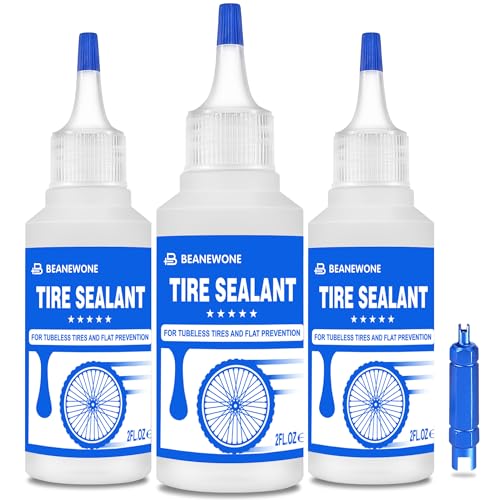
- Three pre-measured 2oz bottles
- Compact for packs and bike pouches
- Includes valve core removal tool
Best For: Touring, camping, and mountain-bike emergency kits
Best High-Solid-Content Pick
NOVATOR High Performance Sealant

- Up to 37% rubber solid content
- Stays liquid for 5–9 months, sometimes longer
- Includes micro-fiber and a valve tool
Best For: Riders seeking concentrated, long-lasting sealant for road, gravel, MTB, or CX tires
Best Compact Endurance Option

- 2–3 times longer-lasting than standard formulas
- Seals punctures up to 1/4 inch and slices up to 1/2 inch
- Includes an injector in a compact 4-ounce size
Best For: Routine top-offs and mixed-surface riders wanting a portable endurance formula
Best Bulk Refill
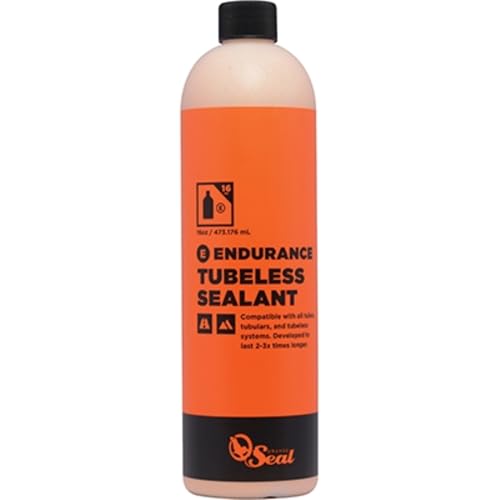
- Large 16-ounce refill bottle
- Designed to last 2–3 times longer than standard sealants
- Seals punctures up to 1/4 inch and slices up to 1/2 inch
Best For: Home workshops, multiple bikes, and frequent tubeless servicing
All-Round Classic – Stan's NoTubes Original Sealant
Stan’s NoTubes Original is a versatile choice among bike tubeless sealants, designed for road, gravel, mountain, cyclocross, and commuter tires. It remains liquid inside the tire for 2–7 months and is rated to seal punctures up to 6.5mm.
Best For: Riders seeking an all-around sealant with broad tire compatibility and long-lasting preventive protection.
Pros:
- Seals punctures up to 6.5mm (¼ inch).
- Compatible with tubeless road, gravel, and mountain bike tires.
- Remains liquid inside tires for 2–7 months.
- Can be installed through the valve with Stan’s injector.
Cons:
- The latex formula may not suit riders specifically seeking a latex-free option.
- Maintenance may still be needed after its stated 2–7-month liquid life.
Its wide compatibility and strong puncture-sealing rating make it a practical default for mixed-terrain riders who want one dependable sealant for several bikes.
High-Volume Pick – Muc-Off No Puncture Hassle Sealant
Muc-Off No Puncture Hassle is a high-volume option for bike tubeless sealants, supplied here in a 1-liter bottle. It is made for tubeless-ready and full UST wheels and tires, seals holes up to 6mm, and includes UV detection dye for locating punctures.
Best For: Mountain, downhill, enduro, and road riders who want a large bottle and visible puncture detection.
Pros:
- Seals holes and tears up to 6mm.
- Suitable for tubeless-ready and full UST wheels and tires.
- Lasts up to six months in temperate climates.
- UV dye helps highlight punctures under UV light.
Cons:
- The 1-liter bottle is less convenient for riders wanting a compact quantity.
- The stated six-month lifespan applies to temperate climates.
The generous volume is useful for frequent sealant top-ups or multiple bikes, while the UV dye adds a helpful diagnostic feature for tracking leaks.
Compact Original – Stan's NoTubes Compact Sealant
This compact Stan’s NoTubes formula is a straightforward choice among bike tubeless sealants. It is intended for road, gravel, and mountain use, seals punctures up to 6.5mm, and remains liquid inside tires for 2–7 months.
Best For: Riders who want Stan’s all-around formula in a smaller bottle for individual bikes or easier workshop storage.
Pros:
- Seals punctures up to 6.5mm (¼ inch).
- Works with road, gravel, and mountain tires.
- Provides 2–7 months of liquid protection inside the tire.
- Supports valve installation with a Stan’s sealant injector.
Cons:
- The latex material is not intended for riders seeking latex-free sealant.
- Its smaller package may be less suitable for servicing several bikes.
With the same broad-use positioning and sealing capability as the classic formula, this version is a convenient fit when a smaller package better matches your maintenance routine.
Cold-Weather Specialist – WTB TCS Tubeless Sealant
WTB Tubeless Bike Tire Sealant (32 oz) Quick Seal for Punctures up to 6mm, All Conditions
Check Price On AmazonWTB TCS is a notable option among bike tubeless sealants for riders facing wet, harsh, or cold conditions. Its synthetic latex formula is ammonia-free, seals punctures up to 6mm, and is optimized to work at temperatures as low as 15°F (-9.4°C).
Best For: Riders who prioritize cold-weather performance or want an ammonia-free, latex-free sealant formula.
Pros:
- Seals punctures up to 6mm.
- Designed to work in temperatures as low as 15°F.
- Ammonia-free formula is suited to wet and harsh conditions.
- Synthetic latex extends product life and reduces latex-allergy concerns.
Cons:
- The supplied 32-ounce size may be more than needed for occasional users.
- Its cold-weather specialization may be unnecessary for mild climates.
WTB TCS stands out when temperatures and conditions are demanding, making it a strong fit for winter riders and anyone specifically avoiding conventional latex or ammonia-based formulas.
Best High-Capacity Pick – 500ml Sealant with Injector
For riders comparing bike tubeless sealants, this 500ml option stands out for its generous capacity and included injector. It is designed for direct application through the valve stem, so you can refill a mounted tire without breaking the bead.
Best For: MTB and road cyclists who want a larger supply of sealant and an included injection setup.
Pros:
- 500ml capacity provides more sealant for maintenance and repairs.
- Seals punctures up to 1/4 inch (6.5mm), including nail and thorn damage.
- Includes a 120cc injector and valve core removal tool for direct application.
- Stays liquid in tires for approximately 3 to 7 months.
Cons:
- The larger bottle is less convenient to carry than small refill bottles.
- Application requires removing the valve core before injecting.
This is a practical choice when capacity matters more than portability. Its injector kit and stated liquid life make it well suited to home maintenance and longer-term tubeless upkeep.
Best Versatile Formula – Orange Seal Regular Formula
This Orange Seal formula is a versatile option among bike tubeless sealants, covering MTB, road, gravel, cyclocross, and e-bike use. Its natural latex formula is designed to adhere to rubber and seal punctures from inside the tire.
Best For: Riders who want one sealant formula for multiple cycling disciplines and tire types.
Pros:
- Works across MTB, road, gravel, cyclocross, and e-bike applications.
- Seals punctures up to 1/4 inch and slices up to 3/4 inch.
- Rated to perform in temperatures as low as 11°F.
- Includes an injector and is compatible with major tubeless-ready and UST tire brands.
Cons:
- The 4-ounce bottle offers less volume than the larger options in this roundup.
- The product details do not state how long the sealant remains liquid in the tire.
Choose this model if broad compatibility and a clearly specified puncture and temperature range are priorities. The smaller bottle is better suited to limited maintenance needs or riders who prefer a compact quantity.
Best Portable Refills – Three 2oz Sealant Bottles
These compact 2-ounce bottles offer a portable approach to bike tubeless sealants. The three-bottle set is pre-measured for tire maintenance and includes a valve core tool, with a precision nozzle for refilling through the valve stem without removing the tire.
Best For: Mountain bikers, touring cyclists, and campers who want sealant refills that fit in a pack or bike pouch.
Pros:
- Includes three 2-ounce bottles for convenient, pre-measured refills.
- Compact bottles are designed to fit in hydration packs or bike pouches.
- Seals punctures up to 1/4 inch, including damage from nails and thorns.
- Direct application can refill a tire in under 30 seconds without breaking the bead.
Cons:
- Each bottle contains less sealant than the 500ml option.
- The product recommends bi-monthly top-ups, which may require regular maintenance.
This set prioritizes portability and easy replenishment over bulk value. It is a useful fit for riders who want separate doses ready for trips, emergency kits, or scheduled tubeless maintenance.
Best High-Solid-Content Pick – NOVATOR High Performance Sealant
For riders comparing bike tubeless sealants, NOVATOR stands out with a concentrated latex formula and added micro-fiber. It is designed to seal punctures up to 1/4 inch while remaining injectable through the valve stem.
Best For: MTB, road, gravel, CX, and riders who want longer intervals between applications.
Pros:
- Up to 37% rubber solid content for concentrated sealing performance.
- Reportedly stays liquid for 5–9 months, and in some cases up to 12 months.
- Works across temperatures from -25°C to +70°C and includes a valve tool.
- Virtually ammonia-free and designed to be gentle on tires and rims.
Cons:
- The three 3-ounce bottles may require multiple bottles for larger MTB or fat-bike tires.
- Recommended dosage varies considerably by tire size, so setup requires measuring.
NOVATOR is a practical choice when sealing concentration, broad temperature suitability, and extended liquid life are priorities. Its supplied three-bottle format is especially convenient for smaller road or gravel tire applications.
Best Compact Endurance Option – Orange Seal Endurance 4 oz
Orange Seal Endurance is a dependable option for riders choosing bike tubeless sealants for mixed road, gravel, CX, and MTB use. Its latex formula is intended to remain effective longer than standard sealants while sealing punctures and slices.
Best For: Riders who want a compact 4-ounce bottle with an included injector for routine tubeless maintenance.
Pros:
- Designed to last 2–3 times longer than standard sealants.
- Recommended top-off interval is 60–120 days.
- Nanite particles are engineered to seal punctures up to 1/4 inch and slices up to 1/2 inch.
- Uses biodegradable ingredients and is compatible with major tubeless-ready and UST tire brands.
Cons:
- The 4-ounce size may be insufficient for fully servicing several larger tires.
- It still requires periodic top-offs despite its endurance formula.
With its compact format and injector, this Orange Seal version suits riders who want a straightforward maintenance bottle. The stated 60–120-day top-off range provides a useful planning reference, though actual service intervals can vary.
Best Bulk Refill – Orange Seal Endurance 16 oz
For frequent tubeless maintenance, this 16-ounce Orange Seal Endurance refill offers more sealant than a standard small bottle. It uses the same long-lasting latex formula, with particles designed to seal punctures up to 1/4 inch and slices up to 1/2 inch.
Best For: Riders maintaining multiple bikes, servicing larger tires, or looking for a bulk refill format.
Pros:
- 16-ounce refill size is useful for repeated applications and multiple tires.
- Formula is designed to last 2–3 times longer than standard sealants.
- Recommended top-offs are spaced 60–120 days apart.
- Compatible with major tubeless-ready and UST tire brands and a range of rubber compounds.
Cons:
- This refill format does not list an included injector or valve tool.
- The larger bottle is less convenient for carrying on rides than a compact container.
This is the most practical option of the three for home workshop use or riders with several tubeless setups. Choose it when refill volume matters more than portability, and use a suitable injector or transfer method for installation.
How We Picked the Best Bike Tubeless Sealants
We focused on sealants designed for bicycle tubeless systems across mountain, gravel, road, cyclocross, and general trail use. Products were compared by their stated puncture-sealing capability, expected service life, application method, available sizes, and suitability for different riding conditions.
Because real-world performance varies with tire pressure, puncture type, temperature, and sealant age, advertised hole sizes are best treated as useful benchmarks rather than guarantees. We also included both quick-sealing formulas and longer-lasting options so riders can match maintenance preferences to their riding habits.
Quick Comparison
| Best For | What to Look For | Recommended Type |
|---|---|---|
| Fast trail repairs | Rapid sealing and larger puncture claims | Quick-sealing MTB formula |
| Long service intervals | Endurance formulation and slower evaporation | Long-lasting sealant |
| Road and gravel | Low rolling resistance, reliable small-hole sealing | Standard or endurance formula |
| Easy installation | Included injector or compatible applicator | Sealant kit with injector |
| Mixed riding | Broad temperature and tire compatibility | All-conditions formula |
Key Buying Factors for Bike Tubeless Sealants
Sealing Speed and Puncture Size
Fast-sealing formulas are useful for aggressive trail riding and higher-risk terrain. Check the manufacturer’s claimed puncture limit, but remember that larger cuts, sidewall damage, and elongated punctures may still require a plug or tire repair.
Longevity and Maintenance
Sealant gradually dries out, especially in hot or dry climates. Endurance formulas can reduce refill frequency, while standard blends may prioritize quicker sealing. Inspect the tire periodically rather than relying only on a stated service interval.
Climate and Riding Conditions
Temperature affects viscosity and drying time. Riders in hot environments, dusty areas, or regions with frequent thorns may benefit from a durable formula and more frequent checks. For winter or wet riding, verify that the product is intended for those conditions.
Volume and Application
Choose enough sealant for your tire size: larger MTB tires generally need more than road tires. Bottles with narrow nozzles or an injector make installation easier and help prevent spills. Never inject sealant through a removable valve core unless the applicator and formula are compatible.
Compatibility
Confirm that the sealant is suitable for tubeless-ready bicycle tires and rims. Follow the manufacturer’s guidance for latex sensitivity, tire inserts, valves, and storage. Shake the bottle thoroughly before use so suspended particles are distributed evenly.
Who Should Buy Which Bike Tubeless Sealants?
Trail and MTB riders: Choose a fast-sealing formula with strong puncture performance, particularly if sharp thorns and rocky terrain are common.
Road and gravel riders: Favor a smooth, dependable formula that handles smaller punctures without requiring frequent maintenance. Endurance blends are convenient for riders who cover high mileage.
Frequent riders: Larger bottles offer better value when servicing several tires or multiple bikes. An injector kit is worthwhile if you install or refresh sealant often.
Low-maintenance riders: Select a long-lasting formula, then still inspect the tire regularly. No sealant eliminates the need to check for drying or uneven coverage.