A commercial curved treadmill can deliver a demanding, self-powered running experience without relying on a conventional motor. Its curved deck encourages users to control pace naturally while adding a practical option for gyms, studios, athletic facilities, and advanced home setups.
We selected 10 models spanning heavy-duty commercial designs, lighter home-and-light-commercial options, and resistance-based manual runners. Use the guide below to compare construction, controls, footprint, comfort, and long-term value before choosing.
Best 10 Commercial Curved Treadmill Picks for 2026
Best Self-Generated Pick
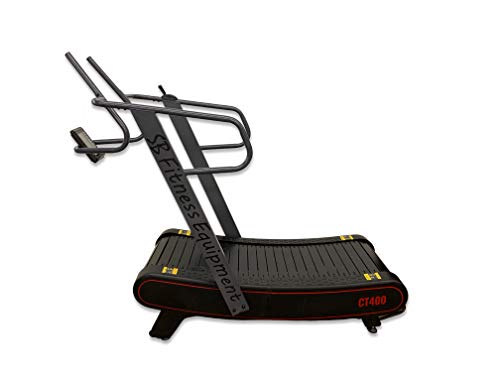
- Self-generated curved design with no stated maximum speed
- Three resistance levels for HIIT and strength training
- 375-pound capacity with digital workout tracking
Best For: High-intensity manual training and sport-specific workouts
Best Smart Powered Alternative

- 16-inch pivoting touchscreen with iFIT compatibility
- 12 MPH speed and -3% to 12% incline range
- Folding 22-inch-wide deck with RunFlex cushioning
Best For: Connected home running and guided incline workouts
Best App-Friendly Home Curved Treadmill

- No speed limit with eight magnetic resistance levels
- Free SunnyFit app access through Bluetooth
- 330-pound capacity with shock absorption and transport wheels
Best For: Flexible home walking, jogging, sprinting, and app workouts
Best High-Capacity Commercial Model
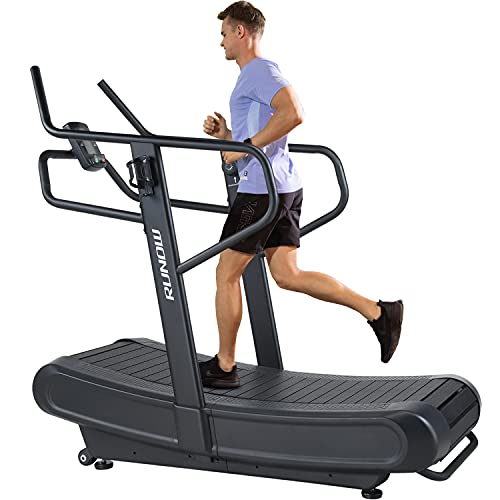
- Commercial-grade manual design with 450-pound capacity
- Four resistance levels for running and HIIT
- LCD tracks pace, wattage, speed, and workout metrics
Best For: Facilities and larger users needing robust manual training
Best Heavy-Duty Value
8-Level Curved Manual Treadmill

- 500-pound capacity with a sturdy alloy-steel frame
- Eight adjustable resistance levels for walking, running, and HIIT
- Spacious belt with LED metrics and transport wheels
Best For: Taller users and demanding home-gym workouts
Best Light-Commercial Pick
SB Fitness CT550 Curved Treadmill

- Light-commercial rating with a five-year manufacturer warranty
- Eight magnetic resistance levels and backlit LCD tracking
- Self-generated design with built-in water bottle holder
Best For: Home or light-commercial cardio and interval training
Best Connected Home Option
Sole Fitness C80 Curved Treadmill

- Motorless curved slat belt responds to the user's stride
- Eight magnetic resistance levels with Bluetooth LCD console
- 19-by-62-inch deck and 330-pound user capacity
Best For: Connected home-gym cardio, running, and sprint intervals
Best Overall
Commercial Curved Treadmill with 4-Level Resistance

- Four resistance levels for walking through HIIT
- 63-by-19-inch belt with 450-pound capacity
- LCD tracking and self-powered operation
Best For: HIIT, sprint training, and high-capacity home gyms
Best Shock Absorption
6-Level Manual Curved Treadmill

- Five-layer rubber belt for cushioned training
- Six resistance levels with instant manual control
- 400-pound capacity and digital workout monitor
Best For: Cushioned running and quieter interval workouts
Best Resistance Range
8-Level Commercial Curved Treadmill

- Advertised eight-level resistance adjustment
- 63-by-19-inch belt for full strides
- LCD display and built-in transport wheels
Best For: Variable-intensity cardio in home or gym settings
Best Self-Generated Pick – SB Fitness CT400
The SB Fitness CT400 is a practical commercial curved treadmill for users who want self-powered training, quick pace changes, and adjustable resistance without relying on a motor. Its curved track supports running, walking, sport-specific drills, and HIIT while the digital display tracks core workout data.
Best For: High-intensity home or facility workouts, especially for users who want a self-generated treadmill with a 375-pound capacity.
Pros:
- Self-generated design has no stated maximum speed and responds immediately to pace changes.
- Three resistance levels support strength-focused and HIIT workouts.
- Flexible track slats provide shock absorption, while the display tracks time, distance, speed, calories, and total miles.
- Includes transport wheels and leveling feet, with a substantial warranty package.
Cons:
- At 145 pounds, it is lighter than some commercial-grade alternatives but still requires suitable floor space.
- The 18-inch deck is narrower than the deck on some powered running treadmills.
- Listed as an open-box product grade.
The CT400 stands out when manual operation, resistance control, and versatile training matter more than powered incline or app-based programming. Its capacity and warranty make it a compelling option for demanding workouts.
Best Smart Powered Alternative – NordicTrack Commercial 1750
Although it is not a manual curved treadmill, the NordicTrack Commercial 1750 is a strong powered alternative for buyers comparing commercial curved treadmill options with connected training. It combines speeds up to 12 MPH, automatic incline and decline, cushioning, folding storage, and an interactive touchscreen.
Best For: Home runners who prioritize guided workouts, powered hills, app connectivity, and a larger running deck.
Pros:
- 16-inch pivoting touchscreen supports on- and off-treadmill iFIT workouts.
- 12 MPH speed range and -3% decline to 12% incline support varied endurance training.
- 22-inch-wide, 60-inch-long deck and RunFlex cushioning suit regular running.
- Folding frame, Bluetooth connectivity, and integrations with Strava, Garmin Connect, and Apple Health add convenience.
Cons:
- Requires corded electric power rather than self-generated operation.
- Many advanced features require an iFIT Pro Membership.
- At 265.7 pounds, it is substantially heavier and less simple to relocate than manual models.
The Commercial 1750 is the better fit for a connected home gym than for shoppers specifically seeking a non-motorized curved belt. Choose it for structured programming, incline work, and powered running performance.
Best App-Friendly Home Curved Treadmill – Sunny Smart Curved Treadmill
The Sunny Health & Fitness Smart Curved treadmill offers a flexible commercial curved treadmill-style workout for home users who want manual pacing and resistance control. Its 59-inch belt has no speed limit, while eight magnetic resistance levels and free SunnyFit app access expand training options.
Best For: Home users seeking unrestricted manual walking, jogging, sprinting, and app-connected workouts without a membership fee.
Pros:
- No speed limit lets users set their own walking, jogging, or sprinting pace.
- Eight magnetic resistance levels provide more adjustment than many manual curved models.
- Free SunnyFit app access via Bluetooth includes trainer-led workouts and virtual scenic tours.
- Shock absorption, transport wheels, floor stabilizers, and a 330-pound capacity support practical home use.
Cons:
- Its product grade is listed as home use rather than commercial.
- The 17.7-inch deck is relatively narrow for some runners.
- Heart-rate tracking requires the separately sold HR200 monitor.
This model is a well-rounded choice for home buyers who want a manual curved belt without recurring app fees. Its adjustable magnetic assistance and unrestricted pace make it suitable for both steady sessions and sprint work.
Best High-Capacity Commercial Model – RUNOW 6310CB Curved Treadmill
The RUNOW 6310CB is a commercial curved treadmill designed for users who need a high weight capacity and straightforward manual control. Its non-electric belt responds to the user’s pace, while four resistance settings and a compact LCD provide useful control for running, walking, sport-specific training, and HIIT.
Best For: Facilities, athletes, and larger users who need a commercial-grade manual curved treadmill with a 450-pound capacity.
Pros:
- Commercial product grade and 450-pound maximum recommended weight support demanding use.
- Manual operation eliminates the need for electricity and allows immediate pace changes.
- Four resistance levels support sprinting, jogging, and HIIT progression.
- Five-inch LCD tracks time, distance, calories, wattage, speed, pace, and resistance.
Cons:
- At 287 pounds, it is considerably heavier than the other manual models listed here.
- The listed 48-inch deck length is shorter than the 59- and 60-inch decks of several alternatives.
- It lacks the connected app features found on some newer models.
The 6310CB is the strongest match for buyers who value commercial construction, manual control, and maximum user capacity. Its weight and shorter listed deck should be considered carefully before installation.
Best Heavy-Duty Value – 8-Level Curved Manual Treadmill
For shoppers comparing a commercial curved treadmill for demanding home workouts, this self-powered model emphasizes stability, capacity, and adjustable resistance. Its spacious belt, heavy-duty steel construction, and 500-pound maximum user weight make it suited to walking, running, and HIIT without an electrical outlet.
Best For: Taller users, heavier-duty home gyms, and runners who want eight resistance levels for varied training.
Pros:
- Spacious 78.74-by-35.43-inch running surface supports users up to 6 feet 3 inches tall.
- Eight resistance levels can be adjusted with the side-mounted tension knob.
- Heavy-duty steel frame, rubber belt, 500-pound capacity, and transport wheels.
- LED display tracks time, distance, speed, and calories; phone holder is included.
Cons:
- Heart-rate tracking requires a compatible chest strap or fitness watch, sold separately.
- At 418.5 pounds, it is substantial to reposition despite the transport wheels.
- Requires periodic bolt checks and belt cleaning for maintenance.
This is a strong option when a commercial curved treadmill-style build and high weight capacity matter more than compactness. The no-outlet design adds placement flexibility, while the resistance knob supports both easier sessions and challenging intervals.
Best Light-Commercial Pick – SB Fitness CT550 Curved Treadmill
The SB Fitness CT550 is a practical commercial curved treadmill choice for home or light-commercial settings. Its self-generated power, magnetic resistance, and backlit LCD console provide straightforward interval and cardio tracking without relying on a conventional motor.
Best For: Home users and light-commercial facilities seeking a self-powered treadmill with a bottle holder and long manufacturer warranty.
Pros:
- Eight magnetic resistance levels let users adjust workout intensity.
- Backlit LCD tracks time, speed, distance, calories, and heart rate.
- 20-inch running surface and 11-inch step-up height support accessible use.
- Self-generated operation uses the user’s effort rather than a standard electrical motor.
Cons:
- Its 350-pound maximum user weight is lower than some heavy-duty curved treadmill options.
- The product is rated for light commercial use rather than heavier commercial-duty environments.
- The supplied details list a 20-inch deck width and length, so confirm the dimensions that matter for your stride.
With its light-commercial rating and five-year manufacturer warranty, the CT550 is appealing for buyers who want a simple, self-powered machine for walking, jogging, running, or HIIT. The water bottle holder and LCD heart-rate readout add useful workout conveniences.
Best Connected Home Option – Sole Fitness C80 Curved Treadmill
For buyers considering a commercial curved treadmill but primarily training at home, the Sole Fitness C80 combines a motorless slat belt with eight magnetic resistance levels and Bluetooth connectivity. Its curved deck is designed for walking, running, sprinting, and resistance-focused cardio.
Best For: Home-gym users who want a quieter self-propelled treadmill with Bluetooth-enabled console features.
Pros:
- Self-propelled slat belt accelerates and slows with changes in stride.
- Eight magnetic resistance levels support steady-state cardio and sprint intervals.
- Bluetooth LCD console tracks speed, distance, and heart rate.
- 19-by-62-inch deck, interlocking slat belt, and 330-pound capacity support demanding sessions.
Cons:
- Its 330-pound capacity is lower than some heavy-duty curved treadmill alternatives.
- The product is designated for home use, not commercial or light-commercial use.
- Warranty coverage is one year for parts and labor, with a 90-day cosmetic warranty.
The C80 is a sensible fit when home-gym placement, motorless operation, and connected console features are priorities. Its slat belt and curved deck suit interval work, while the magnetic resistance gives users more control over training intensity.
Best Overall – Commercial Curved Treadmill with 4-Level Resistance
If you want a commercial curved treadmill for demanding home workouts or athletic conditioning, this motorless model combines a spacious 63-by-19-inch belt with four resistance levels. Its self-powered design lets you control pace naturally by moving forward or backward on the belt.
Best For: HIIT, sprint training, endurance workouts, and users who want a high-capacity manual treadmill.
Pros:
- Four resistance levels support walking, jogging, sprinting, and HIIT.
- Wide, long running surface is designed for comfortable strides.
- 450-pound capacity and reinforced steel construction suit demanding training.
- LCD tracks time, speed, distance, calories, and heart rate.
Cons:
- Self-powered operation requires continuous user effort.
- Its 79-inch length and 450-pound steel construction may require substantial floor space.
This is the strongest all-around option for buyers prioritizing capacity, running-surface width, and a commercial-grade build. The two-year parts-replacement warranty and lifetime customer support add useful ownership reassurance.
Best Shock Absorption – 6-Level Manual Curved Treadmill
This commercial curved treadmill is aimed at users who want a more cushioned manual running experience. Its five-layer rubber belt, six-level resistance knob, and all-mechanical construction make it suitable for home gyms and light commercial use.
Best For: Runners seeking added belt cushioning, interval workouts, and quieter motorless training.
Pros:
- Five-layer rubber belt is designed to absorb impact and provide a non-slip surface.
- Six resistance levels allow more intensity adjustment than a basic manual treadmill.
- Heavy-duty steel frame supports up to 400 pounds.
- Digital monitor displays workout metrics including speed, time, distance, calories, pulse, and wattage.
Cons:
- At 316 pounds, it is difficult to reposition without planning.
- The supplied specifications contain an inconsistent maximum-speed listing, so buyers should verify speed details before ordering.
- The listing specifies a one-year warranty.
Choose this model if belt cushioning and resistance control matter more than portability. Its quiet, non-electric design can work well in shared spaces, provided you have room for its heavy frame.
Best Resistance Range – 8-Level Commercial Curved Treadmill
For buyers comparing a commercial curved treadmill by resistance adjustability, this model stands out with an advertised eight-level range and a spacious 63-by-19-inch belt. It is a self-powered option for home or gym cardio and anaerobic training.
Best For: Users who want broad intensity adjustment, quiet operation, and easy treadmill relocation.
Pros:
- Advertised eight resistance levels cover casual walking through sprint training.
- 63-by-19-inch curved belt provides room for unrestricted strides.
- Iron resistance gear is designed for durable, stable adjustments.
- LCD shows time, speed, steps, and calories.
Cons:
- The supplied listing gives conflicting resistance descriptions, referring to both six and eight levels.
- The specifications include an inconsistent 16-ounce maximum-weight entry, so capacity should be confirmed before purchase.
- The listing specifies a one-year warranty.
This model is appealing when a wide belt and extensive resistance adjustment are your priorities. Before buying, confirm the correct resistance count and user-weight specification with the seller.
How We Picked These Commercial Curved Treadmills
We focused on the features that matter most in frequent-use cardio equipment: self-powered operation, frame and belt construction, resistance adjustment, display information, running-surface comfort, user capacity, and intended environment. Because specifications vary widely, we considered whether each treadmill appears suited to a full commercial gym, a studio, a home gym, or lighter commercial use. We also looked for practical details such as water-bottle storage, shock absorption, maintenance demands, and the amount of space needed around the machine.
Models marketed as commercial-grade should still be checked against the manufacturer’s published weight limit, warranty, assembly requirements, and service coverage before purchase.
Quick Comparison
| Best For | What to Prioritize | Typical Advantage |
|---|---|---|
| Busy gyms | Robust frame, durable belt, service support | Better suited to repeated daily use |
| Training studios | Resistance range, compact footprint, simple controls | Flexible programming for intervals |
| Home gyms | Noise, footprint, comfort, warranty | Lower operating complexity |
| Performance athletes | Responsive slat belt and adjustable resistance | More demanding self-powered workouts |
Key Buying Factors for a Commercial Curved Treadmill
Construction and Intended Use
Look for a rigid frame, stable handrails, a well-supported deck, and a belt designed for repeated impact. A unit labeled for light commercial use may be appropriate for a studio or home gym but not for an always-busy fitness center.
Resistance and Running Feel
Resistance levels change how much effort is required to move the belt. More settings provide finer control for sprints, intervals, incline-like effort, and rehabilitation-oriented sessions. If several users will share the machine, choose controls that are easy to adjust while standing safely.
Display and Usability
At minimum, confirm that the monitor tracks useful metrics such as time, speed, distance, calories, or heart rate compatibility. A simple display can be preferable in a commercial setting when reliability and quick user turnover matter more than entertainment features.
Comfort, Space, and Maintenance
Check belt width, shock absorption, step-up height, overall dimensions, and clearance requirements. Manual curved treadmills do not need motor maintenance, but the belt, rollers, frame, and display still require inspection and cleaning. Verify delivery access and whether assembly is included.
Who Should Buy Which Commercial Curved Treadmill?
Choose a heavy-duty commercial model if the treadmill will serve many users daily or support sprint training in a professional facility. A resistance-focused curved runner suits studios and athletes who want challenging interval workouts. Home buyers should favor a quieter, appropriately sized model with clear warranty coverage rather than paying for capacity they will not use. For shared home or light-commercial use, prioritize a balanced combination of durability, adjustable resistance, usable tracking, and straightforward maintenance.