The right cycling jacket for mountain biking can make the difference between a comfortable trail session and a cold, damp ride cut short. The best option depends on your climate, intensity, layering habits, and how much protection you need from wind and rain.
We’ve rounded up 10 jackets spanning lightweight shells, thermal softshells, packable rain layers, and winter-ready designs. Use the guide below to compare protection, breathability, fit, storage, and seasonal versatility before choosing.
Best 10 Cycling Jacket for Mountain Biking Picks for 2026
Trail-Ready Shell
Lightweight MTB Windproof Jacket

- Breathable mesh-lined windproof shell
- Water-resistant coverage for light rain
- Relaxed fit with drop-tail hem
Best For: Layering on windy, changeable mountain-bike rides
Packable Rain Shield
Lightweight Waterproof MTB Jacket

- 10,000mm waterproof protection
- Packs into its own rear pocket
- Underarm vents and reflective details
Best For: Carrying on rides with unpredictable rain
Best Cold-Weather Pick
ROCKBROS Thermal Windproof MTB Jacket

- 320 GSM polar fleece lining for winter warmth
- Windproof, water-resistant outer layer
- Reflective details and multiple storage pockets
Best For: Winter mountain biking and cold-weather outdoor use
Best Relaxed Fit
ROCKBROS Fleece Winter Cycling Jacket

- Thick fleece lining for chilly-weather warmth
- Relaxed US plus-size design allows movement
- Reflective details and four-pocket storage
Best For: Roomier winter rides and outdoor commuting
Best Rain Shell
ROCKBROS Waterproof MTB Windbreaker

- Waterproof-coated fabric with sealed seams
- Lightweight design with underarm and back vents
- Reflective elements for low-light visibility
Best For: Rainy mountain biking and lightweight weather protection
Cold-Weather Utility Pick
Bikewa Men's Thermal Cycling Jacket
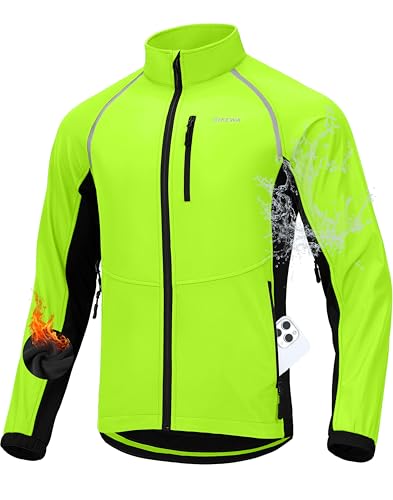
- Three-layer fleece, windproof, and breathable construction
- Eight pockets plus underarm vents
- Reflective details and fluorescent color for visibility
Best For: Winter riders who want warmth, storage, and visibility
Softshell Performance Pick
ARSUXEO Men's Winter Cycling Jacket

- Three-layer softshell with fleece lining
- Medium stretch and room for mid-layers
- Five pockets and reflective logos
Best For: Cool-weather riders seeking flexible warmth and night visibility
Ventilation and Visibility Pick
Baleaf Men's Winter Cycling Jacket

- Three-layer fleece-lined softshell insulation
- Zippered chest vents for ventilation
- Drop-tail hem and broad reflective detailing
Best For: Active winter rides needing airflow and road-spray coverage
Trail-Ready Shell – Lightweight MTB Windproof Jacket
This cycling jacket for mountain biking is a lightweight, relaxed-fit shell designed for changing trail conditions. Its windproof, water-resistant construction, mesh lining, drop-tail hem, and adjustable hood provide practical coverage without the bulk of a heavy winter coat.
Best For: Mountain bikers who want a breathable outer layer for windy descents, light to moderate rain, and room for layering.
Pros:
- Breathable mesh lining helps manage comfort during climbs and descents.
- Water-resistant shell helps repel light to moderate rain and trail spray.
- Relaxed fit accommodates a jersey and mid-layer.
- Drop-tail hem and adjustable hood add useful trail coverage.
Cons:
- Runs large, so check sizing carefully before ordering.
- Water resistance is intended for light to moderate conditions rather than heavy rain.
- Only two pockets are listed.
Choose this jacket when mobility, layering room, and wind protection matter more than maximum storm protection. The off-white polyester shell and loose fit make it a practical all-season trail layer, though riders should account for its generous sizing.
Cold-Weather Defender – Thermal Softshell Cycling Jacket
This cycling jacket for mountain biking is built for winter riding with a three-layer softshell design. A moisture-repelling outer surface, waterproof membrane, and fleece interior combine with stretch panels, extended cuffs, and a drop tail for warmth and movement.
Best For: Winter mountain bikers who need a warm, stretchy jacket for cold rides and changing moisture conditions.
Pros:
- Fleece lining provides added warmth for winter use.
- Waterproof membrane and windbreaker outer layer help protect against wet, cold conditions.
- High-stretch fabric supports mobility on the bike.
- Reflective accents and two pockets add practical riding features.
Cons:
- Stretch inserts are not windproof or waterproof.
- Medium-weight construction may feel too warm for mild conditions.
- Check the revised size chart despite the updated US-oriented sizing.
This is the warmest, most winter-focused option in the group. Its fleece interior and protective layering suit cold-weather trail rides, while the stretch panels help preserve mobility; however, the exposed inserts deserve consideration in wet or highly windy conditions.
Packable Rain Shield – Lightweight Waterproof MTB Jacket
This cycling jacket for mountain biking prioritizes packability and rain protection. The lightweight polyester shell offers 10,000mm waterproof protection, 5,000g breathability, underarm ventilation, reflective detailing, and storage that folds into the rear pocket.
Best For: Riders who want an emergency rain layer that packs down easily for mountain-bike trips, commutes, and mixed outdoor use.
Pros:
- 10,000mm waterproof rating and windproof protection suit wet conditions.
- Folds into its own rear pocket for compact carrying.
- Underarm ventilation helps release heat during active rides.
- Reflective prints improve visibility in low-light conditions.
Cons:
- No-stretch fabric may feel less flexible during technical riding.
- Lightweight design provides less warmth than a thermal jacket.
- Loose-fit shoppers may need to size up according to the listing guidance.
For riders who value low pack weight and dependable rain coverage, this is the most convenient choice. It works best as a shell over riding layers rather than as a standalone cold-weather jacket, and its ventilation helps make it more versatile on climbs.
Fleece-Lined Ride Layer – Windproof Winter Cycling Coat
This cycling jacket for mountain biking combines a brushed fleece interior with wind protection, underarm and back ventilation, and practical storage. It is designed for roughly 45°F to 70°F conditions, with reflective details and light-rain resistance for everyday outdoor riding.
Best For: Cool-weather mountain biking, running, and outdoor rides where warmth, ventilation, and storage are important.
Pros:
- Brushed fleece interior helps retain body heat.
- Underarm and back ventilation helps move moisture away from the body.
- Chest and rear pockets provide useful storage for ride essentials.
- Reflective logo and back stripe improve low-light visibility.
Cons:
- Intended for light rain, not moderate or heavy rainfall.
- Riders wearing a thick jersey may need to size up.
- Hand-wash care may be less convenient than machine washing.
This jacket is a sensible middle-ground layer for cool rides when fleece warmth is useful but a full rain shell is unnecessary. Its ventilation and pocket layout are practical for longer outings, while the stated temperature range helps set realistic expectations.
Best Cold-Weather Pick – ROCKBROS Thermal Windproof MTB Jacket
If you need a cycling jacket for mountain biking in chilly fall or winter conditions, this ROCKBROS model emphasizes fleece warmth, wind protection, and practical ride-focused details. Its extended rear hem, ventilation panels, storage pockets, and reflective trim make it suited to active cold-weather outings.
Best For: Winter mountain biking, commuting, hiking, and other cold-weather activities.
Pros:
- 320 GSM polar fleece lining helps retain body heat.
- Windproof, water-resistant outer layer and extended rear hem provide added weather coverage.
- Six back and shoulder vents plus side mesh panels help release excess heat.
- Reflective strips, multiple pockets, and a touchscreen sleeve add ride-friendly utility.
Cons:
- The fit runs small; sizing up may be necessary, especially for a looser fit.
- Hand-wash care is required.
- The fabric has low stretch.
This is the strongest choice of the three for insulated winter riding, particularly when warmth and visibility matter. It is water-resistant rather than designed for heavy rain, so consider a dedicated rain shell for sustained wet conditions.
Best Relaxed Fit – ROCKBROS Fleece Winter Cycling Jacket
For riders who prefer extra room, this cycling jacket for mountain biking uses a relaxed US plus-size fit with a thick fleece lining and wind-resistant outer fabric. It is designed for chilly conditions while adding ventilation, reflective details, and ample zippered storage.
Best For: Cold-weather rides, commuting, exercise, and riders who want a roomier fit.
Pros:
- Full fleece lining and wind-resistant construction are optimized for approximately 20°F to 50°F weather.
- Shoulder and back cutouts help release heat during extended activity.
- Water-repellent fabric resists light rain, splashes, and morning dew.
- Multiple zippered pockets and all-around reflective details improve practicality and visibility.
Cons:
- It is not intended for heavy rain or prolonged soaking.
- The heavyweight construction may feel warmer and bulkier during intense rides.
- Hand-wash care is required.
This jacket stands out when comfort and coverage take priority over a close performance fit. Its loose silhouette works well for commuting and casual mountain-bike outings, while the ventilation helps offset the substantial fleece insulation.
Best Rain Shell – ROCKBROS Waterproof MTB Windbreaker
When rain protection is the priority, this lightweight cycling jacket for mountain biking uses coated fabric, sealed seams, and a waterproof zipper to help block wet weather. Underarm and back vents, an elastic hem, and reflective elements make it a practical shell for variable outdoor conditions.
Best For: Rainy mountain biking, road cycling, commuting, and lightweight outdoor layering.
Pros:
- Waterproof-coated polyester, sealed seams, and a waterproof zipper help protect against rain.
- Underarm and back ventilation holes support breathability during exercise.
- Lightweight design, elasticated hem, and double zippers support active movement.
- Reflective elements on the front, back, and shoulder improve low-light visibility.
Cons:
- The jacket provides weather protection but is not described as insulated for winter warmth.
- The sizing runs small; sizing up may be needed for a looser fit.
- Hand-wash care is required.
This is the most suitable option for wet-weather rides and packable-style layering among these three products. Choose it over the fleece jackets when waterproofing and lower weight matter more than built-in insulation.
Cold-Weather Utility Pick – Bikewa Men's Thermal Cycling Jacket
If you need a cycling jacket for mountain biking in cold, changeable weather, the Bikewa combines a windproof outer layer, breathable membrane, and fleece lining. Its water-resistant finish, underarm vents, long silicone-grip hem, and bright color make it practical for winter rides and low-light conditions.
Best For: Winter mountain biking, road cycling, and outdoor activities when storage capacity and visibility matter.
Pros:
- Three-layer construction balances warmth, wind protection, and breathability.
- Eight utility pockets provide substantial storage for riding essentials.
- Reflective details and fluorescent coloring support visibility in low light.
- Underarm vents and a silicone waist grip add practical ride comfort.
Cons:
- The regular, no-stretch fit may offer less flexibility than a stretch softshell.
- Its medium-weight fleece construction is aimed at winter use rather than mild-weather layering.
This is a storage-focused winter cycling jacket with useful ventilation and visibility features. Choose it when warmth, pockets, and weather resistance take priority over a highly flexible fit.
Softshell Performance Pick – ARSUXEO Men's Winter Cycling Jacket
The ARSUXEO is a cycling jacket for mountain biking designed around cold-weather comfort, with a three-layer softshell, fleece lining, and medium stretch. It is rated in the supplied notes for roughly 40–55°F conditions and adds reflective logos, an anti-slip strip, and elongated cuffs for riding practicality.
Best For: Mountain bikers and cyclists riding in cool-to-cold conditions who want a flexible softshell with accessible storage.
Pros:
- Softshell construction combines water resistance, wind protection, breathability, and fleece warmth.
- Medium stretch and room for mid-layers support flexible cold-weather use.
- Five pockets offer space for essentials, including a rear zippered pocket.
- Four reflective logos help improve visibility during night rides.
Cons:
- The stated temperature range may require additional layers in colder conditions.
- Three rear pockets are open, so they may provide less security than zippered storage.
With a classic cycling fit and stretch softshell fabric, this jacket suits riders who want a balance of warmth and mobility. It is especially compelling for cool-weather and evening rides where reflective detailing is useful.
Ventilation and Visibility Pick – Baleaf Men's Winter Cycling Jacket
For mountain biking in cold weather, the Baleaf combines a three-layer insulated softshell with two zippered chest vents. The drop-tail hem, silicone gripper, reflective accents, and four utility pockets make this cycling jacket practical for active winter riding and wet road spray.
Best For: Winter cyclists and mountain bikers who prioritize ventilation, road-spray coverage, and low-light visibility.
Pros:
- Fleece-backed three-layer construction provides warmth and wind protection.
- Two zippered chest vents help release excess heat during exertion.
- Drop-tail hem and silicone gripper help protect against spray and jacket movement.
- Reflective elements appear across the chest, elbows, back, and pocket.
Cons:
- Four pockets provide less storage than some competing winter cycling jackets.
- The standard-length design may offer less rear coverage than a longer jacket.
The Baleaf stands out for ventilation and ride-specific coverage rather than maximum pocket capacity. Its form fit, stretch, reflective detailing, and drop-tail hem make it a strong option for active winter rides.
How We Picked the Best Cycling Jacket for Mountain Biking
We focused on jackets designed for active cycling rather than casual outerwear. The selection includes lightweight windbreakers, water-resistant and waterproof shells, fleece-lined thermal jackets, and relaxed-fit winter models. We considered the features that matter most on trails: weather protection, breathability, mobility, warmth, packability, pocket space, and suitability for layering.
Because trail conditions vary widely, no single jacket is ideal for every rider. A breathable shell may be best for fast rides in changeable weather, while an insulated softshell is more useful for cold-weather starts and lower-intensity outings.
Quick Comparison
| Jacket type | Best for | Main advantage | Potential trade-off |
|---|---|---|---|
| Lightweight shell | Windy or mixed-weather rides | Low bulk and easy layering | Limited insulation |
| Packable rain jacket | Showers and emergency coverage | Stores easily in a pack | May feel less breathable during hard climbs |
| Thermal softshell | Cool-weather mountain biking | Warmth, stretch, and wind resistance | Bulkier than a shell |
| Fleece-lined winter jacket | Cold-season rides | Strong insulation and comfort | Can be too warm for high-output riding |
Key Buying Factors for a Cycling Jacket for Mountain Biking
Weather Protection
Windproof fabric is valuable on exposed descents, while water resistance helps with light rain and trail spray. For sustained downpours, look for a jacket specifically described as waterproof and check whether the seams and zippers provide additional protection.
Breathability and Ventilation
Mountain biking involves repeated climbs and descents, so overheating is a common problem. Breathable materials, vent panels, and two-way or adjustable zippers can help release heat. If you ride hard, prioritize ventilation over maximum insulation.
Warmth and Layering
Thermal or fleece-lined jackets work well in cold conditions, but they should leave enough room for a base layer without restricting your arms or shoulders. A lightweight shell is more versatile when temperatures change throughout the day.
Fit, Mobility, and Storage
Choose a cycling-specific cut that allows a forward riding position without excessive fabric catching on branches. Adjustable cuffs and hems improve coverage, while secure pockets are useful for keys, a phone, gloves, or snacks. A packable design is especially practical for unpredictable forecasts.
Who Should Buy Which Cycling Jacket for Mountain Biking?
For Wet-Weather Versatility
Choose a lightweight waterproof or water-resistant shell if you need protection that can be carried on nearly every ride. This style is best for riders who value low weight and flexible layering.
For Cold and Windy Trail Rides
A thermal softshell or fleece-lined winter jacket is the better choice when warmth matters more than packability. These jackets suit early-morning rides, winter commuting, and slower-paced trail sessions.
For High-Output Riders
Look for breathable, lightweight construction with room for a moisture-wicking base layer. Avoid excessive insulation unless you regularly ride in genuinely cold conditions.
For Casual and Mixed-Use Riders
A relaxed-fit thermal jacket offers comfort for cycling, hiking, and everyday outdoor use. It may be less aerodynamic, but the extra room can make layering easier.
Before buying, match the jacket’s protection and insulation to your usual temperature range, then verify the size chart and return policy. The best Cycling Jacket for Mountain Biking is the one that keeps you dry and comfortable without limiting movement or causing overheating.