The best down sleeping bags balance warmth, weight, packability, and comfort without making campsite nights harder than they need to be. This roundup compares 10 options for backpacking, cold-weather camping, and relaxed outdoor trips.
Use the buying guide below to match temperature ratings, fill power, shape, size, and features to the way you camp.
Best 10 Down Sleeping Bags Picks for 2026
Cold-Weather Ultralight Pick
Naturehike 0 Degree Down Sleeping Bag

- RDS-certified 650-fill duck down
- U-neck collar and dual wind bars
- Opens fully as a down blanket
Best For: Cool-weather backpacking and camping
Roomy Sleep-System Choice
Large Down Sleeping Bag with Pillow

- 680FP RDS-certified duck down
- Extra-wide 33.5-inch shoulder area
- Includes a detachable 80g pillow
Best For: Comfort-focused camping and hiking
Eco-Conscious Backpacking Classic

- 550FP compressible down
- Recycled fabrics with PFAS-free DWR
- Available in three length options
Best For: Three-season camping and backpacking
Big-and-Tall Winter Alternative
Coleman Heritage 10°F Sleeping Bag
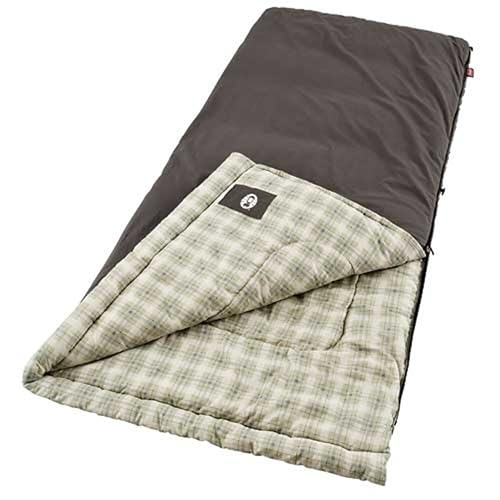
- 84-by-40-inch rectangular design
- 5 pounds of Holofill 808 insulation
- Machine washable flannel-lined comfort
Best For: Spacious car camping and tall sleepers
Best Lightweight Pick
Compact 3-Season Down Sleeping Bag

- 1.9-pound packable design
- 600-fill duck down insulation
- Connects to a second bag
Best For: Mild-weather backpacking and three-season camping
Best Heavy-Duty Pick
Graphene 620-Fill Down Sleeping Bag

- 620-fill-power down insulation
- Splicing zippers for double-bag use
- Water-resistant graphene fabric
Best For: Flexible camping and taller sleepers
Best Summer Value
Lightweight QEZER Down Sleeping Bag

- 600-fill-power duck down
- 1.6-pound lightweight carry
- Roomy semi-rectangular design
Best For: Summer camping and lightweight hiking
Cold-Weather Ultralight Pick – Naturehike 0 Degree Down Sleeping Bag
For campers seeking down sleeping bags for colder conditions, the Naturehike CW700 combines RDS-certified 650-fill duck down with a mummy-and-envelope-inspired shape. Its listed ISO comfort rating is 29°F, with an extreme rating of 18°F, making it a practical option for cool-weather backpacking and camping.
Best For: Backpackers who want a compressible, packable down bag with a roomy foot area and added neck protection.
Pros:
- RDS-certified 650-fill duck down with 700g of fill and 85% down content.
- U-shaped neck collar and dual wind bars help limit cold-air entry.
- 400T 20D ripstop nylon shell, YKK zippers, and a blanket-style fully opened configuration.
- Available in medium and large sizes.
Cons:
- The large version weighs about 2.9 pounds, so it is not the lightest option available.
- The listed ratings distinguish between comfort and extreme performance; shoppers should match the bag to their expected temperatures.
Choose this Naturehike model if warmth-focused design features, traceable down, and flexible sizing matter more than minimizing pack weight. Pairing it with a sleeping pad is recommended to maximize warmth.
Roomy Sleep-System Choice – Large Down Sleeping Bag with Pillow
This wide mummy-style bag stands out among down sleeping bags by including a detachable 80g pillow and a 33.5-inch shoulder width. With 680FP RDS-certified duck down, compression bags, and versions rated for different conditions, it is designed for campers who value comfort and versatility.
Best For: Adults and teens who want an extra-wide sleeping bag with an integrated pillow for camping or hiking trips.
Pros:
- 680FP RDS-certified duck down provides a lightweight, compressible insulation package.
- Extra-wide 33.5-inch shoulder area offers more room than a standard mummy bag.
- Detachable 80g pillow, internal security pocket, and reflective drawcords add convenience.
- Different-color bags can zip together for couples or family travel.
Cons:
- Warmth varies by version, with listed comfort ratings ranging from 45°F to 0°F.
- The product notes recommend leaving the compressed bag out for at least half an hour so the down can recover its loft.
This is a strong comfort-oriented choice for travelers who dislike restrictive mummy bags. Confirm the selected fill and temperature version before buying, especially if you need a winter bag.
Eco-Conscious Backpacking Classic – Kelty Cosmic 20 Down Mummy
The Kelty Cosmic 20 is a proven-style option among down sleeping bags, pairing 550-fill-power down with recycled shell and liner fabrics. Its 20°F rating, compressible design, and multiple length choices make it a practical fit for backpacking, camping, and general three-season use.
Best For: Campers and backpackers who want traceable down, recycled fabrics, and a familiar mummy-bag design.
Pros:
- Uses 550FP down that compresses for easier packing.
- Recycled nylon and polyester fabrics include PFAS-free durable water repellent.
- RDS-certified, traceable down supports the product’s sustainability focus.
- Short, regular, and long sizes accommodate sleepers up to approximately 5’6″, 6′, and 6’6″.
Cons:
- At about 2 pounds 6 ounces in regular size, it is not an ultralight bag.
- The 550FP fill power is lower than that of several premium down alternatives.
The Cosmic 20 is a sensible middle-ground choice for shoppers who prioritize established design, recycled materials, and a 20°F rating. Its regular size stuffs to about 13 by 7 inches for manageable transport.
Big-and-Tall Winter Alternative – Coleman Heritage 10°F Sleeping Bag
Although it is not a down model, the Coleman Heritage is worth comparing with down sleeping bags when size, flannel comfort, and easy care take priority. This 4-season rectangular bag measures 84 by 40 inches, fits campers up to 6 feet 7 inches, and uses 5 pounds of Holofill 808 synthetic insulation.
Best For: Tall or broad campers, car campers, hunting trips, guest use, and anyone who wants a machine-washable cold-weather bag.
Pros:
- Generous Big & Tall dimensions provide substantially more room than typical mummy bags.
- 5 pounds of Holofill 808 insulation is designed for temperatures down to 10°F.
- Cotton cover and synthetic flannel liner provide a soft, familiar bed-like feel.
- Machine washable with a Wrap ‘N’ Roll storage system and five-year limited warranty.
Cons:
- At 8.9 pounds, it is far heavier and less packable than down sleeping bags.
- The rectangular design and cotton construction are better suited to car camping than backpacking.
- It uses synthetic Holofill insulation rather than down.
Pick the Coleman when roominess, durability, and simple maintenance outweigh pack size and weight. It is a comfortable cold-weather base-camp option, but backpackers should look to lighter down sleeping bags instead.
Best Lightweight Pick – Compact 3-Season Down Sleeping Bag
For backpackers seeking lightweight down sleeping bags for mild three-season trips, this mummy-style option emphasizes low carry weight and compact storage. Its 1.9-pound design uses 600-fill-power duck down and is rated for a comfort range of 46°F to 63°F, with a listed limit of 36°F.
Best For: Spring, summer, and fall backpacking, bikepacking, car camping, and emergency vehicle kits.
Pros:
- Lightweight 1.9-pound construction packs to approximately 10.63 by 6.69 inches.
- Spacious trapezoidal foot box allows more natural foot movement.
- Left- and right-side zipper options allow two bags to connect.
- Ripstop nylon shell, interior pocket, and included storage sack add practical utility.
Cons:
- Its temperature range is intended for mild conditions rather than deep winter.
- The relatively light down fill may provide less insulation than heavier cold-weather bags.
- Down needs several hours to fully loft after unpacking.
This is a sensible choice when packability matters more than extreme-weather protection. The mummy shape and down insulation support cool-weather comfort, but winter campers should look for a lower-rated bag.
Best Versatile Design – 3-in-1 Down Sleeping Bag and Quilt
Among down sleeping bags for campers who value flexibility, this rectangular model stands out for its convertible design. The detachable hood and full-length unzipping let it function as a sleeping bag, blanket, or quilt, while 680-fill-power traceable white duck down targets temperatures from 20°F to 45°F.
Best For: Campers, teens, and adults who want one adaptable sleep system for camping, road trips, and home use.
Pros:
- Three-in-one configuration works as a sleeping bag, blanket, or quilt.
- Roomy 220cm by 80cm rectangular shape allows easier movement.
- 680-fill-power RDS-certified white duck down balances warmth and weight.
- Detachable hood, two-way zippers, and compatible zippers add versatility.
Cons:
- At approximately 2.42 pounds, it is heavier than the lightest backpacking bags.
- Rectangular construction may be less thermally efficient than a mummy shape.
- It should be removed from its compression sack ahead of use to regain loft.
This model is appealing for buyers who want more than a conventional sleeping bag. Its convertible layout and roomy fit improve versatility, while the stated 20°F to 45°F range makes it suitable for cooler three-season and some fall trips.
Best Cold-Weather Value – 10-Degree Roomy Mummy Down Bag
For colder outings, these down sleeping bags need effective draft protection as well as substantial insulation. The ZOOOBELIVES AlpliveD1500 combines 35 ounces of 550-plus-fill-power down with a hood, draft collars, insulated draft tube, and roomy mummy shape. Its guide lists 32°F comfort, a 10°F lower limit, and 0°F extreme rating.
Best For: Fall camping, hunting weekends, scout campouts, car camping, and short cold-weather backpacking trips.
Pros:
- 35 ounces of down provide substantially more insulation than lightweight three-season models.
- Draft collar, face collar, and insulated tube help reduce heat loss.
- Roomy mummy shape and 3D foot box offer coverage without an especially restrictive fit.
- Compression straps, a YKK anti-snag zipper, and internal pocket support camp use.
Cons:
- At 3.9 pounds, it is notably heavier for extended backpacking.
- The listed 10°F lower limit should not be treated as a comfort rating.
- Best performance in colder conditions depends on an insulated sleeping pad and suitable layers.
This is the strongest cold-weather option in the group for buyers prioritizing warmth over minimum pack weight. Its heavier insulation and draft-blocking features make it better suited to chilly camps, while the roomy cut adds comfort for users who dislike tight mummy bags.
Best Ultralight Choice – Naturehike RDS Down Sleeping Bag
For backpackers prioritizing minimal weight and compact storage, this Naturehike option is one of the most portable down sleeping bags in the group. Its 650-fill-power duck down, water-repellent nylon, and channel-separated insulation suit three-season camping, hiking, and travel.
Best For: Lightweight backpacking and users who need a compact three-season sleeping bag.
Pros:
- Weighs about 1.3 pounds and packs to approximately 4.7 by 10.2 inches.
- Uses 295g of 650-fill-power RDS-certified duck down.
- Features individual down channels, a two-way YKK zipper, and water-repellent nylon.
- Can be zipped together with another compatible sleeping bag.
Cons:
- The listed CW295 version is a short size, so check the size chart carefully.
- Its stated temperature range is aimed at mild three-season conditions rather than deep winter.
This is a strong pick when pack weight and storage volume matter most. Confirm the selected size before ordering, especially if you need the medium CWM400 version.
Best Heavy-Duty Pick – Graphene 620-Fill Down Sleeping Bag
This graphene-shell option offers a balance of warmth, roominess, and versatility for camping, hiking, and vehicle-based trips. Among these down sleeping bags, it stands out for its splicing zippers, chest insulation, and foot ventilation zipper.
Best For: Campers wanting a roomy sleeping bag that can be paired with another compatible bag.
Pros:
- Uses 500g of 620-fill-power down in an 86.61-by-31.5-inch design.
- Left and right zippers allow two compatible bags to be combined.
- Graphene fabric is described as tear-resistant and water-resistant.
- Chest insulation and a three-dimensional foot zipper help adjust warmth and ventilation.
Cons:
- At roughly 2.2 to 2.5 pounds, it is heavier than the lightest option here.
- The stated 41°F to 54°F rating makes it more suitable for mild conditions than severe cold.
Choose this model if flexibility and extra insulation features matter more than achieving the absolute lowest pack weight. Its longer dimensions also make it appealing for taller users.
Best Summer Value – Lightweight QEZER Down Sleeping Bag
Designed for warmer-weather trips, this QEZER model keeps weight and packed size low while providing a roomy semi-rectangular shape. Its 600-fill-power duck down and 400T nylon construction make it a practical choice for summer camping and backpacking.
Best For: Summer campers and hikers seeking a lightweight, spacious down sleeping bag.
Pros:
- Weighs about 1.6 to 1.68 pounds and packs to approximately 9.84 by 5.51 inches.
- Provides an 85.04-by-31.5-inch semi-rectangular sleeping area.
- Uses 600-fill-power duck down with a stated comfort range of 45°F to 61°F.
- Includes a foot zipper for ventilation and can pair with a compatible gray or orange bag.
Cons:
- Its summer rating and 36°F limit are less suitable for consistently cold conditions.
- The larger semi-rectangular shape may be less thermally efficient than a snug mummy-style design.
This model makes sense for warm-season adventures where ventilation, interior space, and low carry weight are priorities. Consider a warmer-rated bag for colder shoulder-season trips.
How We Picked the Best Down Sleeping Bags
We focused on the features that most affect real-world performance: temperature rating, down fill power, overall weight, packability, shape, dimensions, construction, and useful extras. The selection includes lightweight mummy bags for backpacking, roomier designs for comfort, cold-weather models, and larger bags for campers who prioritize space over minimum packed weight.
Because listed temperature ratings are not always directly comparable, treat them as a starting point rather than a guarantee. Your clothing, sleeping pad, tent, humidity, wind, and personal tolerance for cold all affect how warm a bag feels.
Quick Comparison
| Best For | What to Look For | Trade-Off |
|---|---|---|
| Ultralight backpacking | Higher fill power, low weight, compressible design | Usually narrower and more expensive |
| Cold-weather camping | Low temperature rating, draft protection, hood, durable shell | More bulk and weight |
| Roomy comfort | Wide cut, rectangular shape, larger dimensions | Less thermal efficiency |
| Occasional camping | Moderate price, easy care, versatile rating | May not be ideal for extremes |
Key Buying Factors for Down Sleeping Bags
Temperature Rating
Choose a rating below the lowest temperature you realistically expect, especially if you tend to sleep cold. A bag rated around 20°F can suit three-season trips, while 0°F-class models are better for winter conditions when paired with an appropriate sleeping pad.
Fill Power and Insulation
Fill power measures how much loft a given amount of down can provide. Higher numbers generally offer better warmth-to-weight performance, while 550- to 650-fill options can deliver useful value and durability. Responsible sourcing, such as RDS certification, may also matter if ethical materials are a priority.
Shape, Fit, and Size
Mummy bags reduce empty air space and conserve heat, but they can feel restrictive. Rectangular and big-and-tall designs provide more room for movement and layering. Select a length and shoulder or hip width that fit your body without leaving excessive unused space.
Weight, Packability, and Weather Protection
For backpacking, compare total weight and packed size, not just the insulation rating. Look for a compressible down package, a dependable zipper, a draft collar or tube, and a hood on colder models. A water-resistant shell or DWR treatment helps protect down from light moisture, but down still needs to stay dry for best loft.
Who Should Buy Which Down Sleeping Bags?
Backpackers: Choose a lightweight mummy bag with higher fill power and a temperature rating suited to your route. Cold-weather campers: Prioritize a lower rating, hood, draft protection, and enough room for warm sleep clothing. Car campers and comfort-focused sleepers: A wider or big-and-tall bag can be more enjoyable, even if it weighs more. Budget-conscious occasional campers: Look for a versatile mid-range rating and practical construction rather than paying solely for maximum fill power.
Finally, pair any of these Down Sleeping Bags with a sleeping pad whose insulation matches the conditions. A warm bag cannot perform well if cold ground pulls heat away beneath you.