Winter riding brings shorter days, wet roads, glare, and reduced visibility. The right helmet light can help you stand out without adding distracting bulk or complicated controls.
We compared 10 helmet-mounted and helmet-compatible lights across brightness, mounting, weather resistance, runtime, charging, and cold-weather practicality so you can choose a safer fit for commuting, cycling, or motorcycling.
Best 10 Helmet Lights for Winter Riding Picks for 2026
All-Weather 2-in-1 Visibility

- Front and tail lights with independent controls
- Five modes and USB rechargeable battery
- IP66 waterproof, lightweight 75g design
Best For: Cyclists seeking front-and-rear visibility for wet-weather rides
Minimalist Magnetic Mount
Thousand Heritage 2.0 Helmet Light

- Magnetic mounting for quick attachment
- Three modes with USB-C charging
- 40 lumens and IP54 water resistance
Best For: Heritage 2.0 helmet owners wanting a lightweight visibility light
Compact Front-and-Rear Set

- 27g ultra-slim two-light design
- Four front and six rear modes
- IP65 protection with fast 1–1.5 hour charging
Best For: Portable bike, backpack, scooter, or stroller visibility
Smart Motorcycle Visibility
Wireless Brake-Detecting Helmet Light

- Smart detection for braking and deceleration
- 100 LEDs with up to 500 lumens
- Wireless mounting and USB-C charging
Best For: Motorcyclists wanting automated rear helmet visibility
All-Weather Visibility Set
Rechargeable Front and Rear Bike Lights
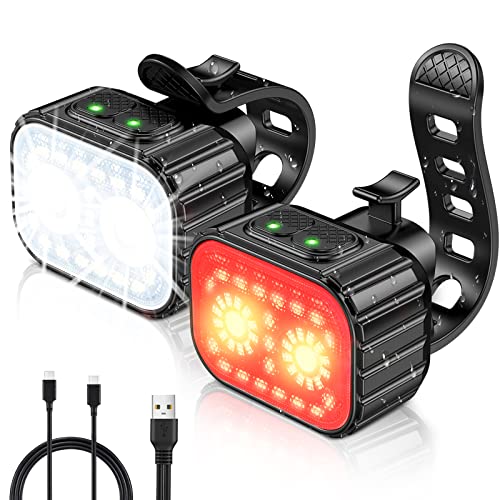
- Front and rear lights with 12 combined modes
- Up to 58-hour front-light runtime in slow-flash mode
- IPX6 water resistance for rainy or foggy rides
Best For: Winter riders seeking broad bike visibility and long runtime
Cold-Weather Marker Pick
Waterproof Red Helmet Signal Lights

- Operates in temperatures down to -20°C
- Steady and flashing modes with about 100 hours of use
- Lightweight red markers for helmets, hats, or backpacks
Best For: Cold-weather signaling and visibility rather than trail illumination
Trail-Focused Helmet Headlight
850-Lumen Rechargeable Helmet Light

- 850 lumens with an 85° floodlight and stated 650-foot range
- Five modes and up to 18 hours of stated runtime
- 100° adjustable anti-slip helmet mount
Best For: Night riding and mountain-bike trails needing forward illumination
Smart Visibility Pick
Crelander Programmable LED Helmet Light

- App-controlled animations, text, and symbols
- IP66 waterproof with brake-sensing alert
- Up to 6 hours of rechargeable operation
Best For: Customizable visibility for motorcycle, bicycle, and e-bike riders
Long-Running Safety Pick
Trailstrike TS-101-A Rear Helmet Light

- Three modes with simple one-button control
- Waterproof red rear LED design
- Up to 8 hours of rechargeable power
Best For: Motorcycle riders wanting simple, extended rear visibility
Compact Weather-Ready Pick

- IPX6 waterproof ABS construction
- Multiple steady and flashing modes
- Ultra-light 5.7 g design with tool-free mounting
Best For: Lightweight helmet, bicycle, or motorcycle visibility in wet weather
All-Weather 2-in-1 Visibility – 200-Lumen Helmet Light
For riders comparing helmet lights for winter riding, this 2-in-1 design combines a front light and tail light in one lightweight unit. Independent controls, five lighting modes, USB recharging, and IP66 waterproofing make it a flexible choice for dark, wet commutes and longer rides.
Best For: Cyclists who want front-and-rear visibility from one rechargeable, weather-resistant helmet light.
Pros:
- Front and tail lights can be operated or adjusted independently.
- Offers five modes and up to 200 lumens from the front light.
- IP66 protection and a lightweight 75-gram design suit wet-weather riding.
- Tool-free mounting also works on bikes, scooters, strollers, and other equipment.
Cons:
- The supplied notes clarify that it is intended to help riders stay seen rather than illuminate 200 meters of dark roadway.
- Runtime varies substantially by mode, from approximately 8 to 36 hours.
This is a practical visibility-focused option for winter riders who value front-and-rear signaling, flexible mounting, and strong splash protection more than maximum road illumination.
Minimalist Magnetic Mount – Thousand Heritage 2.0 Helmet Light
For helmet lights for winter riding, this Thousand light emphasizes a clean, low-fuss setup for compatible Heritage 2.0 helmets. Its magnetic mounting, three light modes, USB-C charging, and compact 50-gram weight make it convenient for daily visibility use, while IP54 protection offers resistance to water and dust.
Best For: Thousand Heritage 2.0 owners who want a lightweight, magnetic helmet-mounted safety light.
Pros:
- Magnetic mounting is designed for quick attachment and removal.
- USB-C charging simplifies recharging.
- Three light modes provide basic visibility flexibility.
- Lightweight 50-gram construction adds little helmet weight.
Cons:
- It is specifically listed for the Thousand Heritage 2.0 helmet, limiting compatibility.
- Its 40-lumen maximum is modest compared with brighter front-light options.
- IP54 water and dust resistance is less protective than higher-rated waterproof designs.
This is best treated as a compact visibility accessory rather than a powerful road-illuminating headlight. Its strongest advantages are compatibility, magnetic convenience, and simple USB-C charging.
Compact Front-and-Rear Set – Slim Rechargeable Bike Lights
Although designed as a bike-mounted set, these compact lights are worth considering alongside helmet lights for winter riding when portable front-and-rear visibility is the priority. The 27-gram pair charges in about 1 to 1.5 hours, offers separate white and red modes, and uses IP65 water resistance for rainy or foggy conditions.
Best For: Riders who prefer an ultra-slim front-and-rear light set that can also attach to backpacks, scooters, or strollers.
Pros:
- Ultra-slim 27-gram design is easy to carry in a pocket.
- Includes four front-light modes and six rear-light modes with memory function.
- Both lights can be charged simultaneously using the included cable.
- IP65 protection and shock-resistant PC construction support wet-weather use.
Cons:
- The supplied mounting system uses elastic straps for bicycles and other gear rather than a dedicated helmet mount.
- Maximum output is listed as 250 lumens, but the notes do not specify how that output is divided between the two lights.
This set makes sense for riders who want highly portable visibility and multiple flash patterns. For helmet use, confirm that the strap-based mounting arrangement is suitable for your helmet before buying.
Smart Motorcycle Visibility – Wireless Brake-Detecting Helmet Light
For motorcycle-focused helmet lights for winter riding, this wireless rear helmet light adds high-mounted visibility without wiring or an app. It uses 100 LEDs, smart brake detection, USB-C charging, three settings, and a weather-resistant design intended for commuting, cruising, and touring.
Best For: Motorcyclists who want a self-contained rear helmet light with automatic deceleration and brake detection.
Pros:
- Smart sensors are designed to detect braking, downshifting, and engine braking.
- Mounts directly to the helmet without wiring or an app.
- USB-C charging reaches full power in approximately 1.5 hours.
- Includes universal and XL mounts plus a one-year manufacturer warranty.
Cons:
- This is a rear motorcycle helmet light, not a front headlight.
- The notes describe it as weather resistant but do not provide an IP rating.
- Helmet fit may depend on choosing the appropriate included mount size.
Its distinguishing feature is automated braking visibility, making it more specialized than a basic steady or flashing safety light. It is a strong fit for motorcycle riders who want a clean, wireless rear-light installation.
All-Weather Visibility Set – Rechargeable Front and Rear Bike Lights
For riders comparing helmet lights for winter riding, this rechargeable front-and-rear set is a practical option when you also want bike-mounted visibility. It combines multiple lighting modes, long runtimes, and IPX6 water resistance for wet or foggy conditions.
Best For: Winter commuters and recreational riders who want a versatile front-and-rear light set for bikes.
Pros:
- Front and rear lights offer independently controlled modes, with 12 settings overall.
- Slow-flash runtime reaches up to 58 hours for the front light and 25 hours for the taillight.
- IPX6 water resistance and a covered USB port suit rainy or foggy rides.
- Tool-free installation supports horizontal or vertical positioning.
Cons:
- The supplied mounting type is a handlebar mount rather than a helmet mount.
- The front light is rated at up to 400 lumens, less than some dedicated helmet headlights.
This set makes the most sense when whole-bike visibility matters more than a helmet-mounted beam. Its battery indicator and extended low-mode runtimes are useful for regular winter riding, while the IPX6 rating adds reassurance in wet weather.
Cold-Weather Marker Pick – Waterproof Red Helmet Signal Lights
These compact red marker lights are a lightweight choice for shoppers looking at helmet lights for winter riding, especially when visibility and identification matter more than illuminating the path. They offer steady and flashing modes and are designed to operate from -20°C to 50°C.
Best For: Winter cyclists, hikers, and outdoor users who need a small red marker light for a helmet, hat, or backpack.
Pros:
- Designed for cold-weather operation from -20°C to 50°C.
- Two modes provide steady or flashing visibility.
- Built-in CR2032 batteries offer approximately 100 hours of operation.
- Can be hung, stuck, or attached with Velcro for versatile placement.
Cons:
- This is a marker light, not a forward-facing headlight for lighting trails.
- Velcro may come off curved helmet surfaces; the notes recommend securing it with a strap.
- Replacing the battery by cutting the silicone means the light will no longer be waterproof.
Choose this two-light set as a visibility aid rather than your primary riding light. Its cold-temperature range, low weight, and long stated battery life make it useful for signaling your position during winter outings.
Trail-Focused Helmet Headlight – 850-Lumen Rechargeable Helmet Light
For riders who need a true forward-facing option among helmet lights for winter riding, this BrightRoad model offers an 850-lumen beam, a stated 650-foot range, and an adjustable helmet mount. Its five modes and USB charging make it suited to nighttime cycling and mountain-bike use.
Best For: Mountain bikers and night riders who want a bright, adjustable helmet-mounted headlight.
Pros:
- 850 lumens and an 85° floodlight are designed for strong trail illumination.
- Five modes provide flexibility for different riding conditions.
- Adjustable 100° mount with an anti-slip pad helps stabilize the light.
- USB rechargeable design includes a battery-status indicator and up to 18 hours of stated runtime.
Cons:
- The IPX1 rating indicates limited water resistance compared with more weather-sealed lights.
- The notes do not specify a winter operating-temperature range.
- It is sold as a single front light, so additional rear visibility equipment may be needed.
This is the strongest illumination choice of the three for riders navigating dark trails or roads. Before committing to extended wet-weather use, consider its lower IPX1 rating and pair it with a separate rear marker for more complete visibility.
Smart Visibility Pick – Crelander Programmable LED Helmet Light
The Crelander is a distinctive choice among helmet lights for winter riding, combining rear visibility with app-controlled animations, symbols, and text. Its IP66 waterproof rating, brake-sensing warning signal, and rechargeable battery make it suited to outdoor rides in changing weather.
Best For: Riders who want customizable LED graphics along with added rear visibility for motorcycle, bicycle, or e-bike use.
Pros:
- App-controlled display supports animations, text, symbols, and dynamic patterns.
- IP66 waterproof construction and lightweight 0.1 kg design.
- Brake-sensing warning signal can automatically activate brighter alerts.
- Battery provides up to 6 hours of operation and charges via USB-C.
Cons:
- More feature-rich and potentially more complex than a basic rear safety light.
- Battery runtime is listed at up to 6 hours, which may require recharging for longer outings.
- App connectivity is needed to customize the display.
This is the most versatile and attention-grabbing option of the three, especially for riders who value personalization. Its waterproofing and automatic braking alert add practical benefits for winter conditions, while the animated display may be more than some riders need.
Long-Running Safety Pick – Trailstrike TS-101-A Rear Helmet Light
The Trailstrike TS-101-A keeps helmet lights for winter riding simple with a bright red rear LED and three selectable modes. Its waterproof design, universal helmet compatibility, and up to 8 hours of power make it a practical option for regular night rides.
Best For: Motorcycle riders seeking a straightforward red rear light with extended battery life and easy mounting.
Pros:
- Offers always-on, flash, and warning modes through a one-button switch.
- Waterproof design supports use in poor weather conditions.
- Rechargeable battery provides up to 8 hours after about 2 hours of charging.
- Universal fit attaches to motorcycle helmets with Velcro and adhesive mounting.
Cons:
- Provides a red safety light rather than customizable graphics or colors.
- The supplied notes identify compatibility primarily with motorcycle helmets.
- Mounting relies on Velcro and sticky attachment materials.
With its uncomplicated controls and longer stated runtime, the Trailstrike is a strong fit for riders who prioritize dependable rear signaling over extra features. It offers useful mode choices without requiring an app.
Compact Weather-Ready Pick – Small LED Rear Helmet Light
This compact red LED is a practical choice for helmet lights for winter riding when you want lightweight visibility and straightforward installation. Its IPX6 waterproof ABS shell, multiple flashing modes, and adhesive mounting make it suitable for low-light rides where rain or snow may be a concern.
Best For: Riders who want a lightweight, tool-free helmet light that can also serve as a bicycle or motorcycle tail light.
Pros:
- IPX6 waterproof rating helps protect against water splashes from all directions.
- Tool-free adhesive installation and included Velcro support flexible mounting.
- Multiple modes include steady, intermittent, and side-to-side blinking.
- Very lightweight design weighs approximately 5.7 g.
Cons:
- The supplied notes do not specify an exact battery runtime.
- Adhesive mounting may be less convenient to reposition than a dedicated quick-release system.
- Its small red-light design offers fewer personalization features than an app-controlled display.
This model stands out for its low weight and weather resistance, making it easy to add to a helmet without much bulk. Choose it when simple visibility and flexible use matter more than a detailed battery readout or smart controls.
How We Picked the Best Helmet Lights for Winter Riding
We focused on the features that matter most when riding in darkness and poor weather: dependable visibility, secure mounting, rechargeable power, useful flash patterns, and resistance to rain or road spray. We also considered whether each light is designed for a bicycle helmet, motorcycle helmet, or broader outdoor use.
Product descriptions were reviewed for stated brightness, weatherproofing, charging method, control options, fit, and safety-oriented functions such as rear lighting, brake sensing, or programmable patterns. Because real-world battery life varies with temperature and mode, treat advertised runtimes as estimates rather than guarantees.
Quick Comparison
| Feature | What to Look For |
|---|---|
| Best visibility upgrade | High output, wide viewing angle, and a steady or flashing rear mode |
| Best for wet weather | A sealed design with a stated waterproof or weatherproof rating |
| Best convenience | USB or USB-C recharging, simple controls, and battery indicators |
| Best smart features | App control, programmable patterns, or automatic brake detection |
| Best lightweight choice | A compact marker light that does not shift the helmet balance |
Key Buying Factors for Helmet Lights for Winter Riding
Brightness and Visibility
More lumens do not automatically mean better safety. A helmet light should be visible from the front, rear, and sides, while a focused headlight should illuminate enough of the route for your speed. For shared roads, combine a forward-facing headlight with a red rear light rather than relying on one beam.
Mounting and Helmet Compatibility
Check whether the light uses a bracket, strap, adhesive pad, magnetic attachment, or a helmet-specific mount. The attachment should stay secure over bumps without covering vents, interfering with a visor, or weakening the helmet shell. Never drill into a helmet to install a light.
Weather Resistance and Cold
Rain protection is especially important in winter. Look for a stated IP rating or clear weatherproof construction, but remember that waterproofing does not mean the light should be submerged. Cold temperatures can reduce battery capacity, so charge fully, carry a backup light for longer trips, and store the unit indoors.
Runtime and Controls
Flashing modes generally extend runtime, while maximum brightness drains batteries quickly. Choose controls that are easy to operate with gloves, and avoid app-dependent models if you need reliable operation without a phone.
Who Should Buy Which Helmet Lights for Winter Riding?
Daily bicycle commuters should prioritize a secure mount, strong side visibility, weather resistance, and a rear-facing mode. Road cyclists may prefer lighter designs with aerodynamic profiles and multiple flash settings. Mountain and trail riders need a bright forward beam, dependable runtime, and controls that remain usable with gloves.
Motorcyclists should look for helmet-compatible mounting, low-profile construction, weather sealing, and smart brake or programmable safety functions where useful. Occasional riders and walkers can often save money with a compact rechargeable marker light, provided it remains visible from the angles that matter on their route.