The right sleeping pad can make the difference between waking up refreshed and spending the night feeling every rock beneath your tent. The best sleeping pads for backpacking balance packed size, weight, insulation, comfort, and durability for the conditions you expect to encounter.
This roundup includes dependable closed-cell foam pads, compact inflatable models, and thicker self-inflating options. Use the guide below to narrow the choices by trip style, sleeping preference, and the trade-offs that matter most on the trail.
Best 10 Sleeping Pads for Backpacking Picks for 2026
Classic Trail Comfort

- 14-ounce closed-cell foam design
- Folds accordion-style for easy packing
- R-value 1.7 with durable dual-density foam
Best For: Dependable warm-weather backpacking and mountaineering
Plush Foam Upgrade
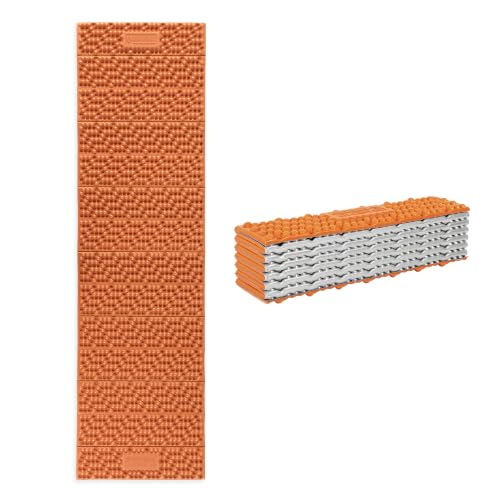
- Taller nesting nodes add cushioning
- Dual-density foam supports and softens
- Reflective film helps retain body heat
Best For: Lightweight backpacking with enhanced foam comfort
Reflective Warmth Pick

- R-value 2.6 for increased insulation
- Reflective coating boosts warmth
- 14-ounce foldable closed-cell foam design
Best For: Cooler-weather backpacking without inflation concerns
Value Waterproof Mat

- Wide 23.6-inch sleeping surface
- Waterproof IXPE foam with aluminum film
- Folds compactly for transport
Best For: Budget-conscious camping and moderate-condition backpacking
Fast-Setup Comfort

- Inflates in about 50 seconds with an attached foot pump
- Four-inch wavy air-cell design includes an integrated pillow
- 1.8 pounds with snap-together connectors for two pads
Best For: Campers wanting quick inflation, cushioned support, and flexible sizing
Lightweight Insulation
POWERLIX Inflatable Sleeping Pad

- Hexagon air cells target pressure-point support
- Inflation bag fills the pad in 8–10 pumps
- Includes insulation, storage bag, and two repair kits
Best For: Backpackers seeking an accessory-rich inflatable pad
Foam-Supported Rest
OGERY Self-Inflating Sleeping Pad

- Three-inch foam-and-air structure reduces bounciness
- Self-inflates and includes a built-in foot pump
- Six-pound design has insulation and a non-slip base
Best For: Comfort-focused campers and car campers
Best Overall Comfort
Overmont Ultralight Sleeping Pad

- 4.7-inch thickness with ergonomic support
- Built-in foot pump and pillow
- 1.98 pounds; supports up to 300 pounds
Best For: Backpackers prioritizing cushioning and easy setup
Best Ultralight Pick
Gear Doctors Ether Sleeping Pad

- Only 17.5 ounces
- Detachable pump sack inflates without lung effort
- R-value 2 for spring and summer use
Best For: Ultralight backpackers on warm-weather trips
Best Extra-Thick Design

- Six-inch thickness with built-in pillow
- Built-in foot pump and dual-layer valves
- Connects to another compatible pad
Best For: Campers wanting maximum elevation and space
Classic Trail Comfort – Therm-a-Rest Z Lite Original
The Therm-a-Rest Z Lite Original is a dependable choice among sleeping pads for backpacking when you want low weight, simple setup, and durable closed-cell foam. Its accordion-fold design packs easily and weighs just 14 ounces.
Best For: Backpackers and mountaineers seeking an economical, durable foam pad for three-season ground insulation.
Pros:
- Lightweight 14-ounce construction with no inflation required
- Accordion-style folding makes it easy to pack
- Heat-trapping dimples and dual-density foam provide comfort and ground protection
- Water-resistant closed-cell foam is durable and made in the USA
Cons:
- R-value 1.7 provides less insulation than the Z Lite Sol
- Its folded shape may need to be carried externally on some packs
This is a practical, low-maintenance pad for hikers who value reliability over plush cushioning. It is especially appealing for warm-weather trips and rugged use where puncture resistance matters.
Plush Foam Upgrade – NEMO Switchback
The NEMO Switchback is a strong option among sleeping pads for backpacking if you prefer a lightweight foam pad with added structure and warmth-focused features. Its nesting nodes, dual-density foam, and reflective film are designed to improve comfort and insulation.
Best For: Backpackers and mountaineers who want a compact closed-cell foam pad with a more cushioned feel.
Pros:
- Hexagonal nesting pattern creates taller, more supportive nodes
- Dual-density foam balances softness and support
- Reflective thermal film helps reflect body heat
- Lifetime warranty against defects in materials and workmanship
Cons:
- Closed-cell foam design is less cushioned than an inflatable pad
- Listed water resistance is not water resistant
The Switchback adds thoughtful foam shaping and reflective insulation to a classic foldable-pad format. Choose it when compactness, simplicity, and a little extra plushness are more important than maximum sleeping thickness.
Reflective Warmth Pick – Therm-a-Rest Z Lite Sol
Therm-a-Rest Z Lite Sol Camping and Backpacking Sleeping Pad, Limon/Silver, Regular - 20 x 72 Inches
Check Price On AmazonThe Therm-a-Rest Z Lite Sol is one of the more versatile sleeping pads for backpacking when you want a lightweight foam pad with improved warmth. Its ThermaCapture reflective coating works with heat-trapping dimples, while the folding design keeps packing straightforward.
Best For: Backpackers who want a durable, 14-ounce closed-cell pad with more insulation than the original Z Lite.
Pros:
- R-value 2.6 offers increased insulation for cooler conditions
- Reflective coating is designed to increase warmth by 20 percent
- Folds compactly and requires no inflation
- Denser bottom foam improves durability and ground protection
Cons:
- Still provides less cushioning than thicker inflatable pads
- Accordion-folded shape may be less pack-friendly inside a loaded backpack
The Z Lite Sol is a sensible step up from a basic foam pad for hikers who want additional warmth without adding much weight or complexity. Its durable construction also suits trips where reliability is a priority.
Value Waterproof Mat – Foldable IXPE Camping Pad
This foldable IXPE mat is a budget-oriented choice among sleeping pads for backpacking, offering a wide 23.6-inch sleeping surface, waterproof construction, and simple closed-cell foam convenience. Its aluminum film is designed to reflect body heat, and the pad folds for transport.
Best For: Ultralight hikers, campers, and picnic users who want a wide, waterproof foam mat at a straightforward price.
Pros:
- Wider 23.6-inch open width than the other listed pads
- Waterproof, moisture-resistant IXPE construction
- Aluminum film helps reflect body heat
- Folds to approximately 23.6 x 5.5 x 5.5 inches
Cons:
- Heavier than the Therm-a-Rest foam pads at about 455 grams listed weight
- 0.7-inch thickness and 2.1 insulation rating offer limited cushioning and insulation
- Includes no accessories
This mat makes sense for hikers who prioritize width and waterproofing over the lowest possible packed weight. It is a simple, foldable option for moderate conditions, short trips, and general outdoor use.
Fast-Setup Comfort – Built-In Pump Backpacking Pad
For hikers who want quick setup and cushioned support, this option stands out among sleeping pads for backpacking. Its wavy air-cell design, integrated pillow, and attached foot pump provide a comfortable sleep system without requiring an external pump.
Best For: Backpackers and campers who prioritize fast inflation, an integrated pillow, and the ability to connect two pads.
Pros:
- Built-in foot pump inflates the pad in about 50 seconds without mouth inflation.
- Four-inch thickness, wavy air cells, and an integrated pillow provide plush support.
- At 1.8 pounds, it packs compactly and is made with water-resistant 40D nylon and TPU.
- Side snap fasteners allow two pads to be joined into a wider sleeping surface.
Cons:
- The attached pump and pillow may appeal less to backpackers seeking the simplest possible pad.
- The supplied notes do not provide an R-value or packed dimensions.
This is a practical choice for campers who want a thicker, feature-rich pad while keeping setup simple. The built-in pump and connection snaps add convenience for overnight trips, couples, and flexible camp setups.
Lightweight Insulation – POWERLIX Inflatable Sleeping Pad
This POWERLIX model combines a compact inflatable design with body-mapped hexagon air cells for pressure-point support. For shoppers comparing sleeping pads for backpacking, its included inflation bag, insulation, and repair kits make it a well-equipped option for outdoor trips.
Best For: Backpackers and hikers who want a lightweight inflatable pad with included inflation accessories and insulation.
Pros:
- Hexagon air cells are designed to support pressure points across different sleeping positions.
- Included inflation bag reportedly fills the pad in 8–10 pumps.
- Compact, lightweight, insulated, and waterproof for camping and backpacking use.
- Includes a storage bag, two repair kits, and a multipurpose inflation bag.
Cons:
- At about 1.97 inches thick, it is thinner than the four-inch pad in this roundup.
- The supplied notes do not specify the pad’s weight or R-value.
The POWERLIX is a versatile inflatable mat for travelers who value a small packed profile and useful included accessories. Its insulation and ergonomic cell layout add comfort, while the inflation bag reduces the need to carry a separate pump.
Foam-Supported Rest – OGERY Self-Inflating Sleeping Pad
The OGERY takes a comfort-first approach to sleeping pads for backpacking with a three-inch hybrid foam-and-air construction. Its self-inflating design, built-in foot pump, and non-slip base make it particularly suited to campers who prefer stable, quiet support over ultralight weight.
Best For: Car campers and backpackers who want thick foam cushioning, adjustable firmness, and reduced movement noise.
Pros:
- Three-inch memory-foam construction supports side, back, and stomach sleepers.
- Self-inflates after opening the valve, with a built-in foot pump for firmness adjustment.
- Foam interior is designed to reduce movement noise and heat loss in cooler conditions.
- Textured bottom helps limit sliding on tent floors, car trunks, and cots.
Cons:
- At six pounds, it is substantially heavier than the 1.8-pound pad in this roundup.
- Its hybrid foam construction may be less suitable for minimalist, weight-focused backpacking.
- The supplied notes do not provide packed dimensions or an R-value.
This pad favors stable, mattress-like comfort rather than minimum carry weight. It is a strong fit for vehicle-supported trips and campers who appreciate foam cushioning, quiet performance, and adjustable firmness.
Best Overall Comfort – Overmont Ultralight Sleeping Pad
The Overmont combines generous cushioning, a built-in pillow, and quick foot-pump inflation in a backpack-friendly package. For shoppers comparing sleeping pads for backpacking, its 4.7-inch thickness and 1.98-pound weight offer a practical balance of comfort and portability.
Best For: Backpackers who want an extra-thick pad with integrated head support and hands-free inflation.
Pros:
- 4.7-inch thickness, ergonomic wave-shaped cells, and built-in pillow support back, side, and stomach sleepers.
- Built-in foot pump inflates the pad in about 30–60 seconds without mouth inflation.
- Folds to approximately 9.8 by 4.7 inches and supports up to 300 pounds.
- 75D fabric and multi-layer TPU construction provide a water-resistant, tear-resistant surface.
Cons:
- At 1.98 pounds, it is heavier than more minimalist backpacking pads.
- The integrated pillow and 4.7-inch profile may take more pack space than a thinner pad.
The Overmont is a comfort-focused choice for hikers who do not want to sacrifice cushioning to save weight. Its built-in pump and pillow reduce the need for extra gear, while the compact packed size keeps it suitable for overnight trips.
Best Ultralight Pick – Gear Doctors Ether Sleeping Pad
At just 17.5 ounces, the Gear Doctors Ether is designed for hikers who count every ounce. Its contoured design, detachable pump sack, and compact 8.6-by-3.1-inch packed size make it one of the most packable sleeping pads for backpacking in this group.
Best For: Ultralight backpackers taking spring or summer trips and prioritizing minimal packed weight.
Pros:
- Weighs only 17.5 ounces and packs about the size of a water bottle.
- Detachable foot pump sack enables lung-free inflation in under 90 seconds.
- ErgoCushion contours provide a 76-by-25-inch sleep surface and help limit slipping.
- Includes a repair kit and lifetime replacement support.
Cons:
- Its R-value of 2 is intended for spring and summer rather than colder conditions.
- Thicker edges and a thinner center may feel less uniformly cushioned than a flat, extra-thick pad.
The Ether stands out when low pack weight is the main requirement. It offers useful comfort features without adding much bulk, though its two-season insulation makes it better suited to warmer-weather adventures.
Best Extra-Thick Design – OGERY 6-Inch Sleeping Pad
The OGERY provides a substantial six inches of inflatable cushioning, plus a built-in pillow and foot pump. It is a strong option among sleeping pads for backpacking when elevated support matters more than achieving the lightest possible pack weight.
Best For: Campers and backpackers who prefer maximum height, a spacious sleep surface, and easy setup.
Pros:
- Six-inch thickness and a 79-by-27.5-inch inflated size provide generous elevation and room.
- Built-in foot pump and dual-layer valves simplify inflation and help reduce air leakage when closed properly.
- Waterproof 50D polyester with TPU coating is designed for outdoor use.
- Side buttons allow two compatible pads to be connected into a wider surface.
Cons:
- At 2.4 pounds, it is heavier than the Gear Doctors Ether and Overmont pad.
- The 11-by-5.9-by-5.9-inch packed size is relatively bulky for minimalist backpacking.
- The notes recommend using ground protection and avoiding sharp surfaces to help prevent punctures.
The OGERY favors comfort and height over ultralight portability. Its spacious dimensions, pillow, and connection buttons make it particularly useful for relaxed camping setups, while the packed bulk may be less appealing for long-distance hikers.
How We Picked the Best Sleeping Pads for Backpacking
We organized these 10 picks around the features backpackers typically prioritize: carry weight, packed size, sleeping comfort, insulation, setup, construction, and versatility. The selection spans nearly indestructible closed-cell foam pads, lightweight air mattresses, and cushioned self-inflating designs. Because no single pad suits every route, we considered how each style fits different climates, sleeping positions, budgets, and pack loads.
Before buying, verify the current dimensions, listed weight, packed size, valve or pump design, and insulation rating. Product specifications can vary by size and may change over time.
Quick Comparison
| Pad type | Best for | Main advantage | Trade-off |
|---|---|---|---|
| Closed-cell foam | Minimalists and rugged trips | Reliable and puncture-proof | Bulky and less cushioned |
| Inflatable | Low-weight comfort | Compact for packing | Needs careful handling |
| Self-inflating | Comfort-focused campers | Foam cushioning and easy setup | Usually heavier and larger |
Key Buying Factors for Sleeping Pads for Backpacking
Weight and Packed Size
Every ounce matters on long routes. Foam pads are simple and dependable but often attach to the outside of a pack. Inflatable pads generally provide more comfort per ounce and compress smaller, while thicker self-inflating models take up more room.
Insulation and Sleeping Conditions
For cold-weather or shoulder-season trips, prioritize a higher insulation rating or a pad designed for lower temperatures. A thin summer pad may feel comfortable but can allow body heat to escape into the ground. Pair the pad with a suitable sleeping bag or quilt.
Comfort and Dimensions
Side sleepers often prefer thicker inflatable or self-inflating pads. Back and stomach sleepers may be satisfied with a thinner model. Check shoulder and hip width, pad length, surface texture, and whether the design includes a pillow or raised edges.
Durability and Setup
Closed-cell foam is the safest choice around sharp ground and can serve as a sit pad during breaks. Inflatable models need a clear campsite and careful inflation. Built-in pumps can simplify setup, but test the mechanism before a trip and carry a repair kit when appropriate.
Who Should Buy Which Sleeping Pads for Backpacking?
Choose a closed-cell foam pad if reliability, simplicity, and low cost matter more than plush comfort. Select a lightweight inflatable pad when you want the smallest packed volume and a better comfort-to-weight ratio. A self-inflating pad is a strong choice for campers who want foam-like cushioning and easier setup, especially when a few extra ounces are acceptable.
For frequent backpackers, compare the pad’s packed dimensions with your existing gear and consider how it will fit inside or outside your pack. For occasional campers, a versatile model with an integrated pillow or pump may offer convenient value. Whichever style you choose, practice inflation, deflation, and packing at home before relying on it in the backcountry.