An upright exercise bike with backrest can make indoor cardio more comfortable by adding lumbar support without requiring a full-size gym setup. The best options combine stable seating, smooth resistance, easy-to-read displays, and adjustability for different users.
We compared 10 home exercise bikes across comfort, storage, resistance control, weight capacity, and workout versatility to help you choose a model that fits your space, fitness level, and routine.
Best 10 Upright Exercise Bike with Backrest Picks for 2026
Most Versatile Pick
5-in-1 Folding Bike with Backrest

- Upright and semi-recumbent modes
- 16 magnetic resistance levels
- Arm and leg bands included
Best For: Versatile low-impact home workouts
Best Compact Option
Sunny Health & Fitness Smart X-Bike

- Foldable space-saving X-frame
- 14 magnetic resistance levels
- SunnyFit app connectivity
Best For: Apartments and compact home gyms
Best Recumbent Comfort
MERACH Magnetic Recumbent Bike

- Thick seat and mesh backrest
- Quiet dual-belt drive system
- 330-pound weight capacity
Best For: Supported, low-impact recumbent riding
Best Connected Upright Bike
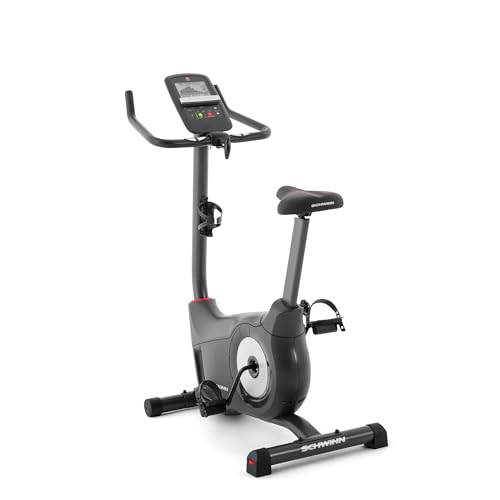
- 16 magnetic resistance levels
- 13 workout programs and 5.5-inch LCD
- Bluetooth app connectivity
Best For: Structured upright training with connected features
Best Heavy-Duty Foldable Pick

- 330-pound capacity with reinforced X-frame
- 16 magnetic resistance levels
- Foldable design with transport wheels
Best For: Seniors and users wanting a stable, versatile home bike
Best Back Support Features

- Upright and recumbent configurations
- XXL adjustable backrest and wide seat
- Luminous display with 16 resistance levels
Best For: Seniors and shorter users prioritizing comfort adjustments
Best Quiet Full-Body Option

- Quiet magnetic resistance with 16 levels
- Integrated bands for full-body workouts
- Folds to a compact 20-by-20-inch footprint
Best For: Apartment users wanting quiet, multifunctional exercise
Compact Full-Body Pick
Foldable Magnetic Exercise Bike

- Eight quiet magnetic resistance levels
- Upright, reclined, and foldable modes
- 300-pound capacity with arm bands
Best For: Small-space users wanting flexible home workouts
Connected Cardio Choice

- Quiet magnetic resistance system
- Heart-rate monitor and fitness-app support
- 300-pound capacity with adjustable seat
Best For: App-focused riders seeking tracked cardio workouts
Best Backrest Versatility

- Upright, reclined, and folding postures
- 16 magnetic resistance levels
- 350-pound capacity with padded backrest seat
Best For: Seniors and riders wanting supported posture options
Most Versatile Pick – 5-in-1 Folding Bike with Backrest
For shoppers seeking an upright exercise bike with backrest, this folding model adds useful flexibility with upright and semi-recumbent riding positions. Its 16-level magnetic resistance, adjustable seat, and included arm and leg bands support varied low-impact home workouts.
Best For: Users who want cycling and light full-body training in a compact home machine.
Pros:
- Switches among upright, semi-recumbent, arm-band, and leg-band workouts.
- Supportive mesh backrest and wide padded seat with eight height positions.
- Sixteen magnetic resistance levels provide quiet, adjustable pedaling.
- Folding X-frame, device holder, and LCD workout tracking suit smaller spaces.
Cons:
- Its multiple workout functions may be unnecessary for shoppers seeking a basic bike.
- The listed 38-pound weight may make frequent moving less convenient than lighter options.
This is a strong choice when comfort, adjustability, and exercise variety matter more than having the simplest possible setup. Its 300-pound recommended capacity and compact folding design add practical appeal for shared home spaces.
Best Compact Option – Sunny Health & Fitness Smart X-Bike
This Sunny Health & Fitness model is a practical upright exercise bike with backrest for apartments and smaller workout areas. The foldable X-frame, transport wheels, mesh back support, and 14-level magnetic resistance emphasize convenient, low-impact indoor training.
Best For: Apartment users who prioritize foldability, comfort, and app-connected workouts.
Pros:
- Foldable frame reportedly saves up to 50% of storage space.
- Adjustable ergonomic seat and mesh back support promote a more relaxed ride.
- Fourteen magnetic resistance levels offer a gradual range from beginner to challenging.
- Bluetooth connectivity works with the SunnyFit app, and transport wheels aid repositioning.
Cons:
- It has fewer resistance levels than some competing models in this roundup.
- The supplied notes do not list a built-in LCD metric display.
Choose this bike if storage and easy repositioning are central to your buying decision. Its 300-pound capacity and integrated resistance bands also make it a capable option for straightforward full-body home sessions.
Best Recumbent Comfort – MERACH Magnetic Recumbent Bike
Although designed primarily as a recumbent bike rather than a traditional upright exercise bike with backrest, this MERACH model is worth considering when supported seating is the priority. It combines a thicker seat, breathable backrest, eight seat positions, and quiet dual-belt magnetic operation.
Best For: Riders who prefer a supported, low-impact recumbent position for home exercise.
Pros:
- Thicker seat and breathable mesh backrest are designed for extended comfort.
- Eight seat positions accommodate different inseam lengths within the listed range.
- Silent dual-belt drive and eight lever-adjusted resistance levels support quiet workouts.
- LCD metrics, heart-rate tracking, iPad holder, and Bluetooth app support add useful feedback.
Cons:
- Its recumbent layout is less suitable for shoppers specifically wanting upright riding.
- The 48-inch length requires more floor space than the folding bikes listed here.
- The supplied dimensions recommend users approximately 5’2″ to 5’10”.
This is the comfort-focused alternative in the group, with a 330-pound capacity and a seat designed for supported riding. Consider it when a backrest and relaxed posture matter more than an upright training position.
Best Connected Upright Bike – Schwinn 130 Upright Bike
The Schwinn 130 is a conventional upright exercise bike with backrest alternatives to consider if you prefer an upright riding position and connected training tools. It offers 16 magnetic resistance levels, 13 workout programs, Bluetooth connectivity, and an ergonomically arranged riding setup, but the supplied notes do not list a backrest.
Best For: Riders who want structured programs, app connectivity, and upright cycling without a backrest requirement.
Pros:
- Sixteen magnetic resistance levels support varied workout intensity.
- Thirteen workout programs and a 5.5-inch LCD provide structured training and feedback.
- Bluetooth works with Explore the World and Zwift integrations, with subscriptions required for those services.
- Adjustable handlebars, a foam comfort seat, and strapped pedals support positioning and stability.
Cons:
- The supplied specifications do not identify a backrest.
- Some app features require separate Explore the World or Zwift subscriptions.
- Assembly is required, and the notes say detailed instructions are not provided.
For shoppers whose priority is an established upright training platform rather than back support, the Schwinn 130 offers the strongest program and connectivity package here. If a backrest is essential, compare its seat design carefully with the folding and recumbent alternatives.
Best Heavy-Duty Foldable Pick – 5-in-1 Folding Exercise Bike
If you want an upright exercise bike with backrest that can also support varied home workouts, the GOIMU 5-in-1 model is a flexible option. Its magnetic resistance, reinforced X-shaped frame, and foldable design suit users who want a quiet cardio machine without giving up storage convenience.
Best For: Seniors and home users seeking a stable, foldable bike with multiple workout modes and a 330-pound capacity.
Pros:
- Offers 16 magnetic resistance levels for adjustable workout intensity.
- Reinforced steel X-frame supports up to 330 pounds.
- Folds for storage and includes transport wheels.
- Includes an adjustable seat, backrest, pedals, and calorie monitor.
Cons:
- At 50.6 pounds, it may be less convenient to carry up stairs.
- The supplied details do not specify the full dimensions or exact configuration of all five workout modes.
This is a practical choice when stability and versatility matter most. Its quiet magnetic drive and compact folding format make it suitable for shared living spaces, while the backrest and adjustable seat add support during low-impact rides.
Best Back Support Features – YYFITT 3-in-1 Exercise Bike
The YYFITT is a strong contender if your priority is an upright exercise bike with backrest that can adapt to different riding positions. It switches between upright and recumbent configurations and combines a wide seat, adjustable backpad, and large backrest for more supported indoor cycling.
Best For: Seniors and shorter users who want adjustable back support, a wider seat, and easy-to-read display digits.
Pros:
- Adjusts between upright and recumbent riding positions.
- Large, adjustable backrest and angle-adjustable backpad support comfort.
- Wide 12.6-by-9.5-inch seat with adjustable height.
- Includes 16 magnetic resistance levels, arm bands, and a luminous display.
Cons:
- Its 300-pound capacity is lower than some heavy-duty alternatives.
- The 40-inch width may require more setup space than a compact folding bike.
- Battery power means the display requires batteries.
Among these options, this model puts the most emphasis on back and seating adjustability. The upright-to-recumbent frame and luminous display are especially useful for users who need easier access, better viewing, or a more relaxed riding position.
Best Quiet Full-Body Option – PLENY 5-in-1 Folding Bike
The PLENY is a versatile upright exercise bike with backrest for users who want more than basic pedaling. It combines magnetic cycling resistance with integrated bands, a padded backrest, a phone holder, and a compact folding frame for home workouts in smaller spaces.
Best For: Apartment dwellers and users who want quiet cardio plus band-based upper-body and full-body exercises.
Pros:
- Uses four magnets and a 6.6-pound flywheel for smooth, quiet resistance.
- Provides 16 resistance levels and integrated resistance bands.
- Folds to a stated 20-by-20-inch footprint and includes transport wheels.
- Arrives 85% pre-assembled and includes a one-year warranty.
Cons:
- The 300-pound capacity is lower than the GOIMU model.
- The supplied details do not identify a specific seat-height range.
- Its listed drive system is chain-based rather than belt-based.
This model stands out for combining quiet cycling with upper-body training and easy storage. It is a sensible fit for users who want a multifunctional machine, although those seeking the most detailed seat and backrest adjustments may prefer the YYFITT.
Compact Full-Body Pick – Foldable Magnetic Exercise Bike
If you want an upright exercise bike with backrest-style versatility for a smaller home gym, this foldable magnetic model offers three riding positions, including upright and reclined modes. Its quiet resistance, adjustable seat, and folding frame make it practical for apartments and shared spaces.
Best For: Beginners, families, and apartment users who want a compact bike with light upper-body training.
Pros:
- Eight magnetic resistance levels provide quiet, smooth workouts.
- Three modes include upright, reclined, and folded configurations.
- Supports up to 300 pounds and accommodates riders from 4’4″ to 6’6″.
- Arm resistance bands, an LCD monitor, phone holder, and transport wheels add versatility.
Cons:
- The notes do not specify a dedicated backrest, so the reclined mode may not provide the same support as a traditional recumbent bike.
- The LCD tracks basic workout data but does not list app connectivity.
This is a sensible choice when storage, quiet operation, and workout flexibility matter most. Its reclined setting can offer a more relaxed ride, while the upright position and resistance bands support broader home workouts.
Connected Cardio Choice – Magnetic Indoor Spin Bike
This magnetic indoor bike suits shoppers prioritizing adjustable cardio and digital tracking, though it is not presented as an upright exercise bike with backrest. The seat moves up, down, and forward or backward, helping users set a comfortable pedaling position for home workouts.
Best For: Riders who want quiet spin-style training, heart-rate monitoring, and compatibility with fitness apps.
Pros:
- Magnetic resistance delivers smooth, quiet operation.
- Tracks time, speed, distance, calories, odometer, and heart rate.
- Connects with Kinomap, Zwift, and Fitshow.
- Heavy-duty frame supports up to 300 pounds, with transport wheels for moving.
Cons:
- The supplied notes do not mention a backrest or reclined riding position.
- It requires a corded electric power source according to the listed details.
- Seat adjustment is described, but the notes do not provide the full dimensional specifications.
Choose this model for connected, upright-style cardio rather than supported reclining exercise. Its strongest advantages are app integration, built-in pulse readings, quiet magnetic resistance, and a sturdy weight capacity.
Best Backrest Versatility – BARWING 5-in-1 Exercise Bike
For shoppers specifically seeking an upright exercise bike with backrest support, this BARWING model stands out with upright, reclined, and foldable postures. Its seat backrest adjustments, high weight capacity, and broad resistance range make it especially suited to users who want more supported riding options at home.
Best For: Seniors and home users who want adjustable posture, back support, quiet resistance, and a higher weight capacity.
Pros:
- Offers upright, reclined, and folding workout positions with seat backrest adjustments.
- Sixteen magnetic resistance levels support gradual progression.
- Supports up to 350 pounds and accommodates users from 4’11” to 6’6″.
- Includes arm and leg resistance bands, a padded seat, and a console display.
Cons:
- Its multiple adjustment features may require more setup and space management than a basic stationary bike.
- The console tracks core metrics, but the notes do not mention app connectivity.
This is the closest match in the group for buyers who specifically want backrest-supported versatility. The reclined posture, reinforced padded seat, and 16 resistance levels provide a more adaptable setup than a conventional upright-only bike.
How We Picked the Best Upright Exercise Bike with Backrest
We focused on the features that matter most for consistent home workouts: back support, seat comfort, frame stability, resistance range, adjustability, display usability, folding design, and overall versatility. The lineup includes upright, recumbent, foldable, and multi-position bikes, so it covers both compact apartments and users who prioritize a more supported riding posture.
We also considered practical details such as stated weight capacity, low-impact operation, ease of storage, and whether a bike appears suited to beginners, seniors, or more regular cardio users. Product claims and specifications can vary by seller, so confirm current measurements, warranty terms, and included features before ordering.
Quick Comparison
| Best For | Look For |
|---|---|
| Small spaces | Foldable frame, transport wheels, and a compact footprint |
| Back support | Wide padded seat with a firm, adjustable backrest |
| Gentle cardio | Low-impact pedaling and multiple low resistance levels |
| Progressive training | At least 8 to 16 magnetic resistance settings |
| Multiple users | Adjustable seat, accessible controls, and a higher weight rating |
Key Buying Factors for an Upright Exercise Bike with Backrest
Seat and Backrest Design
A backrest should support your lower back without forcing you too far upright or limiting your leg movement. Check the seat width, backrest height, padding, and adjustment range. A larger seat may improve comfort, while a firmer cushion can provide better long-session support.
Fit and Stability
Measure the bike when unfolded and stored. Confirm that the seat adjusts far enough for your inseam and that the pedals remain comfortable during a full rotation. Wider stabilizers, levelers, and a sturdy frame help reduce rocking, particularly for heavier users or anyone who needs extra confidence while mounting.
Resistance and Controls
Magnetic resistance is generally quiet and low maintenance. More levels allow finer adjustments, but a high level count matters less than smooth transitions and an easy-to-reach control system. Beginners may prefer simple manual adjustment; performance-focused users may want more demanding upper levels.
Display and Convenience
Look for clearly visible readings for time, speed, distance, calories, and pulse when available. Folding mechanisms, wheels, bottle holders, device trays, and transport handles can make a bike easier to use regularly. Remember that basic displays are not the same as connected training systems.
Who Should Buy Which Upright Exercise Bike with Backrest?
Choose a foldable 5-in-1 model if you need one machine for upright, semi-recumbent, or compact storage positions. A dedicated recumbent bike is usually better for users who want maximum back and hip support. A conventional upright bike may suit riders seeking a more familiar cycling posture and a smaller footprint.
Seniors and beginners should prioritize easy access, a supportive seat, stable construction, and light resistance settings. Taller or heavier users should verify the adjustment range and published capacity carefully. For frequent workouts, favor smoother magnetic resistance, stronger frames, and a seat that remains comfortable beyond short sessions.