Bike rollers can help triathletes improve cadence, balance, pedaling smoothness, and indoor training consistency without the bulk of a full stationary bike.
This roundup compares 10 options across smart connectivity, resistance control, portability, stability, and fit for road and mountain bikes.
Best 10 Bike Rollers for Triathlons Picks for 2026
Smart Setup Pick

- No wheel or cassette removal
- Bluetooth and ANT+ connectivity
- 1500W capacity with 10% grade
Best For: Connected indoor training with fast setup
Adjustable Training Value
Elite Arion Mag Parabolic Rollers

- Three magnetic resistance levels
- Folding, space-saving frame
- Works with Rouvy and Kinomap
Best For: Flexible indoor workouts in compact spaces
Stable Natural Ride

- Tapered rollers center the wheels
- Swing system absorbs speed changes
- Foldable and needs no power
Best For: Balance and cadence practice without electronics
Quiet Adjustable Fit

- Aluminum alloy and ABS build
- Quiet PP roller design
- Adjustable front-wheel bracket
Best For: Quiet training across varied bike sizes
Versatile Training Pick
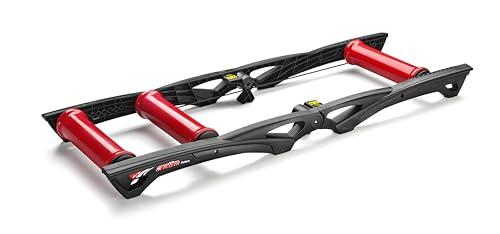
- Folds for compact storage
- Up to 280 watts at 40 km/h
- Works with major apps using Misuro B+
Best For: Portable indoor training with optional app connectivity
Simple Stability Choice
TacX Antares Retractable Rollers

- Tapered rollers center the wheels
- No power required
- Fits 26- to 29-inch wheels
Best For: Maintenance-free balance and technique practice
Travel-Friendly Balance Trainer
Aviation-Grade Aluminum Bike Rollers

- 5.4 kg aluminum construction
- Includes storage bag and foot supports
- Fits road, mountain, and folding bikes
Best For: Portable balance practice before or at competitions
Best Stability Pick
ROCKBROS Adjustable Parabolic Rollers

- Parabolic shape helps enhance stability
- Fits 16- to 29-inch bikes
- Foldable aluminum frame with sealed bearings
Best For: Riders prioritizing stability, portability, and broad bike compatibility
Best Quiet Balance Trainer

- Quiet aluminum rollers with sealed bearings
- 16-inch wheelbase supports 26- to 29-inch bikes
- Folds flat and includes rubber floor-protection pads
Best For: Riders wanting quiet balance and pedal-efficiency training in compact spaces
Best Adjustable Resistance

- Five magnetic resistance levels
- Supports QR and several thru-axle sizes
- Foldable aluminum design for travel and storage
Best For: Structured workouts, race-day warm-ups, and riders needing adjustable load
Smart Setup Pick – Wahoo KICKR ROLLR
The Wahoo KICKR ROLLR is a practical choice for triathletes who want bike rollers for triathlons without removing the wheel or cassette. Its front-wheel clamp, magnetic resistance, and Bluetooth/ANT+ connectivity make it suitable for structured indoor sessions.
Best For: Riders seeking a connected trainer with quick bike setup and adjustable resistance.
Pros:
- No wheel removal or cassette required
- Front-wheel clamp fits most bikes with tires up to 2.1 inches
- Bluetooth and ANT+ connectivity with up to 1500W and a 10% grade simulation
Cons:
- Heavier 25 kg construction makes it less portable
- Limited to a one-year manufacturer warranty
Choose this model if convenience and electronic connectivity matter more than a lightweight, traditional roller design. Its 250-pound load capacity also supports a broad range of riders.
Adjustable Training Value – Elite Arion Mag Parabolic Rollers
The Elite Arion Mag Parabolic is a versatile option for bike rollers for triathlons, offering three manual magnetic resistance levels for endurance, interval, and power work. Its folding frame is especially useful when storage space is limited.
Best For: Home-gym users who want adjustable resistance, app compatibility, and a foldable platform.
Pros:
- Three manual magnetic resistance settings
- Folding design measures 500 × 1400 × 130 mm
- Compatible with Rouvy and Kinomap apps
- Supports up to 150 kg and fits road and mountain bikes
Cons:
- Resistance adjustment is manual rather than electronically controlled
- Performance depends on rider speed and selected setting
The Arion Mag balances training flexibility and storage convenience. Its stated output reaches 220 watts at 20 km/h and 520 watts at 40 km/h, giving faster riders room for harder sessions.
Stable Natural Ride – TacX Galaxia Swing Rollers
The TacX Galaxia uses tapered rollers and a patented swing system to make bike rollers for triathlons feel more controlled during acceleration and deceleration. It requires no power, making it a straightforward option for technique and cadence practice.
Best For: Riders prioritizing centered wheels, a natural rocking motion, and simple no-power operation.
Pros:
- Tapered rollers help keep the bike centered
- Swing system absorbs acceleration and deceleration
- Foldable design simplifies storage
- Fits 26–29-inch wheels and requires no power
Cons:
- Single roller resistance setting
- 90.7 kg stated load capacity is lower than some alternatives
This is a good match for triathletes who want a maintenance-free roller focused on balance and riding feel rather than app connectivity or selectable resistance. The front roller also spins equally for added stability and speed tracking.
Quiet Adjustable Fit – Aluminum Alloy Bike Rollers
These aluminum-alloy bike rollers offer a simple platform for bike rollers for triathlons, with PP rollers designed for quieter riding. An adjustable front-wheel bracket and compatibility with 16–29-inch bicycles make fit flexibility a central feature.
Best For: Riders wanting a quiet, adjustable roller platform for mountain or road-bike training.
Pros:
- Aluminum alloy and ABS construction
- PP rollers are designed for quieter riding
- Adjustable front-wheel bracket accommodates different bike models
- Tapered bearings are intended to reduce tire wear and provide a realistic feel
Cons:
- The supplied notes do not specify power output or resistance levels
- Included components are listed as none
This model is worth considering when quiet operation and broad wheel-size adjustment are more important than detailed performance specifications. Its non-slip pedal design adds a practical safety-oriented feature for indoor sessions.
Versatile Training Pick – Arion Roller Trainer
The Unbekannt Arion is a practical choice for cyclists seeking bike rollers for triathlons, combining a lightweight composite design with straightforward setup. It folds for storage and can deliver up to 280 watts at 40 km/h, while optional sensor compatibility adds support for popular training platforms.
Best For: Triathletes and road or mountain-bike riders who want a portable roller with app-training potential.
Pros:
- Folds to a compact 530 x 730 x 250 mm size for storage.
- Produces up to 130 watts at 20 km/h and 280 watts at 40 km/h.
- Compatible with My E-Training, Zwift, TrainerRoad, and Kinomap when paired with a Misuro B+ sensor.
- Supports wheel sizes up to 29 inches and has a listed 253.5-pound load capacity.
Cons:
- App functionality requires the separately paired Misuro B+ sensor.
- Air resistance may offer less resistance control than electronically controlled systems.
With folding storage, broad bike compatibility, and optional connected-training support, the Arion offers a flexible setup for indoor preparation before a triathlon.
Simple Stability Choice – TacX Antares Retractable Rollers
The Garmin TacX Antares is a straightforward option among bike rollers for triathlons, using tapered rollers to help keep the wheels centered. It requires no power, folds down for storage, and accommodates bikes with 26- to 29-inch wheels.
Best For: Triathletes who prioritize stable, maintenance-free roller practice without an electrical connection.
Pros:
- Tapered rollers help keep the wheels centered for stability.
- Requires no power and is described as maintenance free.
- Fits bikes with 26- to 29-inch wheel diameters.
- Retracts to 31.5 x 18.5 x 5.31 inches and has a maximum footprint of 53 x 18.5 inches.
Cons:
- The supplied notes do not indicate app or power-measurement features.
- Its listed bike type is mountain bike, so compatibility should be checked for a specific triathlon setup.
The Antares focuses on uncomplicated balance and riding practice rather than connected features, making it useful for technique work and easy storage between sessions.
Travel-Friendly Balance Trainer – Aviation-Grade Aluminum Bike Rollers
This portable platform-style trainer is a distinctive option for bike rollers for triathlons, especially when balance and transport matter. Its 6061 aviation-grade aluminum construction weighs 5.4 kg, includes a storage bag, and adds side foot supports for getting on and off the rollers more confidently.
Best For: Cyclists who need portable balance practice at home, outdoors, or near a competition venue.
Pros:
- Lightweight 6061 aluminum construction with an included storage bag.
- Designed to improve balance, control, straight-line riding, and technique.
- Side foot supports provide a standing area at the beginning and end of a session.
- Fits 21- to 38-inch models and 700C bikes, with compatibility across road, mountain, and folding bikes.
Cons:
- Tire friction still creates noise; the product is not completely silent.
- The supplied notes do not specify power measurement or app connectivity.
- Fit depends on the stated wheel and wheelbase ranges, so measurements should be checked first.
For triathletes who value portable technique training, the aluminum platform and foot supports make this roller particularly practical for travel and repeated balance sessions.
Best Stability Pick – ROCKBROS Adjustable Parabolic Rollers
For triathletes comparing bike rollers for triathlons, the ROCKBROS trainer emphasizes stability without giving up the balance practice associated with free-rolling rollers. Its parabolic design, adjustable frame, magnetic resistance, and compatibility with 16- to 29-inch bikes make it a flexible indoor option.
Best For: Riders who want a foldable roller with a more confidence-inspiring parabolic shape and broad bike compatibility.
Pros:
- Parabolic rollers are designed to enhance stability compared with straight rollers.
- Adjustable frame accommodates MTB, road, and folding bikes from 16 to 29 inches.
- Aluminum construction, sealed bearings, and a foldable 6.5 kg design support portability and storage.
Cons:
- It has one listed setting, so resistance adjustability may be limited.
- The roller format requires the rider to balance the bike rather than using a fixed fork mount.
The ROCKBROS is a practical choice when stability and storage matter. Its parabolic profile may help newer roller users, while the adjustable frame and magnetic mechanism suit varied indoor sessions.
Best Quiet Balance Trainer – Home Bicycle Folding Rollers
These Home Bicycle Folding Rollers are a strong option for triathletes seeking bike rollers for triathlons that develop balance, core stability, and pedal efficiency. Aluminum rollers with sealed bearings are intended to run smoothly and quietly, while the wide wheelbase supports controlled high-cadence work.
Best For: Indoor riders who want quiet, free-rolling balance practice with a stable, compact platform.
Pros:
- Sealed-bearing aluminum rollers are designed for smooth, quiet operation.
- The 16-inch-wide wheelbase fits most 26- to 29-inch mountain, road, and folding bikes.
- Foldable steel frame, rubber foot pads, and adjustable belt support convenient storage and secure riding.
Cons:
- The supplied details do not specify multiple resistance levels or a dedicated resistance adjustment.
- Its free-rolling design requires active balance and bike control.
Choose this model if your training space is shared or apartment-based and you value quiet operation. It also offers a useful combination of balance practice, high-cadence stability, and fold-flat storage.
Best Adjustable Resistance – CXWXC GT-05 Magnetic Trainer
For triathletes who prefer structured indoor workouts, the CXWXC GT-05 offers five magnetic resistance levels and a fork-mount setup. It is suited to warm-ups, cooldowns, and training sessions where adjustable load and a compact footprint are more important than free-rolling balance practice.
Best For: Riders who want portable, adjustable-resistance training with QR and selected thru-axle compatibility.
Pros:
- Five magnetic resistance levels allow more control over workout intensity.
- Fork adapters support 9 mm quick release plus 12×100, 15×100, and 15×110 mm thru-axles.
- Aircraft-grade aluminum construction folds for transport and storage.
Cons:
- The manufacturer notes that the front of the bike may sway slightly during riding.
- It is a fork-mount trainer rather than a free-rolling balance platform.
- Thru-axle adapter installation requires careful, accurate fitting.
The GT-05 is the most workout-oriented choice of the three, particularly for riders who want resistance changes during indoor sessions. Confirm your axle size before buying and account for the noted front-end movement.
How We Picked the Best Bike Rollers for Triathlons
We evaluated these Bike Rollers for Triathlons by focusing on the features that matter during structured training: ride stability, resistance options, compatibility, folding design, portability, and setup simplicity. Smart connectivity is useful for power-based workouts, while magnetic or fluid-style resistance can offer a practical alternative for athletes who already use a cycling computer or training app.
We also considered wheel guidance and frame construction. Parabolic rollers and tapered drums can make it easier to stay centered, while wider platforms and adjustable frames may suit riders who want additional confidence or need to accommodate multiple bicycles.
Quick Comparison
| Type | Best For | What to Look For |
|---|---|---|
| Smart rollers | Connected workouts and controlled training | App compatibility, power accuracy, and connectivity |
| Parabolic rollers | Balance and smooth pedaling | Tapered drums, frame stability, and folding hinges |
| Magnetic rollers | Adjustable resistance on a budget | Resistance range, remote control, and noise level |
| Basic folding rollers | Portability and general fitness | Weight, storage size, wheel compatibility, and build quality |
Key Buying Factors for Bike Rollers for Triathlons
Stability and Rider Confidence
Rollers require active balance, so a stable frame and well-shaped drums are important. Beginners may prefer parabolic or tapered rollers that help guide the bike toward the center. A non-slip base and a sufficiently wide platform can also reduce movement during higher-cadence efforts.
Resistance and Workout Control
For easy spinning and technique work, basic rollers may be enough. Triathletes doing threshold intervals, hill simulations, or progressive sessions should consider adjustable magnetic resistance or a smart model that connects to a training platform.
Bike Fit and Compatibility
Check the supported wheelbase and tire sizes before buying. Road bikes are commonly compatible, but mountain bikes and wider tires may require extra clearance. Adjustable axle positions are especially helpful if more than one bike will share the trainer.
Noise, Storage, and Setup
Rollers are generally compact, but drum noise varies with tire type and riding speed. Folding frames are easier to store between sessions. If you train in an apartment or shared space, prioritize quieter operation and use smooth indoor-training tires where appropriate.
Who Should Buy Which Bike Rollers for Triathlons?
Choose smart rollers if you want app-guided workouts, connected training data, and a more structured indoor program. Choose parabolic rollers if your priority is improving balance, cadence, and pedaling smoothness. Choose adjustable magnetic rollers if you need more resistance control without the cost or complexity of a fully connected trainer. Choose a basic folding model if portability, occasional indoor riding, and straightforward setup matter most.
Before ordering, confirm the bike’s wheelbase, tire width, available floor space, and the type of sessions you plan to perform. The best option is the one that provides enough stability for confident riding while offering the resistance and connectivity needed for your triathlon training plan.