Parabolic bike rollers offer a practical way to keep riding indoors while preserving the balance, cadence, and bike-handling skills that fixed trainers can reduce. The tapered drums help center the bike as you pedal, making them a useful choice for warmups, endurance sessions, and technique work.
This roundup compares 10 options ranging from basic folding platforms to premium and smart-compatible designs. Consider stability, portability, resistance, bike compatibility, and noise before choosing the right roller for your space and training goals.
Best 10 Parabolic Bike Rollers Picks for 2026
Adjustable Training Pick
Elite Arion Mag Folding Rollers

- Three manual magnetic resistance levels
- Folding design for compact storage
- Rouvy and Kinomap compatible
Best For: Home cyclists wanting adjustable, app-compatible rollers
Smart Setup Choice
Wahoo KICKR ROLLR Smart Trainer

- No wheel or cassette removal
- 1500W capacity and 10% grade
- Bluetooth and ANT+ connectivity
Best For: Connected training with fast bike setup
Simple Stability Pick
Garmin TacX Antares Retractable Rollers

- Tapered rollers center the wheels
- No power required
- Fits 26- to 29-inch wheels
Best For: Power-free indoor riding and stability
Durable Adjustable Option
Minoura Live Roll R500 Trainer

- Adjustable magnetic resistance
- Metal frame and construction
- Supports road and mountain bikes
Best For: Traditional adjustable roller training
Premium Precision
Alloy Indoor & Outdoor Cycling Trainer

- CNC-machined 6061 alloy drums
- Folding steel frame with tool-free adjustment
- Designed for smooth, quiet training
Best For: Serious cyclists seeking precision and long-term durability
Portable Training Pick
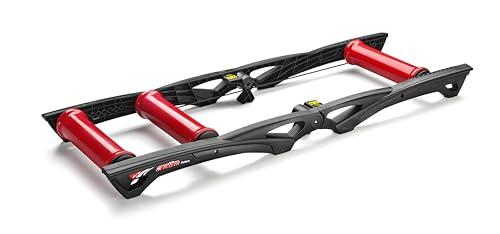
- Folds for compact storage
- Works with road and mountain bikes
- Optional app connectivity with Misuro B+ sensor
Best For: Portable, software-compatible indoor training
Stable Folding Value

- 16-inch wheelbase for many 26- to 29-inch bikes
- Foldable 6.5 kg steel frame
- Sealed bearings, rubber feet, and adjustable belt
Best For: Home balance and pedal-efficiency training
High-Speed Stability Pick

- Heavy, wide rollers for smoother high-speed practice
- Continuous wheelbase adjustment
- Six-point adjustable feet and footrest
Best For: Riders wanting a sturdy, high-rigidity indoor roller setup
Compact Adjustable Choice
Home Folding Parabolic Rollers

- Lightweight 8.3 kg telescoping design
- Seven adjustable wheelbase positions
- Fits 24–29-inch MTB and 700C road bikes
Best For: Portable training in homes with limited storage space
Portable Value Option
ROCKBROS Adjustable Bike Rollers

- Parabolic design for enhanced stability
- Folds flat and weighs 6.5 kg
- Fits 16–29-inch wheels across several bike types
Best For: Lightweight, foldable indoor training for multiple bicycles
Adjustable Training Pick – Elite Arion Mag Folding Rollers
The Elite Arion Mag is a practical choice for riders seeking parabolic bike rollers with adjustable resistance and a compact footprint. Its three manual magnetic levels support varied indoor workouts, while the folding composite frame simplifies storage in smaller spaces.
Best For: Home cyclists who want adjustable resistance, foldable storage, and compatibility with Rouvy and Kinomap.
Pros:
- Three manual magnetic resistance settings for endurance, interval, or power sessions
- Folds to a space-saving 500 × 1400 × 130 mm format
- Supports road and mountain bikes with a stated 150 kg load capacity
- Works with Rouvy and Kinomap for interactive training
Cons:
- Resistance adjustment is manual rather than electronically controlled
- Its plastic frame may feel less substantial than a metal-framed alternative
The Arion Mag balances training flexibility and storage convenience. It is a strong fit when manual resistance control and app compatibility matter more than fully automated smart-trainer features.
Smart Setup Choice – Wahoo KICKR ROLLR Smart Trainer
The Wahoo KICKR ROLLR offers a convenient approach to parabolic bike rollers by combining a roller-style setup with a front wheel clamp and smart connectivity. It accommodates most bikes with tires up to 2.1 inches and avoids wheel removal or cassette changes.
Best For: Riders who prioritize quick bike setup, wireless connectivity, and higher-power indoor training.
Pros:
- No wheel removal or cassette required
- Front wheel clamp helps secure the bike during indoor sessions
- Supports up to 1500W and a simulated 10% grade
- Bluetooth and ANT+ connectivity enable compatible device connections
Cons:
- Its 25 kg weight makes it less convenient to move than lighter roller designs
- Fit is specified for tires up to 2.1 inches
- It is listed with a one-year manufacturer warranty
The KICKR ROLLR is oriented toward convenience and connected training rather than minimal equipment weight. Its clamp-based setup is especially useful for riders who want to get on the trainer without changing wheels or cassettes.
Simple Stability Pick – Garmin TacX Antares Retractable Rollers
The Garmin TacX Antares is a straightforward option for riders comparing parabolic bike rollers for basic indoor practice. Its tapered rollers help keep the wheels centered, and the unit requires no power while folding down for storage.
Best For: Cyclists seeking a maintenance-free, non-powered roller setup for 26- to 29-inch bikes.
Pros:
- Tapered rollers help maintain wheel alignment and stability
- Requires no power and is described as maintenance free
- Fits bikes with 26- to 29-inch wheel diameters
- Retracts to a compact folded size of 31.5 × 18.5 × 5.31 inches
Cons:
- No listed electronic or magnetic resistance adjustment
- Its maximum footprint expands to 53 × 18.5 inches
- The supplied specifications identify the bike type as mountain bike
The Antares keeps the roller experience uncomplicated. Choose it when centered wheels, broad wheel-size compatibility, and power-free operation are more important than connected features or adjustable resistance.
Durable Adjustable Option – Minoura Live Roll R500 Trainer
Minoura Live Roll R500 Roller Trainer Bike Chain Rings & Accessories, White/Silver
Check Price On AmazonThe Minoura Live Roll R500 is a metal-framed choice for shoppers evaluating parabolic bike rollers with adjustable magnetic resistance. It supports both road and mountain bikes and has a stated 250-pound load capacity for home training use.
Best For: Riders who want a sturdy metal roller trainer with adjustable resistance for road or mountain bikes.
Pros:
- Adjustable magnetic resistance supports varied workout intensity
- Metal frame and metal construction provide a substantial build
- Compatible with road and mountain bikes
- Stated load capacity is 250 pounds
Cons:
- The supplied notes do not specify smart connectivity or app support
- At 15.6 pounds, it is heavier than some compact roller options
- Product information lists included components as accessories, so package contents may warrant checking
The Live Roll R500 emphasizes adjustability and traditional construction. It makes sense for riders who prefer a metal roller platform and do not need the connected features found on smart trainers.
Premium Precision – Alloy Indoor & Outdoor Cycling Trainer
For riders comparing parabolic bike rollers, the Alloy emphasizes smooth operation, precise construction, and long-term durability. Its CNC-machined 6061 alloy drums, sealed bearings, and folding steel frame make it a strong option for structured indoor training or race-day warmups.
Best For: Serious cyclists and competitive athletes who prioritize quiet operation, pedal smoothness, and mechanical precision.
Pros:
- Precision-machined alloy drums are designed for a smooth, quiet ride.
- Sealed cartridge bearings support effortless drum rotation and consistent use.
- Tool-free wheelbase adjustment accommodates different bicycles.
- Folding steel frame helps with storage and transport.
Cons:
- Premium construction may be more than casual riders need.
- Air resistance provides low resistance rather than a wide electronically controlled range.
The Alloy is a durability-focused choice for cyclists who want a stable, carefully machined roller system and do not need app connectivity or built-in electronic resistance.
Portable Training Pick – Arion Roller Trainer
The Arion is a practical option among parabolic bike rollers for cyclists who want a lightweight, foldable platform with useful training output. It supports road and mountain bikes, folds for storage, and can connect to training software when paired with a Misuro B+ sensor.
Best For: Riders who want portable rollers with optional virtual-training compatibility and straightforward setup.
Pros:
- Folds to a compact size for storage and transport.
- Supports road and mountain bikes with a stated 253.5-pound load capacity.
- Produces up to 130 watts at 20 km/h and 280 watts at 40 km/h.
- Compatible with My E-Training, Zwift, TrainerRoad, and Kinomap when paired with the Misuro B+ sensor.
Cons:
- Sensor-based app compatibility requires the separately paired Misuro B+ sensor.
- Plastic and polypropylene construction may appeal less to riders seeking a metal frame.
The Arion balances portability and training versatility, making it a sensible choice for riders who want simple rollers now and the option to add connected training later.
Stable Folding Value – Home Bicycle Parabolic Roller
This home trainer is a practical choice for shoppers seeking parabolic bike rollers with a wide platform and compact storage design. Aluminum rollers with sealed bearings, rubber foot pads, and an adjustable belt are aimed at smooth, stable riding across compatible road, mountain, and folding bikes.
Best For: Home users who need a foldable roller platform for balance work, pedal-efficiency practice, and high-cadence riding.
Pros:
- 16-inch wheelbase is designed to fit many 26- to 29-inch bikes.
- Aluminum rollers and sealed bearings support smooth, quiet operation.
- Foldable steel frame weighs 6.5 kg for easier carrying and storage.
- Rubber feet and an adjustable belt help limit movement and floor vibration.
Cons:
- The supplied specifications do not list app connectivity or electronic resistance.
- Compatibility is centered on the stated 26- to 29-inch wheel range.
With its wide wheelbase and foldable steel frame, this model focuses on practical home use and rider-controlled balance rather than connected features or advanced resistance programming.
High-Speed Stability Pick – Minoura Live Roll R800
The Minoura Live Roll R800 is a substantial choice for riders seeking parabolic bike rollers with a wide, heavy platform and support for high-speed rotation practice. Its adjustable frame and drop-style front roller help accommodate different wheelbases while keeping setup stable.
Best For: Riders who prioritize a sturdy, high-rigidity roller setup for smooth, faster indoor practice.
Pros:
- Heavy, wide rollers with steel covers are designed for smoother, higher-speed rotation practice.
- Continuous wheelbase adjustment helps match different bicycles.
- Adjustable feet and footrest provide six-point height adjustment.
- Magnetic resistance and compatibility with wheels up to 29 inches add versatility.
Cons:
- At 46.3 pounds, it is considerably less portable than lighter folding models.
- Its large, substantial construction may require more dedicated storage space.
The R800 emphasizes rigidity and controlled, high-rpm practice rather than easy transport. It is a sensible fit for a more permanent indoor training area.
Compact Adjustable Choice – Home Folding Parabolic Rollers
These home bicycle folding rollers suit shoppers looking for parabolic bike rollers that are easier to move and store. The telescoping design, seven wheelbase positions, and compatibility with 24- to 29-inch mountain bikes and 700C road bikes make them a flexible option for shared spaces.
Best For: Riders who need a portable roller trainer with broad wheel-size and wheelbase adjustability.
Pros:
- Telescoping design weighs 8.3 kg and can fit into narrow storage spaces.
- Seven front-wheel bracket positions accommodate multiple bicycle setups.
- Symmetrical tapered rollers are designed to reduce friction and kinetic energy loss.
- Aluminum alloy and ABS construction, plus a stable base and foot support, support steady training.
Cons:
- The supplied notes do not specify a resistance mechanism.
- Its compatibility is described for 24- to 29-inch mountain bikes and 700C road bikes, so other sizes may not fit.
This model focuses on portability and setup flexibility. It is particularly practical when the trainer must be moved frequently or stored under furniture.
Portable Value Option – ROCKBROS Adjustable Bike Rollers
The ROCKBROS adjustable trainer is a practical pick for riders comparing parabolic bike rollers with fold-flat storage and mechanical resistance. Its three aluminum rollers, sealed bearings, and front adjustment system support a range of mountain, road, and folding bikes.
Best For: Riders seeking a lightweight, foldable roller trainer for several bicycle types.
Pros:
- Parabolic roller design is intended to enhance stability compared with straight rollers.
- Folds flat in three sections for easier carrying and storage.
- At 6.5 kg, it is lighter than the other listed models.
- Sealed bearings are designed for smoother operation, and the front adjustment accommodates 16- to 29-inch wheels.
Cons:
- The supplied specifications list only one adjustment setting, despite the adjustable front frame.
- Mechanical resistance may offer less adjustment flexibility than a magnetic system.
With its low weight, foldable aluminum frame, and wide stated compatibility, the ROCKBROS is well suited to riders who value convenient transport and storage.
How We Picked These Parabolic Bike Rollers
We focused on the features that matter most in everyday indoor riding: roller shape and stability, frame construction, folding or storage design, resistance options, bike-size compatibility, and setup convenience. We also considered whether each model is better suited to casual exercise, structured training, warmups, or riders who want a more engaging balance-focused session.
Product descriptions and specifications can vary by seller, so confirm the current dimensions, included accessories, resistance controls, and compatibility details before ordering.
Quick Comparison
| Best For | What to Look For |
|---|---|
| Beginners | Wide, tapered drums and a stable frame |
| Small spaces | Folding legs or a compact retractable design |
| Hard training | Resistance adjustment and a rigid, durable frame |
| Smart workouts | Compatibility with connected sensors or training systems |
| Mixed bikes | Adjustable roller spacing and broad wheel-size support |
Key Buying Factors for Parabolic Bike Rollers
Stability and Roller Design
Parabolic drums are generally easier to manage than flat rollers because their tapered sides help guide the tires toward the center. Look for a solid base, reliable feet, and enough width for your riding style. Beginners may prefer a longer frame or a front step that makes mounting easier.
Bike Compatibility
Check the supported wheel sizes before buying. Road bikes, mountain bikes, and hybrid bikes may require different roller spacing or adjustment ranges. Tire width and tread can also affect noise, vibration, and smoothness. Confirm that the frame accommodates your bike rather than relying only on a general product name.
Resistance, Noise, and Ride Feel
Basic rollers rely on gearing and cadence for intensity, while resistance-equipped models provide more control for intervals or climbs. Rollers are rarely silent, and knobby tires tend to be louder than slick road tires. A rigid frame and properly inflated tires can help reduce vibration.
Storage and Setup
Folding or retractable models are valuable when the trainer must be stored after every session. Check folded dimensions, carry handles, adjustment mechanisms, and whether the frame can be moved without tools. A quick setup encourages more frequent use.
Who Should Buy Which Parabolic Bike Rollers?
Choose a simple folding model if you want affordable indoor riding, easy storage, and basic balance practice. Choose a sturdier premium roller if you train often and value smoother operation, stronger construction, and better long-term durability. Choose a resistance-equipped design if your sessions include intervals or you want more intensity without changing gears constantly. Choose a smart-compatible option if connected training, virtual workouts, or performance tracking is central to your routine.
Whichever model you choose, place it on a level, non-slip surface, keep adequate clearance around the bike, and begin at a low speed near a stable support until you are comfortable riding hands-free.