The best incline treadmill for a home gym makes hill walking, interval training, and steady cardio easier to fit into your routine—without requiring outdoor terrain or a commercial gym membership.
These 10 picks cover compact walking pads, foldable treadmills, and higher-incline machines. Use the guide below to match incline range, speed, deck size, controls, and storage needs to the way you actually train.
Best 10 Incline Treadmill for Home Gym Picks for 2026
Best Versatile Pick
FOUSAE 5-in-1 Incline Treadmill

- 0.6–7.5 MPH range with 10% incline
- 12 HIIT programs and app compatibility
- 400-pound capacity with cushioned deck
Best For: Versatile walking, jogging, desk use, and HIIT
Best Connected Runner

- 0–10 MPH speed and 0–10% incline
- Automatic iFIT speed and incline adjustments
- Folding frame with KeyFlex cushioning
Best For: Connected running and guided home workouts
Best High-Incline Value
CURSOR FITNESS 16% Incline Treadmill

- Manual incline adjusts from 0% to 16%
- 400-pound capacity and 3.0 HP brushless motor
- Foldable, 90% pre-assembled compact design
Best For: Incline walking and small-space home workouts
Best Auto-Incline Compact Pick
JAGJOG 15% Auto-Incline Treadmill

- 15% automatic incline and 8.8 MPH top speed
- Touchscreen with workout and heart-rate metrics
- Foldable design with FitShow app tracking
Best For: Apartment-friendly automatic hill training
Best Space-Saving Pick
LONTEK 15% Incline Walking Pad
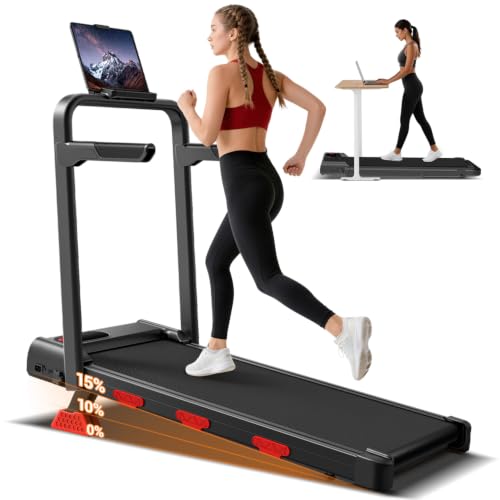
- Manual flat, 10%, and 15% incline options
- Quiet 3.0HP motor with speeds up to 6.2 MPH
- 350-pound capacity with compact storage design
Best For: Walkers needing steep incline options in a compact home gym
Best Running-Focused Option
THERUN Foldable Incline Treadmill

- 9.0 MPH top speed with a 3.0HP motor
- 15 preset programs and 18-inch LED display
- Three manual incline levels up to 6%
Best For: Users combining walking, jogging, and faster home workouts
Best Compact Budget-Style Pick

- Quiet 45 dB operation with speeds up to 3.8 MPH
- Manual 4-degree incline and supportive handle bar
- Folds for compact upright or under-bed storage
Best For: Light walking in apartments, home offices, and small rooms
Compact Hill Training Pick

- 12% manual incline for uphill-style workouts
- Quiet 3.0HP motor with 300-lb capacity
- Folds for compact storage
Best For: Small-space walking and light running workouts
Steep Incline Specialist
LONTEK 40% Incline Walking Pad

- Five manual levels up to 40% incline
- 350-lb capacity with extended handrails
- Quiet, foldable design for home use
Best For: Steep hill training and supported incline walking
Versatile Program Pick
FutureGlide 13% Incline Treadmill

- 13% manual incline for hill-style cardio
- 12 programs with smart-memory display
- Quiet, foldable design with 300-lb capacity
Best For: Varied walking, jogging, and light running workouts
Best Versatile Pick – FOUSAE 5-in-1 Incline Treadmill
If you want an incline treadmill for home gym use that can handle walking, jogging, and running, the FOUSAE offers a broad 0.6–7.5 MPH range, a 10% incline, app compatibility, and a foldable handle for flexible workouts.
Best For: Households wanting one treadmill for walking, desk use, HIIT, and moderate running.
Pros:
- Combines walking-pad and treadmill functionality with speeds up to 7.5 MPH.
- 10% incline, 12 HIIT programs, and app compatibility support varied training.
- 3.0 HP brushless motor, seven-layer cushioning, and a 400-pound capacity.
- Foldable handle and countdown modes add flexibility for home workouts.
Cons:
- Its 7.5 MPH maximum is lower than some running-focused treadmills.
- The supplied notes do not specify the full app list or warranty details.
The FOUSAE is a feature-rich choice when versatility matters more than top-end speed. Its combination of incline, HIIT programming, cushioning, and high weight capacity makes it a practical all-around home-gym option.
Best Connected Runner – NordicTrack T Series 6.5 S
The NordicTrack T Series 6.5 S is a strong incline treadmill for home gym training if you value guided workouts and conventional running performance. It reaches 10 MPH, offers a 0–10% incline, and folds for easier storage.
Best For: Runners and walkers who want iFIT-guided training, app syncing, and automatic workout adjustments.
Pros:
- 10 MPH top speed suits walking, jogging, and running.
- 0–10% digital incline range supports hill training and added intensity.
- iFIT can automatically adjust speed and incline during compatible workouts.
- KeyFlex cushioning, a 20-inch-wide deck, and a folding frame support daily home use.
Cons:
- Many smart features require an iFIT Train Membership.
- Heart-rate control requires a separately sold Bluetooth heart-rate monitor.
- At 203 pounds, it may be less convenient to move than lighter models.
This model stands out for structured, connected training rather than maximum incline. If you are comfortable with the iFIT membership requirement, its automatic adjustments and 10 MPH speed make it a capable home running treadmill.
Best High-Incline Value – CURSOR FITNESS 16% Incline Treadmill
For shoppers prioritizing incline, the CURSOR FITNESS is an incline treadmill for home gym workouts with a manual range up to 16%. Its compact folding design, 400-pound capacity, and 0.6–7.2 MPH speed range suit walking, jogging, and climbing-focused sessions.
Best For: Users who want a steep manual incline and compact storage for apartment or small-space workouts.
Pros:
- 16% manual incline provides more hill-training range than the other listed models.
- 3.0 HP brushless motor supports speeds up to 7.2 MPH.
- 400-pound capacity and seven-layer belt cushioning support a broad range of users.
- 90% pre-assembled, foldable design is intended for quick setup and storage.
Cons:
- The incline is manual, so it must be changed with the included attachments.
- The 15-by-37.5-inch belt is narrower and shorter than the NordicTrack deck.
- It does not offer the automatic incline adjustment found on some connected models.
The CURSOR is especially appealing when maximum incline matters more than a long running deck or automated controls. Its compact footprint and high capacity make it a practical choice for incline walking in smaller homes.
Best Auto-Incline Compact Pick – JAGJOG 15% Auto-Incline Treadmill
The JAGJOG is a practical incline treadmill for home gym use when you want automated hill training without a bulky setup. It combines a 15% auto incline, 8.8 MPH speed, 12 preset HIIT programs, app tracking, and a folding frame.
Best For: Apartment residents and home users who want automatic incline changes, structured workouts, and convenient storage.
Pros:
- 15% auto incline adds hill intensity without manual adjustment.
- 8.8 MPH maximum speed supports walking, jogging, and running.
- Large LED touchscreen tracks speed, incline, distance, time, calories, and heart rate.
- Foldable design, one-kick deck lowering, and app tracking support convenient use.
Cons:
- Its 300-pound capacity is lower than the FOUSAE and CURSOR models.
- The supplied notes do not specify the running-belt dimensions.
- App tracking uses FitShow, which may offer fewer ecosystem options than iFIT.
The JAGJOG balances incline capability with everyday convenience. Its automatic 15% incline and touchscreen make workouts easier to vary, while the foldable design is well suited to apartments and home offices.
Best Space-Saving Pick – LONTEK 15% Incline Walking Pad
The LONTEK is a practical incline treadmill for home gym setups that need portability and flexible walking intensity. Its manually configured flat, 10%, and 15% incline options, quiet brushless motor, and low-profile design make it well suited to compact spaces and everyday walking.
Best For: Walkers who want steep incline options, a portable design, and a high 350-pound weight capacity.
Pros:
- Offers flat, 10%, and 15% incline configurations without complicated controls.
- Quiet 3.0HP brushless motor operates below 45 dB and reaches 6.2 MPH.
- Low-profile, foldable design stores under beds, sofas, desks, or against a wall.
- Supports up to 350 pounds and includes a cushioned belt with side impact strips.
Cons:
- Incline changes are manual rather than electronically controlled.
- The 37.4-by-15-inch belt is more suitable for walking and light jogging than long-stride running.
Choose this model if incline variety, storage flexibility, and weight capacity matter more than automated incline adjustment or a full-size running deck.
Best Running-Focused Option – THERUN Foldable Incline Treadmill
The THERUN is an incline treadmill for home gym users who want more speed and structured workout features. It combines a 9.0 MPH motor, 15 preset programs, a wider running area, and three manual incline levels in a foldable frame.
Best For: Home users who want to alternate between walking, jogging, and faster treadmill workouts.
Pros:
- Reaches speeds up to 9.0 MPH with a quiet 3.0HP motor.
- Includes 15 preset programs and an 18-inch LED display for tracking workout data.
- Three manual incline settings provide up to 6% elevation.
- Features a 43.3-by-16.5-inch non-slip running area with shock absorption.
Cons:
- Incline adjustment is manual rather than powered.
- Its 300-pound capacity is lower than some heavier-duty options.
- At 110 pounds, it may be less convenient to move frequently.
This is the stronger choice for users prioritizing running speed, preset programming, and a more spacious deck over maximum incline height.
Best Compact Budget-Style Pick – Walking Pad with Handle Bar
This compact walking pad is an incline treadmill for home gym spaces where easy storage and quiet operation are priorities. Its handle bar adds support, while the manual 4-degree incline, 3.8 MPH top speed, and small footprint suit walking-focused routines in apartments or home offices.
Best For: Light walking, small households, and users who need a quiet treadmill that stores easily.
Pros:
- Manual 4-degree incline can increase walking intensity and calorie demands.
- Runs at up to 3.8 MPH with a stated noise level of 45 dB.
- Folds for upright or under-bed storage and occupies less than 0.5 square meters.
- Includes sturdy handles, LED metrics, a remote control, and a one-year motor warranty.
Cons:
- Its 3.8 MPH maximum speed is intended for walking rather than running.
- The 265-pound weight recommendation is lower than the other listed models.
- Only one manual incline level is specified.
Consider this model when quiet, low-speed walking and simple storage are more important than running performance or a broad incline range.
Compact Hill Training Pick – 12% Foldable Home Treadmill
If you want an incline treadmill for home gym use without a bulky footprint, this foldable model offers a practical combination of hill-style training, quiet operation, and compact storage. Its 12% manual incline and 0.6–6.2 MPH speed range support walking and light running workouts.
Best For: Apartment users and home exercisers who want manual incline training, basic workout tracking, and easy storage.
Pros:
- 12% manual incline helps simulate uphill walking and increase workout intensity.
- Quiet 3.0HP brushless motor operates below 50 dB and supports users up to 300 pounds.
- Folds to 46.5 x 22.8 x 5.5 inches and includes transport wheels for storage.
- Six-layer belt and shock absorption are designed to reduce impact during workouts.
Cons:
- The incline is manual rather than motorized.
- The 38 x 15-inch belt may feel compact for users who prefer a larger running surface.
- Its maximum speed is 6.2 MPH, so it is less suited to fast running.
This is a sensible incline treadmill for home gym setups where storage space and noise matter more than high-speed training. The manual slope, compact design, and 300-pound capacity make it especially practical for walking-focused routines.
Steep Incline Specialist – LONTEK 40% Incline Walking Pad
For shoppers seeking an incline treadmill for home gym hill training, the LONTEK stands out with five manual incline levels reaching 40%. Its elevated handrails, reinforced base, and 350-pound capacity are designed to provide added support during steep walking and jogging sessions.
Best For: Users who prioritize steep incline workouts, extra support, and a higher weight capacity in a compact home treadmill.
Pros:
- Offers five manual incline settings from 0% to 40% for demanding hill-style training.
- 51-inch dual handrails and a 38.6 x 15.4-inch belt accommodate taller users more comfortably.
- Supports up to 350 pounds and uses reinforced feet plus eight support pads for stability.
- Quiet 3HP brushless motor operates under 45 dB and reaches 6.2 MPH.
Cons:
- The incline settings are manual, requiring adjustment between levels.
- Steep settings and the approximately 15-inch deck height may require additional balance and clearance.
- The belt remains relatively narrow for users seeking a spacious running platform.
The LONTEK is the most specialized choice here for steep incline work. Its strong elevation range, taller handrails, and higher weight rating make it a compelling option for hiking preparation and challenging walking workouts, while its folding design helps preserve floor space.
Versatile Program Pick – FutureGlide 13% Incline Treadmill
This FutureGlide model is a flexible incline treadmill for home gym or office use, combining a 13% manual incline with 12 built-in programs and a handlebar. It is designed for walking, jogging, and light running while remaining compact enough for smaller spaces.
Best For: Home or office users who want varied programmed workouts, a manual incline, and a foldable treadmill with handle support.
Pros:
- 13% manual incline adds hill-climb intensity without requiring a large machine.
- Includes 12 programs and an LED display with pause, countdown, and workout-memory features.
- Quiet 3.0HP brushless motor produces less than 45 dB and supports up to 300 pounds.
- Folds for storage and has a cushioned 38.2 x 15.4-inch running belt.
Cons:
- The incline is manually adjusted rather than electronically controlled.
- Its 6.2 MPH maximum speed is better suited to walking, jogging, and light running than sprinting.
- The running surface may feel narrow for users who prefer a wider belt.
FutureGlide is a well-rounded option when workout variety matters. Its programmed modes and smart-memory display add convenience, while the 13% incline and compact folding frame make it suitable for everyday home or office cardio.
How We Picked the Best Incline Treadmill for Home Gym
We focused on the features that matter most in a home machine: usable incline range, top speed, motor design, belt and deck dimensions, weight capacity, folding or storage options, controls, workout programming, and heart-rate tracking. We also considered whether each treadmill is better suited to walking, jogging, running, interval work, or limited-space use.
Because product specifications can vary by model and seller, confirm the current listing before buying. Pay particular attention to whether the incline is automatic or manual and whether the advertised capacity includes a meaningful safety margin.
Quick Comparison
| Best for | Prioritize | Why it matters |
|---|---|---|
| Walking and light cardio | Low speed, handles, simple controls | Comfort and stability matter more than maximum speed. |
| Running and intervals | Longer deck, stronger motor, higher top speed | More room and power support a natural stride and repeated efforts. |
| Hill-focused training | At least 10% incline | A steeper grade increases challenge without requiring faster running. |
| Small home gyms | Compact footprint and folding design | Storage is often the deciding factor in multipurpose rooms. |
Key Buying Factors for an Incline Treadmill for Home Gym
Incline Type and Range
Automatic incline adjustment is more convenient for intervals and guided workouts, while manual incline models can cost less and have fewer moving parts. A 10% to 15% incline is useful for demanding walking and hill simulations; unusually steep ratings are best treated as a specialty feature and checked carefully for operating limitations.
Speed, Motor, and Deck Size
Walkers can usually prioritize a comfortable belt and stable handrails over top speed. Runners should look for a longer deck, a suitable maximum speed, and a motor designed for regular use. Brushless motors may offer quieter operation, but noise also depends on belt alignment, floor placement, and user weight.
Fit, Safety, and Daily Usability
Check the assembled dimensions, folded dimensions, transport wheels, ceiling clearance, and electrical requirements. Leave space around the treadmill for safe mounting and dismounting. A wider deck, emergency safety key, responsive controls, and secure handles are especially important for beginners or anyone training at higher inclines.
Programs, Connectivity, and Tracking
App compatibility can add coaching and workout variety, but it may require a subscription or a compatible device. If you prefer simple training, onboard interval programs and clear displays may be enough. Confirm that the console shows the metrics you care about, such as speed, incline, time, distance, calories, and heart rate.
Who Should Buy Which Incline Treadmill for Home Gym?
Choose a compact walking pad or handle-equipped model if you mainly walk, work out in a small room, or need easier storage. Select a foldable treadmill with a moderate incline if you want a flexible all-around machine for walking, jogging, and occasional running. For serious interval or hill training, favor automatic incline, a longer running surface, a higher weight rating, and a motor suited to frequent use.
Before ordering, measure your available floor and storage space, compare the machine’s unfolded dimensions with your stride, and check warranty and return terms. The right Incline Treadmill for Home Gym use is the one you can safely set up, comfortably use, and consistently keep available.