Incline treadmill training can build sprint-specific strength, improve conditioning, and add demanding hill efforts without requiring outdoor space. The right machine should balance usable speed with a stable deck, responsive incline adjustment, and enough room for your stride.
We compared 10 models across incline capability, running speed, weight capacity, folding design, and everyday usability so you can choose a treadmill that matches your training goals and available space.
Best 10 Incline Treadmills for Sprint Training Picks for 2026
Best Heavy-Duty Pick

- 4.0 HP motor with speeds up to 10 MPH
- 16% auto incline and 400-pound rating
- Wide, cushioned belt with app connectivity
Best For: Runners needing a sturdy treadmill for incline intervals and fast home workouts
Best Connected Training Pick

- 10 MPH speed and 10% digital incline
- 55-by-20-inch cushioned running deck
- iFIT supports guided and adaptive workouts
Best For: Users who want app-guided incline training with a roomy deck
Best Value HIIT Pick

- 15% auto incline with 10 MPH top speed
- 18-inch belt and multi-cushion deck
- 350-pound capacity with foldable design
Best For: HIIT, incline intervals, jogging, and space-conscious home training
Best Steep-Grade Trainer

- Extreme 40% manual incline for hill simulation
- Extended handrails and 350-pound capacity
- Quiet motor with layered cushioning
Best For: Steep hill conditioning, stair-style workouts, and incline walking
Best All-Around Option
Abonow 8.5MPH Incline Treadmill
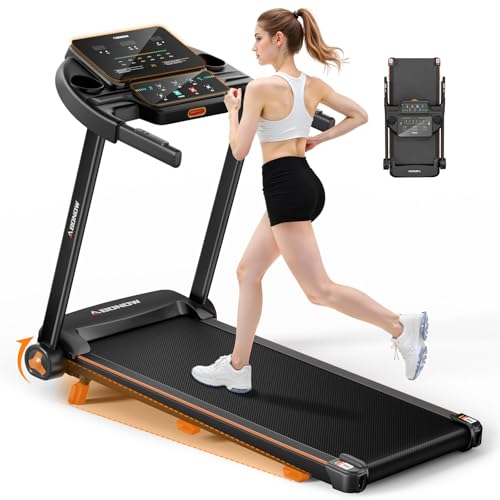
- 8% incline and 8.5MPH top speed
- 12 preset programs for varied intervals
- Foldable design with cushioning and quiet motor
Best For: Versatile home incline intervals and moderate sprint work
Best for Space-Saving Versatility
YPOO Foldable Incline Walking Pad

- 0%-10%-16% incline settings
- Removable desk and foldable frame
- Quiet 3.5HP motor supports up to 350 pounds
Best For: Walking, hill conditioning, and compact home-office use
Best for Hill-Sprint Programming
MERACH 7.5MPH Incline Treadmill

- Dedicated Hill Sprints workout mode
- Three manual incline levels
- Wide belt with 12 shock absorbers
Best For: Structured hill intervals and cushioned home running
Compact Incline Starter

- 4-degree manual incline with supportive handlebar
- 3.8-mph top speed for walking and light conditioning
- Foldable, quiet design for small spaces
Best For: Small-space incline walking and everyday conditioning
Interval-Friendly Pick
JELENS 15% Auto-Incline Treadmill
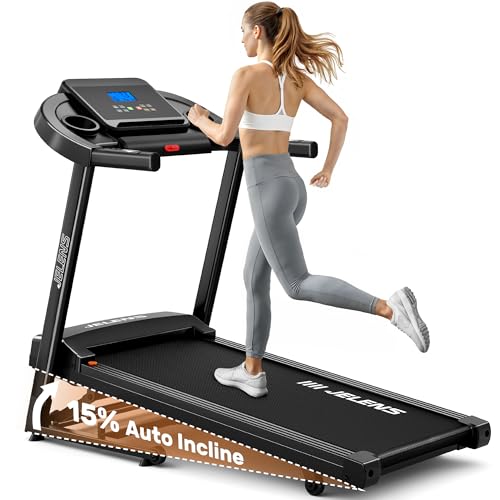
- 15% automatic incline with one-touch level changes
- 7.5-mph maximum speed for moderate running intervals
- App connectivity, pulse sensors, and 330-pound capacity
Best For: Hill intervals and moderate-speed home running
Steep Hill Specialist
LONTEK 40% Incline Walking Pad

- Five manual incline levels up to 40%
- Extended handrails and 350-pound weight capacity
- 6.2-mph top speed with foldable, cushioned design
Best For: Steep hill conditioning and hiking preparation
Best Heavy-Duty Pick – THERUN 16% Incline Treadmill
For shoppers comparing incline treadmills for sprint training, the THERUN stands out with a 4.0 HP motor, speeds up to 10 MPH, and a 0–16% automatic incline. Its wide, cushioned belt and high weight rating make it a practical option for demanding home workouts.
Best For: Runners who want substantial incline range, a wide deck, and heavy-duty support for speed and hill workouts.
Pros:
- 16% auto incline and speeds from 0.6 to 10 MPH support hill intervals and faster training.
- Rated for up to 400 pounds, with a 4.0 HP motor and alloy-steel frame.
- 17-inch-wide, five-layer belt and multiple shock absorbers provide traction and cushioning.
- Bluetooth app support, heart-rate tracking, shortcut controls, and folding storage add convenience.
Cons:
- The 47.2-inch deck may feel short for users with a long sprinting stride.
- At 145 pounds, it may still require some effort to reposition despite transport wheels.
The THERUN offers one of the stronger combinations of incline, motor power, capacity, and cushioning in this group. Its 10 MPH ceiling is better suited to incline intervals and fast runs than all-out sprinting.
Best Connected Training Pick – NordicTrack T Series 6.5 S
The NordicTrack T Series 6.5 S is a compact, connected choice among incline treadmills for sprint training. It reaches 10 MPH and includes 0–10% digital incline, while optional iFIT features can automatically adjust speed and terrain during guided workouts.
Best For: Home users who value structured, app-guided workouts and a longer, wider running deck.
Pros:
- 55-inch by 20-inch deck provides more running room than several compact models.
- 10 MPH top speed and 10% incline support running, hill work, and endurance sessions.
- KeyFlex cushioning is designed to reduce impact during walking and running.
- Folding frame, assisted lowering, and app integrations support convenient home use.
Cons:
- Many connected features require an iFIT Train Membership.
- The 300-pound capacity is lower than the ratings of some competing models here.
- A 10% incline offers less hill range than the 15% and 16% alternatives.
This treadmill is a good fit when coaching and workout automation matter as much as hardware. It can handle incline intervals, but the 10 MPH limit and 10% grade make it better for controlled speed work than maximal sprint training.
Best Value HIIT Pick – ATEEDGE 15% Incline Treadmill
The ATEEDGE combines a 15% automatic incline, 10 MPH maximum speed, and a 350-pound capacity in a foldable home treadmill. For incline treadmills for sprint training, its 18-inch belt and multiple cushioning elements make it especially appealing for interval and HIIT-style sessions.
Best For: Home users seeking a wide, space-conscious treadmill for incline intervals, HIIT, jogging, and general fitness.
Pros:
- 15 incline options and speeds from 0.5 to 10 MPH support varied interval workouts.
- 18-inch-wide belt offers useful lateral room during faster training.
- Eight built-in and six external cushions are designed to reduce impact.
- 350-pound capacity, folding storage, Bluetooth, speakers, and 36 programs add versatility.
Cons:
- The 42.5-inch belt length may limit full-stride sprinting for taller runners.
- The 10 MPH maximum speed may not satisfy users training for top-speed sprints.
- The listed 3-peak HP motor provides less stated power than the THERUN’s 4.0 HP motor.
ATEEDGE is a balanced choice for incline-focused conditioning and HIIT, particularly when belt width and storage matter. Its speed ceiling makes it more suitable for incline repeats and moderate fast running than true maximal sprint work.
Best Steep-Grade Trainer – CURSOR 40% Incline Treadmill
The CURSOR takes a different approach to incline treadmills for sprint training, prioritizing steep hill simulation over high running speed. Its five manual settings reach 40% incline, while extended handrails, a reinforced base, and layered cushioning support walking, climbing, and light jogging.
Best For: Users focused on steep hill conditioning, stair-style workouts, walking, and controlled incline strength work.
Pros:
- Manual incline settings from 0% to 40% provide an unusually steep training range.
- Extended 51-inch handrails and a 350-pound capacity support stability on steep grades.
- Seven-layer belt, eight shock absorbers, and buffer strips help soften impact.
- Quiet brushless motor, foldable design, and transport wheels suit indoor use.
Cons:
- The maximum speed is only 6.2 MPH in the supplied specifications, limiting sprint work.
- Incline adjustment is manual rather than automatic.
- The narrow 15.4-inch belt is less suitable for fast running than wider decks.
The CURSOR is best viewed as a steep-grade conditioning machine rather than a conventional sprint treadmill. It can build climbing strength and cardiovascular demand, but runners seeking high-speed intervals should choose a faster model.
Best All-Around Option – Abonow 8.5MPH Incline Treadmill
For shoppers comparing incline treadmills for sprint training, the Abonow combines an 8% incline, an 8.5MPH top speed, and 12 preset programs for varied interval workouts. Its foldable design, cushioning, and quiet brushless motor also make it practical for home use.
Best For: Home users who want versatile incline intervals, power walking, and moderate sprint work in a compact treadmill.
Pros:
- 8% incline and 8.5MPH maximum speed support hill intervals and faster running.
- 12 preset programs provide multiple workout formats.
- Six shock absorbers and dual-layer cushioning help reduce impact.
- 3HP brushless motor operates below 45 dB and supports up to 280 pounds.
Cons:
- The 41.34-inch running belt may feel short for users with long strides or all-out sprinting.
- Manual incline requires adjustment rather than powered incline changes.
The Abonow is a balanced choice for home interval training, especially when quiet operation and storage convenience matter. Its speed ceiling is better suited to controlled sprint intervals than top-speed sprint specialists.
Best for Space-Saving Versatility – YPOO Foldable Incline Walking Pad
The YPOO is a compact option for buyers considering incline treadmills for sprint training alongside walking and desk use. Its removable workstation, foldable frame, and selectable 0%, 10%, and 16% incline levels support everyday movement and short, light running sessions.
Best For: Apartment dwellers and home-office users who prioritize walking, hill-style conditioning, and occasional light running.
Pros:
- Three incline levels, including 16%, add substantial hill-style intensity.
- Removable desk supports work-and-walk use while preserving workout flexibility.
- Foldable frame and wheels simplify moving and storage.
- 3.5HP motor supports up to 350 pounds and operates around 45 dB.
Cons:
- The supplied specifications are inconsistent about maximum speed, so shoppers should verify the listing before purchase.
- The 37.5-inch deck is less suitable for full-stride sprinting.
- Its design is oriented more toward walking and light running than dedicated sprint training.
The YPOO stands out for multifunctional home use and steep incline walking, but its shorter deck and unclear speed specifications make it a secondary choice for serious sprint intervals.
Best for Hill-Sprint Programming – MERACH 7.5MPH Incline Treadmill
The MERACH is designed for buyers seeking incline treadmills for sprint training with dedicated hill-focused modes. Its manual incline, 7.5MPH top speed, wide belt, and preset Steady-State Climb, Power Hiking, and Hill Sprints programs support structured uphill conditioning.
Best For: Users who want guided hill workouts, a wider running surface, and a sturdy foldable treadmill for home training.
Pros:
- Hill Sprints mode directly targets incline-based interval training.
- Three manual incline levels create varied climbing challenges.
- The 16.5-by-42.5-inch belt offers more lateral room and stability.
- Seven-layer belt and 12 shock absorbers provide substantial cushioning.
Cons:
- The 7.5MPH maximum speed limits very fast sprint work.
- Manual incline changes require stopping to adjust the setting.
- At 93 pounds, it is less lightweight than compact walking-pad designs.
With a dedicated Hill Sprints mode and a comparatively spacious belt, the MERACH is a strong fit for structured incline intervals. Its moderate speed ceiling makes it better for hill sprints than flat, maximal-speed efforts.
Compact Incline Starter – Walking Pad with Handle Bar
If you want a compact option among incline treadmills for sprint training, this walking pad is better suited to warmups, brisk walking, and light conditioning than true sprint work. Its manual 4-degree incline, handlebar, and quiet operation make it practical for small home spaces.
Best For: Small-space users who prioritize incline walking, basic conditioning, and easy storage.
Pros:
- Manual incline adjusts up to 4 degrees for added walking challenge.
- Handlebar provides extra support and includes an LED display for time, speed, distance, and calories.
- Folds for upright or under-bed storage and operates at a stated 45 dB.
- Supports users up to 265 pounds and includes a one-year motor warranty.
Cons:
- Its 3.8-mph maximum speed is not appropriate for sprint training.
- The 4-degree incline is limited compared with steeper hill-training treadmills.
This is a space-saving walking pad rather than a sprint treadmill. Choose it for low-impact incline work and everyday movement, but look for a higher-speed model if sprint intervals are the priority.
Interval-Friendly Pick – JELENS 15% Auto-Incline Treadmill
For shoppers comparing incline treadmills for sprint training, the JELENS offers a more versatile setup than a walking pad. Its 7.5-mph maximum speed, 15% automatic incline, wider belt, and app connectivity support walking, hill intervals, and shorter running efforts at home.
Best For: Home users who want automatic hill adjustments and moderate-speed interval training.
Pros:
- 15% automatic incline provides 15 levels for uphill workouts.
- 7.5-mph maximum speed is more suitable for running intervals than walking-only models.
- 330-pound weight capacity, pulse sensors, and a six-layer shock-absorbing belt add practical training features.
- Bluetooth app support and LCD workout metrics help track sessions.
Cons:
- A 7.5-mph top speed may still be restrictive for all-out sprinting.
- The 43.31-inch belt may feel short for users with a long stride or faster running form.
The JELENS is the strongest match here for incline-based intervals because it combines automatic elevation with the highest listed speed. It is better for controlled tempo work and hill repeats than maximal sprinting.
Steep Hill Specialist – LONTEK 40% Incline Walking Pad
Among these incline treadmills for sprint training, the LONTEK stands out for steep hill conditioning rather than high-speed sprinting. Its five manual incline levels reach 40%, while the extended handrails, reinforced support feet, and cushioning target stability during demanding uphill walking and light running.
Best For: Hill walking, hiking preparation, and steep-incline cardio in a compact home setup.
Pros:
- Five manual levels range from 0% to 40% for challenging elevation work.
- 51-inch handrails and a 38.6-by-15.4-inch belt provide added support and room for taller users.
- Supports up to 350 pounds and uses stability feet plus silicone supports to reduce shaking.
- 3HP brushless motor, triple shock absorption, and foldable storage suit home use.
Cons:
- The 6.2-mph maximum speed limits its usefulness for true sprint training.
- Incline changes are manual rather than automatic.
- The belt is narrower than many conventional running treadmills.
This is a compelling choice for steep incline conditioning and hiking-style workouts, especially when stability matters. However, athletes focused on fast sprint intervals should prioritize a treadmill with a substantially higher speed ceiling.
How We Picked the Best Incline Treadmills for Sprint Training
We focused on the features that matter most for hill intervals and high-effort conditioning: maximum speed, incline range, deck dimensions, frame stability, weight capacity, controls, and storage design. We also considered whether each treadmill is better suited to true running, power walking, or mixed home workouts. A steep incline can make a slower speed challenging, but it does not replace a treadmill with adequate speed for flat or low-incline sprint work.
Because specifications and included features can vary by configuration, verify the current listing before buying, especially the belt size, motor rating, maximum speed, user-weight limit, and warranty.
Quick Comparison
| What to Compare | Best For |
|---|---|
| Higher maximum speed | Fast intervals and running-focused workouts |
| 15% to 16% incline | Versatile hill training and conditioning |
| 40% incline | Steep hill simulation, power walking, and strength-focused intervals |
| Folding frame | Smaller rooms and shared spaces |
| Wide or extended deck | More confidence during hard efforts |
| Higher weight capacity | Improved fit for larger users and heavier training loads |
Key Buying Factors for Incline Treadmills for Sprint Training
Speed and Incline Control
Look for a top speed that supports your intended intervals. For sprint-focused sessions, prioritize speed headroom and quick, easy controls. Models with a 15% or 16% incline offer a useful balance for running and hill repeats, while 40% designs are generally more appropriate for steep walking or controlled strength intervals unless their speed specifications also support running.
Deck Size and Stability
A longer, wider belt is valuable when your stride length increases or fatigue affects foot placement. A rigid frame, dependable handrails, and a suitable user-weight rating also help the treadmill feel secure during demanding efforts. Avoid choosing solely by peak incline if the running surface is cramped or the machine shifts under load.
Motor, Noise, and Recovery Between Intervals
Frequent sprint training places more stress on the drive system than casual walking. Check the stated motor output, recommended usage, cooling design, and warranty. Consider noise as well, particularly in apartments or shared homes. Simple controls that let you reduce speed and incline quickly are useful for safe recovery.
Folding and Space Requirements
Measure both the operating footprint and the folded dimensions, including clearance around the treadmill. Compact walking pads save space, but they may provide less deck room and stability for all-out running. Leave adequate clearance behind and beside the machine before each workout.
Who Should Buy Which Incline Treadmills for Sprint Training?
Choose a 15% to 16% incline treadmill if you want the most flexible option for walking, running, and moderate hill intervals. A model with a wide deck and higher capacity is a sensible choice for larger users or anyone who values stability. Select a 40% incline model if your priority is steep hill conditioning, weighted walking, or low-speed strength work rather than maximum-speed sprints.
Compact foldable and walking-pad designs suit apartment dwellers and users who mainly train at moderate speeds. Runners planning regular fast intervals should favor the longest, widest, most stable deck available within their budget. Before ordering, confirm that the treadmill’s speed, incline, belt dimensions, and warranty align with your actual sprint program—not just its headline incline percentage.