Finding the best incline treadmill for runners means balancing hill-training capability, running space, motor performance, and home-friendly design. The right model can help you add sustained climbs, intervals, and lower-impact conditioning without relying on outdoor weather or terrain.
This roundup compares 10 options ranging from folding walking pads to heavy-duty treadmills with steep automatic inclines, so you can match features and capacity to your training goals.
Best 10 Incline Treadmill for Runners Picks for 2026
Best Overall
15-Level Auto Incline Running Treadmill

- 15 automatic incline levels
- 10 MPH speed and 400-lb capacity
- Cushioned, foldable design with app support
Best For: Versatile home running and incline training
Best Connected Option

- 10 MPH speed and 10% incline
- iFIT-guided automatic adjustments
- Foldable frame with KeyFlex cushioning
Best For: App-guided running and endurance workouts
Best Compact Choice
JELENS 15% Auto Incline Treadmill
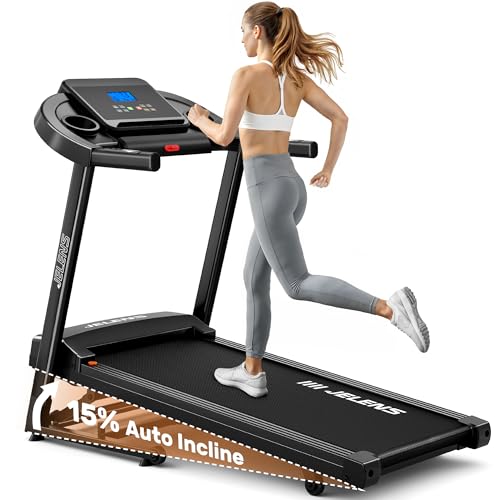
- 15 automatic incline levels
- Quiet motor and foldable storage design
- 330-lb capacity with app and pulse sensors
Best For: Compact, quiet incline workouts
Best for Steep Inclines

- Manual incline settings up to 40%
- Extended 51-inch handrails for taller users
- 350-lb capacity and foldable design
Best For: Steep hill simulation and incline walking
Best Overall Incline Treadmill

- 9.0 MPH maximum speed and 3.0 HP motor
- 0–6% manual incline with 15 preset programs
- 43.3-by-16.5-inch shock-absorbing belt
Best For: Home runners wanting speed, incline, and workout tracking
Best for Small Spaces
WELLFIT Folding Incline Treadmill

- Folds and rolls easily for compact storage
- Up to 10% manual incline and 6.2 MPH
- Four control methods, including app and remote
Best For: Beginners and walkers in apartments or small rooms
Best Quiet Walking Pad

- 10% manual incline for hill-focused workouts
- Quiet brushless motor rated below 40 dB
- Up to 6.2 MPH with 12 preset programs
Best For: Quiet walking, light jogging, and under-desk use
Best for Steep Hill Training

- Manual incline reaches 40%
- 51-inch handrails and 350-lb capacity
- Quiet motor with foldable storage
Best For: Steep hill walking, hiking preparation, and light running
Best Compact Value
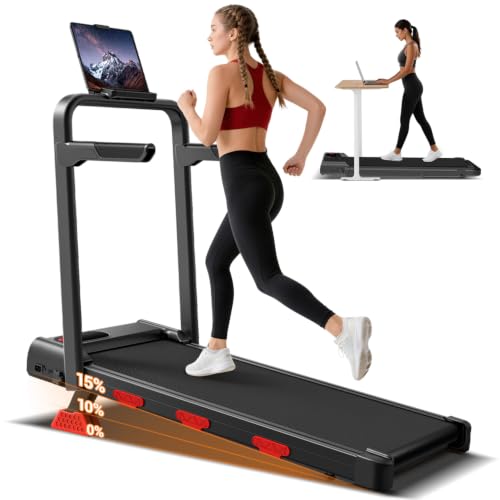
- Flat, 10%, and 15% manual incline
- Quiet 3HP motor with 350-lb capacity
- Folds for under-bed or sofa storage
Best For: Small spaces, walking, jogging, and moderate hill sessions
Best Simple 15% Incline Setup
Compact 15% Incline Walking Pad
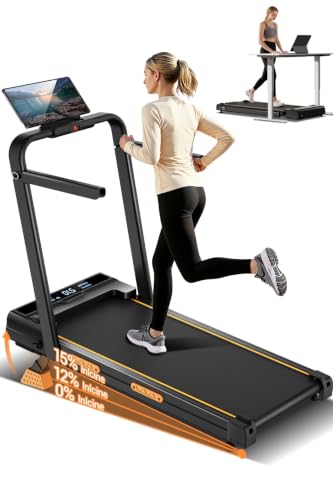
- 15% manual incline for hill workouts
- Anti-slip handlebar and quiet 3HP motor
- Compact foldable frame with remote
Best For: Incline walking, jogging, and short home cardio intervals
Best Overall – 15-Level Auto Incline Running Treadmill
If you want an incline treadmill for runners that can also handle walking and HIIT, this model offers a useful combination of adjustable elevation, a 10 MPH top speed, and a roomy 47.24-by-18.11-inch belt. Its cushioning and 400-pound capacity make it a practical option for frequent home training.
Best For: Runners who want versatile incline workouts, strong weight capacity, and a foldable home treadmill.
Pros:
- 15 automatic incline levels with quick-access controls
- 4.0 HP brushless motor and speeds up to 10 MPH
- Multi-layer cushioning helps reduce impact on knees and ankles
- Folding frame, Bluetooth speakers, app compatibility, and 18 preset programs
Cons:
- Its 131-pound weight may make moving it more demanding
- The 10 MPH maximum speed may not suit advanced sprint training
This is one of the more balanced choices in the group for runners who want meaningful incline variation without giving up a conventional running deck. The combination of automatic controls, cushioning, and high weight capacity supports a broad range of home workouts.
Best Connected Option – NordicTrack T Series 6.5 S
The NordicTrack T Series 6.5 S is an incline treadmill for runners who value guided workouts and connected training. It reaches 10 MPH, provides a 0–10% incline range, and works with iFIT for trainer-led sessions and automatic speed and incline adjustments, though an iFIT membership is required for those features.
Best For: Runners who prefer structured, app-guided workouts and a compact folding treadmill.
Pros:
- 0–10 MPH speed range supports walking, jogging, and running
- 0–10% digital incline adjustment
- KeyFlex cushioning is designed to reduce joint impact
- iFIT can automatically adjust speed and incline during guided workouts
Cons:
- Many connected features require a paid iFIT membership
- The 5-inch LCD display is relatively small
- Its 20-inch-wide belt is narrower than some alternatives
This model makes the most sense for users who are motivated by coaching, workout variety, and automatic adjustments. Its 10 MPH ceiling is suitable for general running and endurance work, but dedicated speed-focused runners may want a faster machine.
Best Compact Choice – JELENS 15% Auto Incline Treadmill
For shoppers seeking an incline treadmill for runners in a smaller home, the JELENS combines 15% automatic incline with a foldable design and transport wheels. Its 7.5 MPH maximum speed is better suited to walking, jogging, and moderate running than high-speed training.
Best For: Space-conscious users who want quiet incline workouts and app-connected fitness tracking.
Pros:
- 15 automatic incline levels simulate uphill training
- Quiet 3.0 HP motor rated below 40 decibels
- 330-pound capacity with six-layer cushioning and an anti-slip belt
- Bluetooth app connectivity, pulse sensors, and foldable storage design
Cons:
- 7.5 MPH top speed limits fast running and sprint work
- The 43.31-inch belt length is relatively short for some runners
- Its lightweight 79.8-pound build may feel less substantial during vigorous use
The JELENS is a practical fit when incline variety, quiet operation, and storage convenience matter more than top speed. Before buying, runners should compare the shorter deck with their stride length and preferred pace.
Best for Steep Inclines – CURSOR 40% Incline Treadmill
The CURSOR stands out among incline treadmill for runners options with five manual settings reaching a steep 40% grade. It is designed primarily for hill and stair-style training, with extended handrails, a stable base, and a 7.5 MPH maximum speed for walking, jogging, and light running.
Best For: Tall users and athletes focused on steep hill simulation, incline walking, and leg-strength work.
Pros:
- 40% maximum incline provides unusually steep elevation training
- 51-inch handrails support taller users and high-slope workouts
- 350-pound capacity with anti-shake pads and multi-layer cushioning
- Quiet brushless motor and foldable storage design
Cons:
- Incline changes are manual rather than automatic
- 7.5 MPH maximum speed is not intended for fast running
- The narrow 38.6-by-15.4-inch belt may feel restrictive to some runners
This is a specialized choice rather than an all-purpose running treadmill. Its steep manual incline and tall handrails are valuable for climbing-focused sessions, but runners wanting flat-distance work or speed intervals may prefer a longer, wider deck and faster top speed.
Best Overall Incline Treadmill – THERUN TR07
The THERUN TR07 is a practical incline treadmill for runners who want a compact home machine with a stronger top speed than a typical walking pad. Its 0–6% manual incline, 9.0 MPH maximum speed, and 3.0 HP motor support walking, jogging, and moderate running workouts.
Best For: Home users who want preset programs, heart-rate tracking, and a foldable treadmill for incline-focused cardio.
Pros:
- Reaches speeds up to 9.0 MPH with a 3.0 HP motor.
- Offers three manual incline settings across a 0–6% range.
- Includes 15 preset programs, an 18-inch LED display, and handrail pulse sensors.
- Uses a non-slip 43.3-by-16.5-inch belt with shock absorption.
Cons:
- Incline adjustment is manual rather than motorized.
- The 16.5-inch belt width may feel limited for some runners.
- It weighs 110 pounds, so moving it may require effort despite the folding design.
For runners prioritizing speed and structured workouts, the TR07 is the strongest match in this group. The manual incline keeps the design straightforward, while the 9.0 MPH ceiling gives it more running range than the two walking-pad-style options.
Best for Small Spaces – WELLFIT Folding Incline Treadmill
The WELLFIT is a compact incline treadmill for runners whose workouts are closer to walking and light jogging. It reaches 6.2 MPH, folds for storage, and offers handlebar, remote, app, and voice controls for convenient use in apartments or multipurpose rooms.
Best For: Beginners, daily walkers, and small-space users who want a portable treadmill with a modest incline.
Pros:
- Provides up to a 10% manual incline and speeds up to 6.2 MPH.
- Automatic belt alignment helps keep the belt centered during use.
- Five-layer cushioning is designed to reduce impact on knees and ankles.
- Folds compactly and includes wheels for easier storage.
Cons:
- The 36-by-16-inch deck is shorter than a conventional running treadmill.
- Its 6.2 MPH maximum is better suited to walking and jogging than faster running.
- Incline adjustment is manual.
The WELLFIT makes the most sense when storage and simple controls matter more than a long running deck. Its incline adds variety, but taller or faster runners may prefer the THERUN’s larger, quicker platform.
Best Quiet Walking Pad – KALWOL Incline Walking Pad
The KALWOL is an incline treadmill alternative for users who want quiet walking, jogging, and occasional hill sessions at home or under a desk. Its 10% manual incline, 6.2 MPH top speed, and brushless motor make it more versatile than a basic walking pad while keeping the format compact.
Best For: Walkers and light joggers seeking a quiet, space-saving treadmill with incline and joint-friendly cushioning.
Pros:
- Offers a quick 10% manual incline adjustment.
- Supports working, walking, jogging, and hill-climbing modes from 0.6 to 6.2 MPH.
- Uses a 2.75 HP brushless motor rated below 40 dB.
- Includes 10 shock absorbers, a seven-layer belt, 12 programs, and a 350-pound capacity.
Cons:
- The 6.2 MPH maximum is not intended for fast running.
- The supplied details do not specify the belt dimensions.
- The incline is manual rather than automatically adjustable during workouts.
Choose the KALWOL when quiet operation, incline walking, and compact storage are the priority. It is less suitable for dedicated speed training, but its cushioning, high weight capacity, and hill mode make it a flexible everyday cardio option.
Best for Steep Hill Training – 40% Incline Walking Pad
For runners comparing an incline treadmill for runners, the LONTEK 40% model stands out for its unusually steep manual incline options. It is better suited to hill walking, hiking preparation, and light running than to high-speed distance training, with speeds up to 6.2 MPH.
Best For: Users who want challenging incline workouts, added stability, and a compact treadmill for home use.
Pros:
- Five manual incline levels, reaching 40% for demanding hill-style training.
- 51-inch dual handrails, reinforced support feet, and an advertised 350-pound capacity add stability.
- Quiet 3HP brushless motor operates below 45 dB and supports speeds from 0.6 to 6.2 MPH.
- Folds to approximately 57.3 x 24.4 x 6.1 inches for easier storage.
Cons:
- The 6.2 MPH maximum limits its usefulness for faster running workouts.
- The 38.6 x 15.4-inch belt may feel narrow or short for longer running strides.
- Incline levels are adjusted manually rather than electronically during a workout.
This is the strongest option here for steep elevation work and taller users who value a higher handrail. Runners seeking speed or a spacious running deck should look elsewhere, but it offers distinctive hill-training capability in a foldable design.
Best Compact Value – 15% Incline Walking Pad
This LONTEK model is a practical choice for shoppers seeking an incline treadmill for runners in a small home office or apartment. Its manually configured flat, 10%, and 15% incline positions add variety, while the 6.2 MPH top speed is appropriate for walking, jogging, and light running.
Best For: Space-conscious users who want basic incline training, quiet operation, and a supportive handlebar.
Pros:
- Three incline configurations provide flat, 10%, and 15% hill options.
- Quiet 3.0HP brushless motor runs below 45 dB and supports up to 350 pounds.
- Low-profile, foldable design can fit under desks, beds, or sofas.
- LED display tracks time, speed, distance, and calories, with a remote included.
Cons:
- Incline changes require repositioning the legs or pads by hand.
- The 37.4 x 15-inch belt is better suited to walking and light jogging than long runs.
- The 6.2 MPH maximum is limited for runners who train at faster paces.
With a compact footprint and straightforward manual incline system, this treadmill offers useful elevation work without a bulky frame. It is a sensible fit for everyday movement and moderate hill sessions, rather than performance-focused running.
Best Simple 15% Incline Setup – Compact 15% Incline Walking Pad
The C5F is a compact option for shoppers seeking an incline treadmill for runners who primarily walk, jog, or add short incline intervals at home. Its 15% manual incline, anti-slip handlebar, and 6.3 MPH maximum speed provide basic training variety without requiring much storage space.
Best For: Home users who want a compact incline treadmill with a handlebar, remote control, and simple workout tracking.
Pros:
- 15% incline adds hill-focused intensity for walking and cardio sessions.
- Anti-slip handlebar provides extra balance during incline or faster walking.
- Quiet 3.0HP brushless motor and 350-pound capacity suit shared home or office spaces.
- Folds to 46.9 x 24.4 x 4.4 inches and includes a phone holder and remote.
Cons:
- The manual incline requires physical adjustment rather than in-workout control.
- The 35.8 x 15.2-inch belt may not provide enough room for longer running strides.
- A 6.3 MPH maximum speed is limiting for faster runners.
This model prioritizes portability and convenience over a full-sized running platform. It works well for incline walking, jogging, and short interval efforts, but serious runners may want a longer belt and higher top speed.
How We Picked the Best Incline Treadmill for Runners
We focused on the features that matter most for runners using a treadmill for structured hill work: incline range, running-surface practicality, motor output, speed potential, stability, user capacity, controls, and storage design. We also included different form factors because a dedicated runner may want a larger deck, while a space-conscious buyer may prioritize a foldable walking pad.
Product descriptions and listed specifications were compared for incline type, display and heart-rate features, handlebar design, noise considerations, and home-use convenience. Because specifications can vary by seller or version, verify the current listing before purchasing.
Quick Comparison
| Best For | Look For | Models in This Roundup |
|---|---|---|
| Traditional running workouts | Larger deck, stable frame, stronger motor | NordicTrack T Series, heavy-duty 15-level model, THERUN |
| Steep hill training | 30%–40% incline capability and secure support | CURSOR 40%, LONTEK 40% |
| Compact home setups | Foldable frame, handles, manageable footprint | JELENS, WELLFIT, LONTEK 15% |
| Walking and light conditioning | Moderate incline, quiet operation, easy controls | Walking Pad 6.2 MPH, 15% incline walking pad |
Key Buying Factors for an Incline Treadmill for Runners
Incline Range and Adjustment
A 10%–15% incline is versatile for warmups, tempo climbs, and interval sessions. Models reaching 30% or 40% are better suited to steep hiking-style efforts and demanding hill repeats, but they require more stability and may offer less natural running space.
Deck Size and Running Comfort
Runners generally benefit from a longer, wider belt, especially at faster speeds or with a longer stride. Compact walking pads can work well for walking and light jogging, but check the usable deck dimensions before planning regular running workouts.
Motor, Stability, and Capacity
Consider the listed horsepower alongside the frame construction, maximum user weight, and intended speed. A stable treadmill with reserve capacity is more comfortable during incline intervals than a lightweight unit that shifts or strains under load.
Controls, Safety, and Storage
Quick-access incline controls, a readable display, pulse sensors, an emergency safety key, and firm handrails improve usability. Folding designs save space, but measure ceiling clearance and stored dimensions before ordering.
Who Should Buy Which Incline Treadmill for Runners?
Choose a traditional running treadmill if you plan frequent runs, faster intervals, or longer sessions and have room for a more substantial frame. Choose a 40% incline model if steep climbing is your main priority and you value a demanding hiking or hill-workout profile.
Choose a 15% incline treadmill for the best balance of running, walking, and repeatable hill sessions. Choose a walking pad if portability, low-profile storage, and casual walking matter more than high-speed running performance. Before buying, confirm the belt dimensions, speed range, incline mechanism, warranty, assembly requirements, and return policy.